Sicily. Day 3. Palermo. Segesta. Salemi. Trapani.
In the morning of our day three, we planned a breakfast with Charlotte and her friends. The weather was fine, we woke up early and went around our neighborhood.
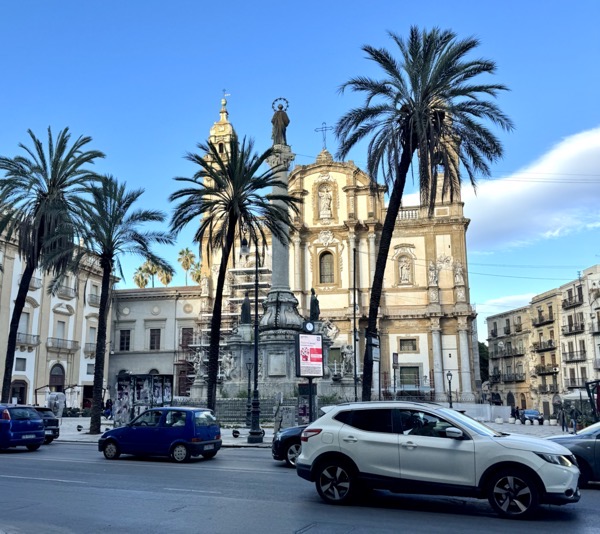
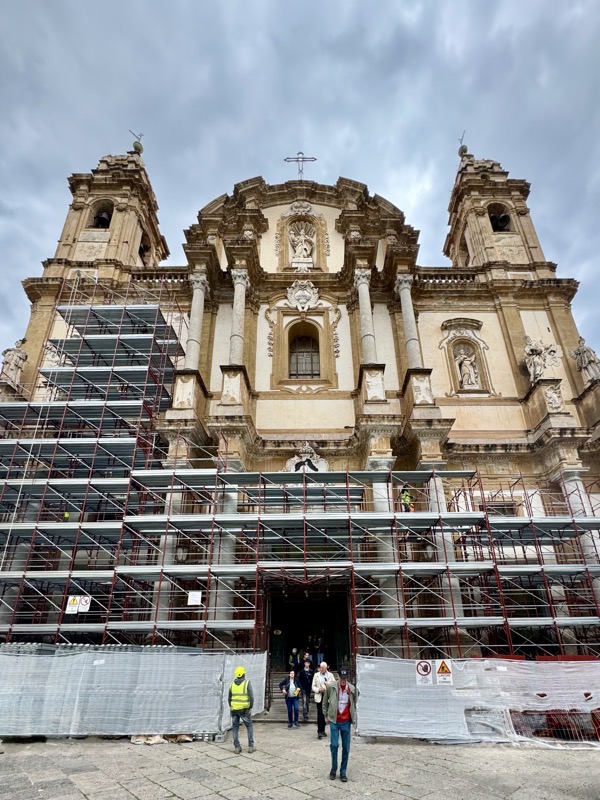
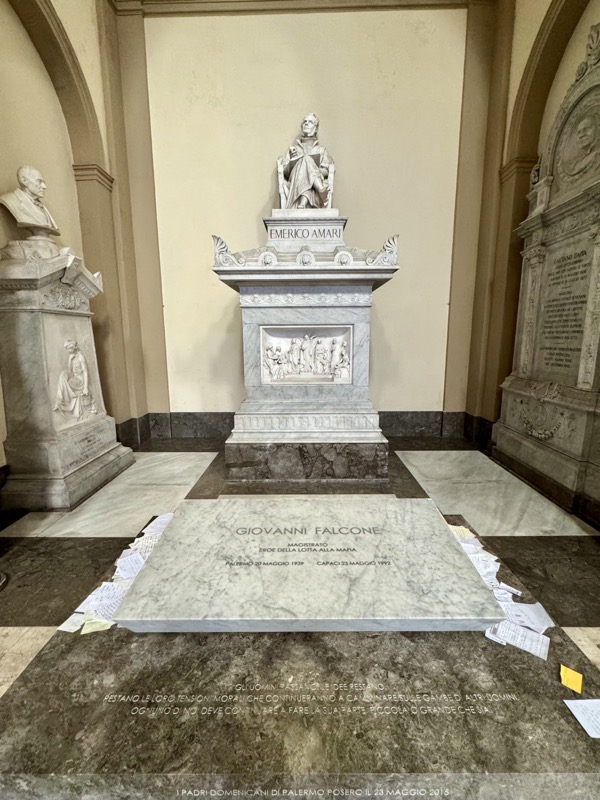
We were staying next to Chiesa di San Domenico, a baroque-style church that is regarded one of the most important in Palermo, a “Pantheon of the Illustrious Men of Sicily” and a symbol of the fight against the mafia — several notable people are buried inside, including a prosecutor who fell victim in the fight with organized crime.
Beautiful from the outside and rich inside the church was well worth the visit. During our stay, it was undergoing renovation.
After the gold and glitter of the Cathedral of Monreale this church looks more simple and somber.
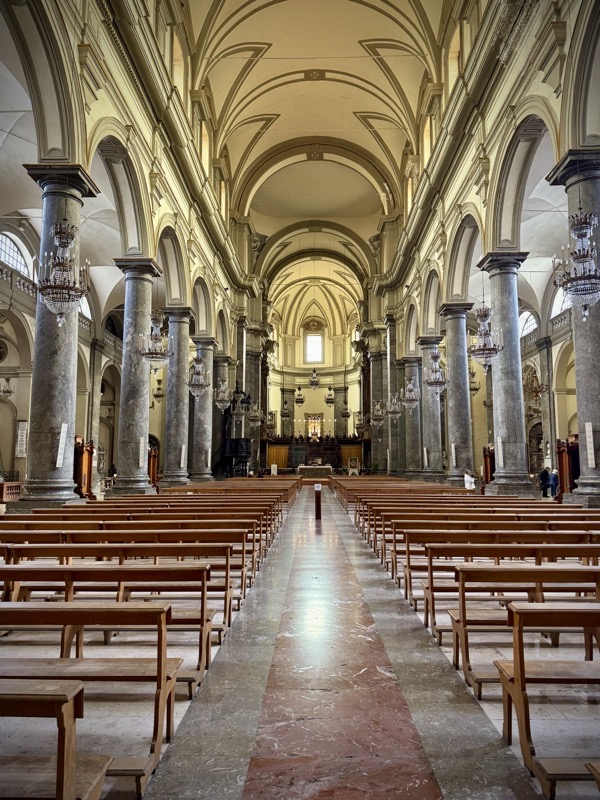
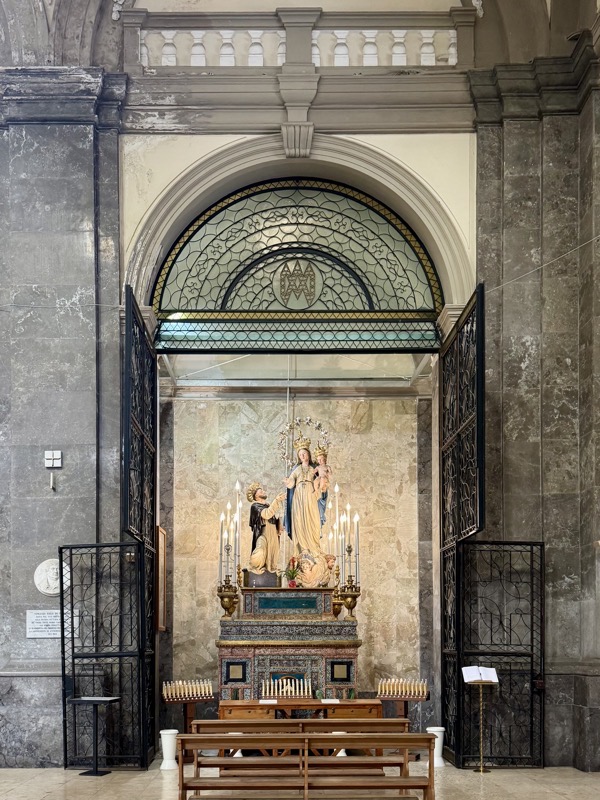
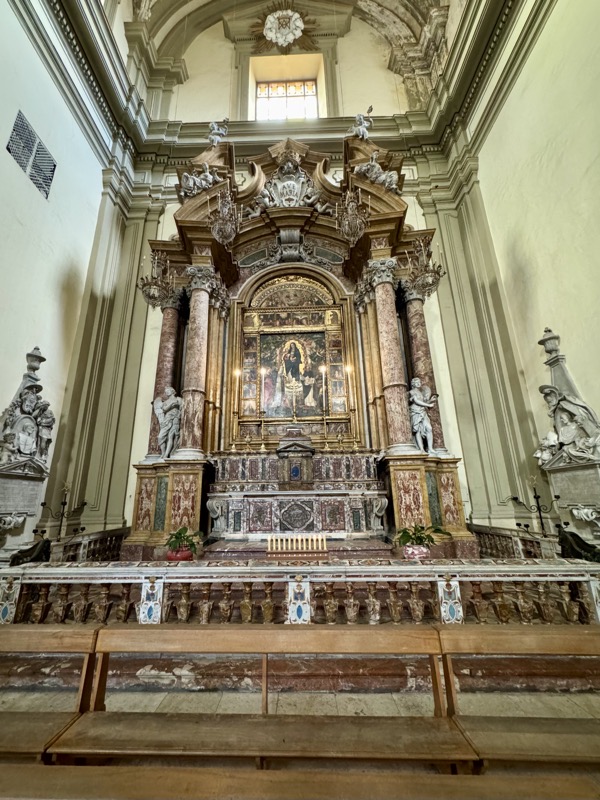
The interior layout of Chiesa di San Domenico follows the shape of a Latin cross. The three naves — including this one with The Madonna of the Rosary — are all decorated with marble colored in different hues.
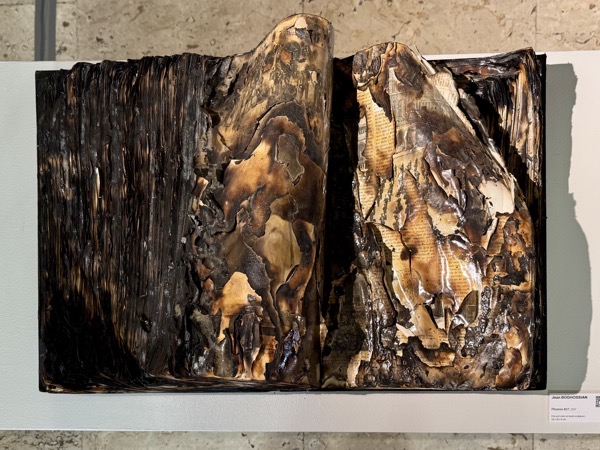
Right at the front of the church, there are striking images of burned books — a symbol of the dispute between Cathar heretics and catholics.
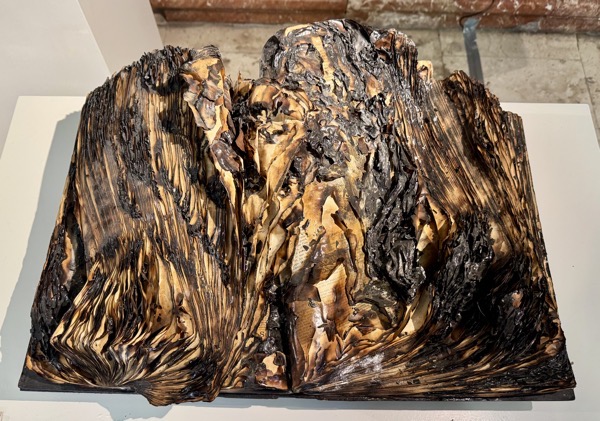
According to the legend, when the books were dropped into a fire, the books of heretics burned down and those of St. Dominic miraculously jumped out of the flames and survived.
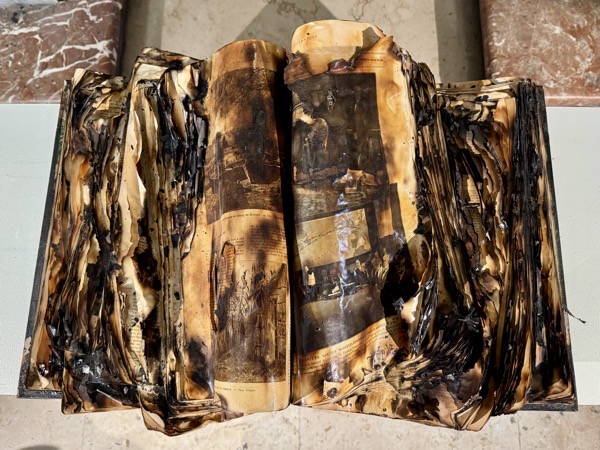
In a way, these books signify the triumph of Catholicism over heresy.
A walnut choir stall behind the big altar.
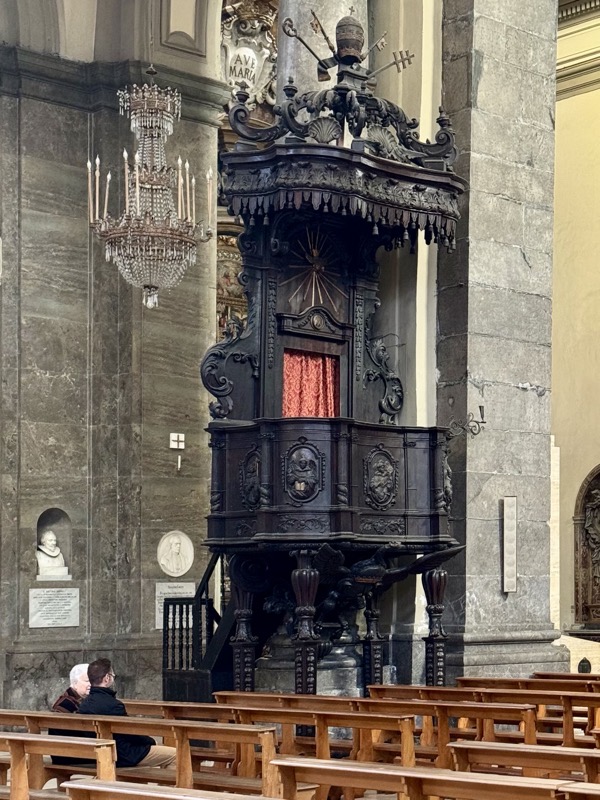
In the small naves on both sides of the cathedral, there are small chapels. Each one of those chapels was once patronized by a noble family and each one contains various works of art.
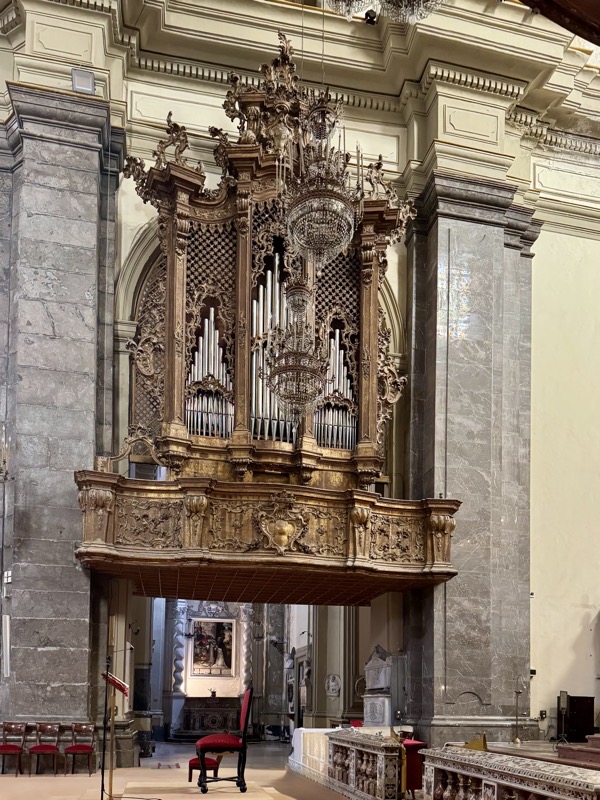
On the sides of the altar, there are wooden choir stalls overlooked by huge, recently restored organs.
The visit turned out to be an emotional one. This church is a bit like the pantheon of the city. Some famous people are buried here including Judge Falcone, assassinated by the Corleonesi Sicilian Mafia. To this day, Palermo residents are bringing in notes of gratitude to his tomb. Very moving place!
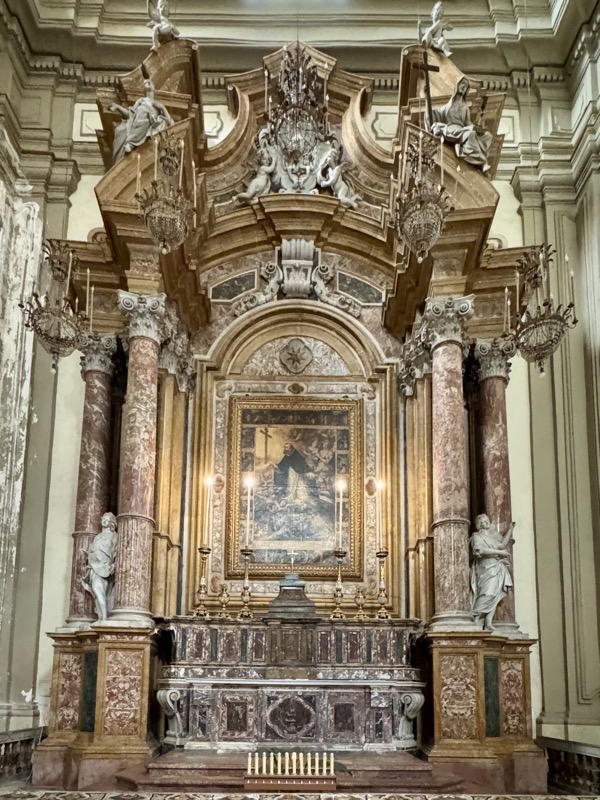
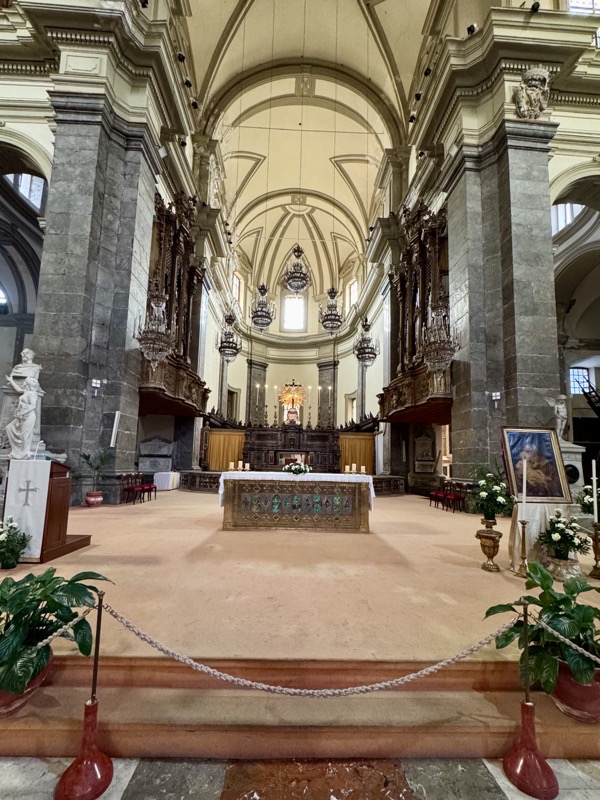
The impressive high altar is framed with a beautiful sculpted archway and adorned with marble statues. Above the altar is a large window with the sign above it (in Latin, of course): “The Truth of the Law was in His Mouth.”
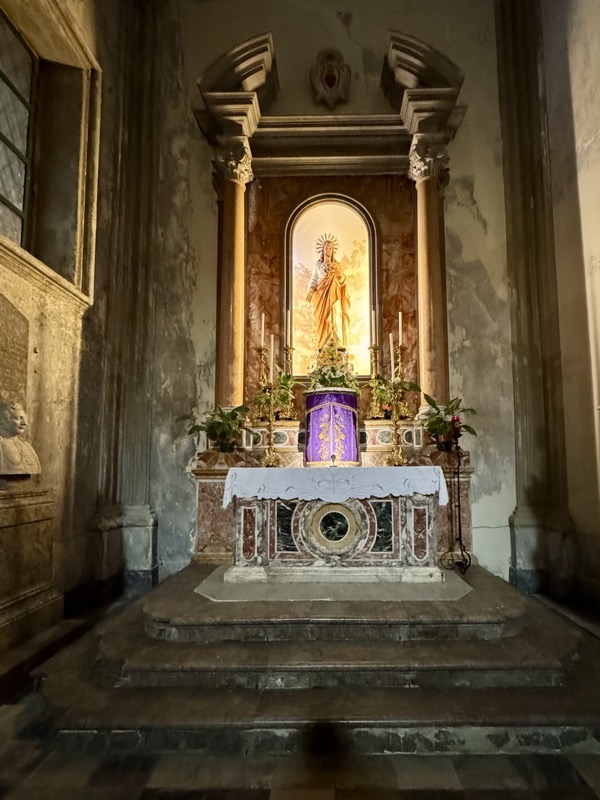
Without notes, which I should have taken but didn’t, the names of the chapels and saints are now mixed up in my memory. But I believe, that this is the chapel of the “Sacred Heart of Jesus.”
This is San Domenico Chapel with the saint in front of the Crucifix with marble funeral monuments of notable Palermians on the left and on the right.
Confused and loaded with the names of distinguished Palermians, patron saints, angels, artists, and architects, we met Charlotte’s coworkers — Immy from the UK and Gui from Portugal.
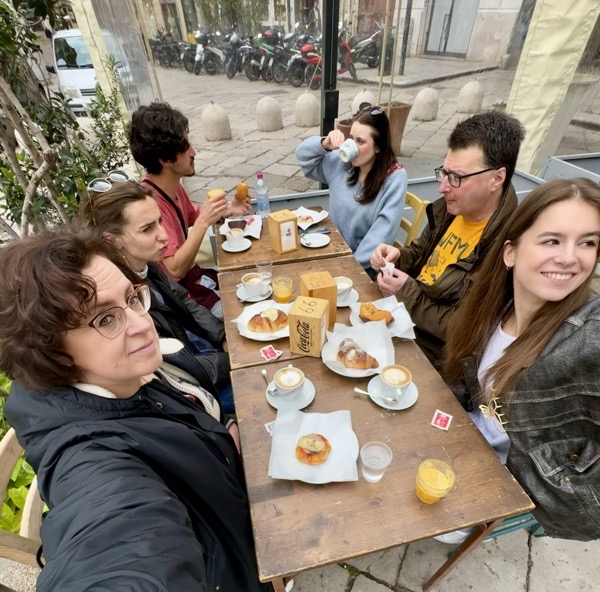
A quick bite on Piazza San Domenico before the road.
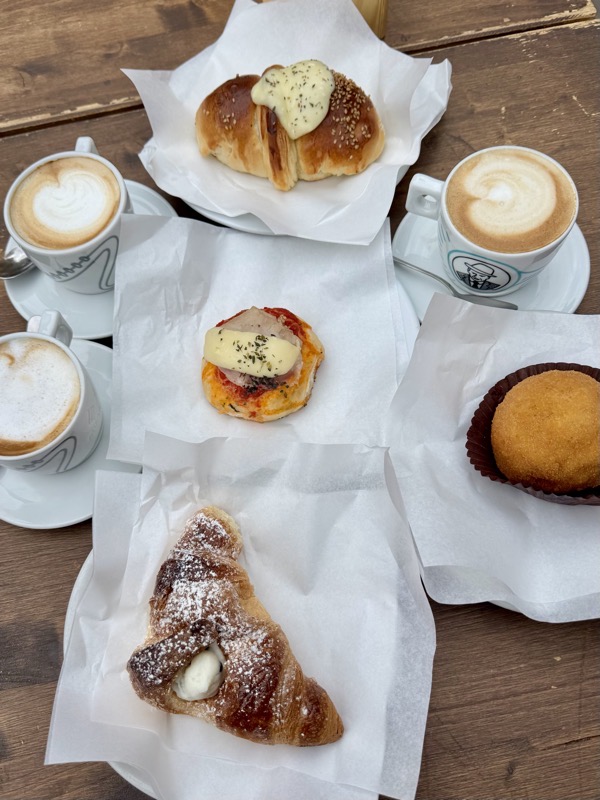
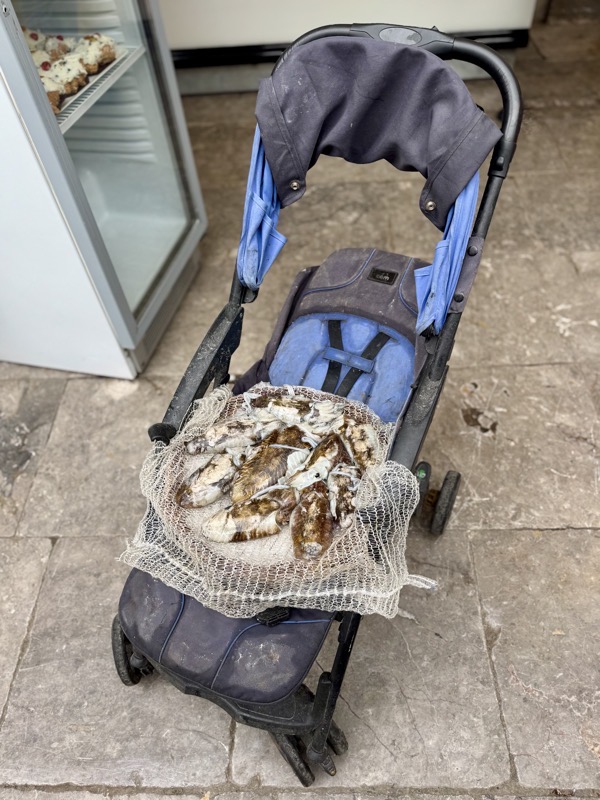
A delivery of fresh oysters to Di Notto Teresa Maria.
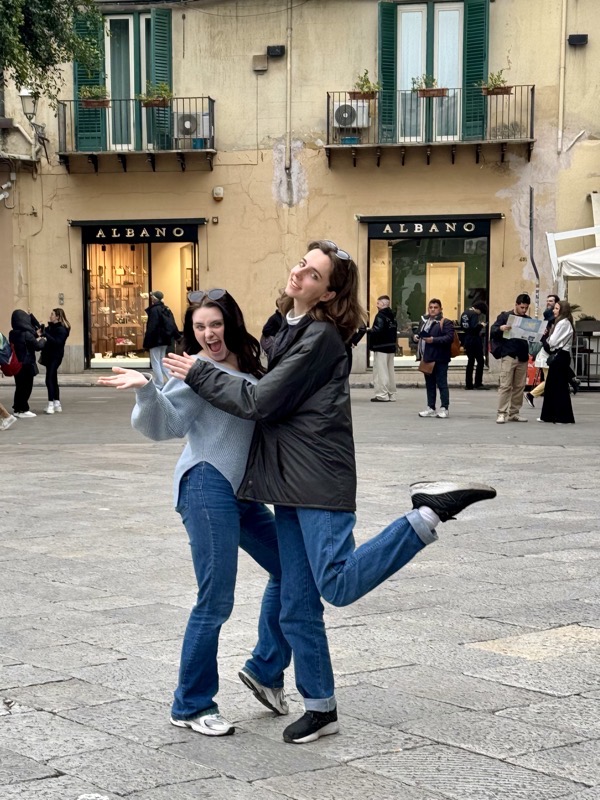
The actors walked with us to the car and we parted ways. Their road was to Salemi for another performance and we were on our way to Segesta.
Later, we would meet them for dinner somewhere around Salemi.
The road to Segesa did resemble at some point the scenic parts of New Jersey’s Route 287 and that guy traveling around France came to mind:
— No matter where you go — it’s New Jersey, New Jersey, New Jersey.
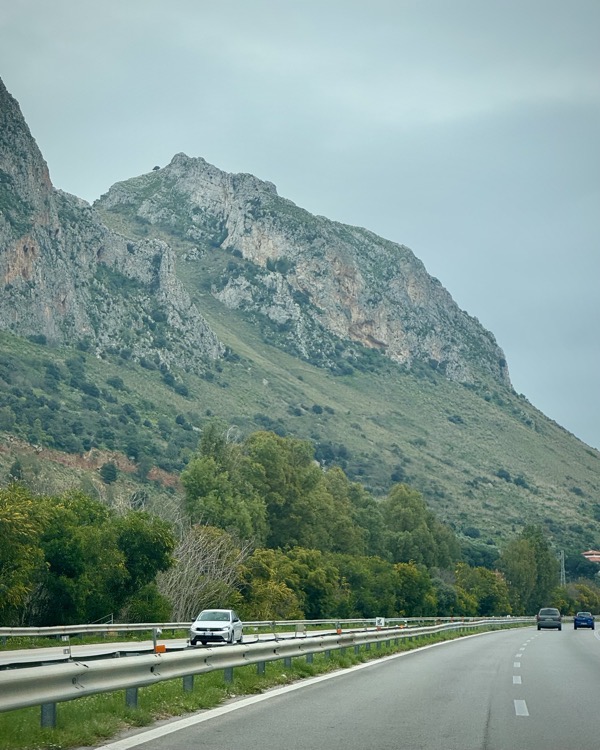
As the roads became more rural, the scenery began to change.
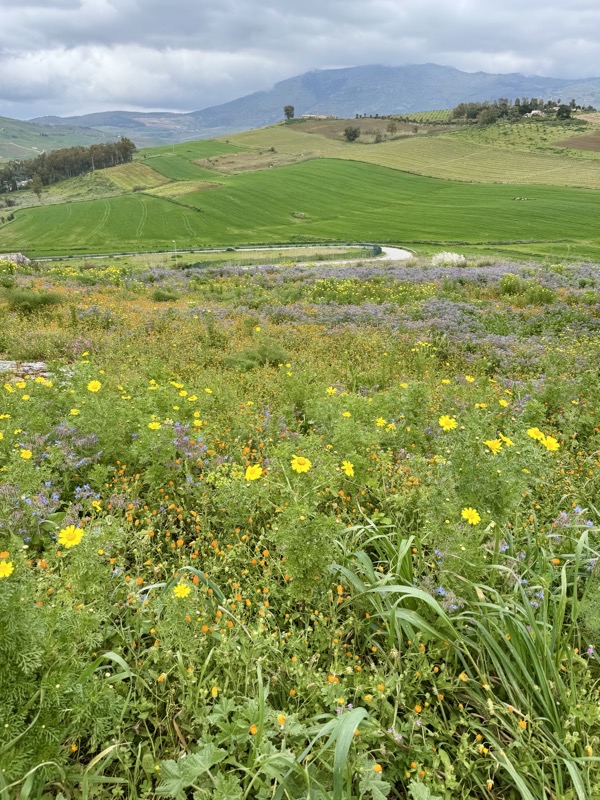
The green color in Italy was greener and the abundance of wild flowers in every direction was so different.
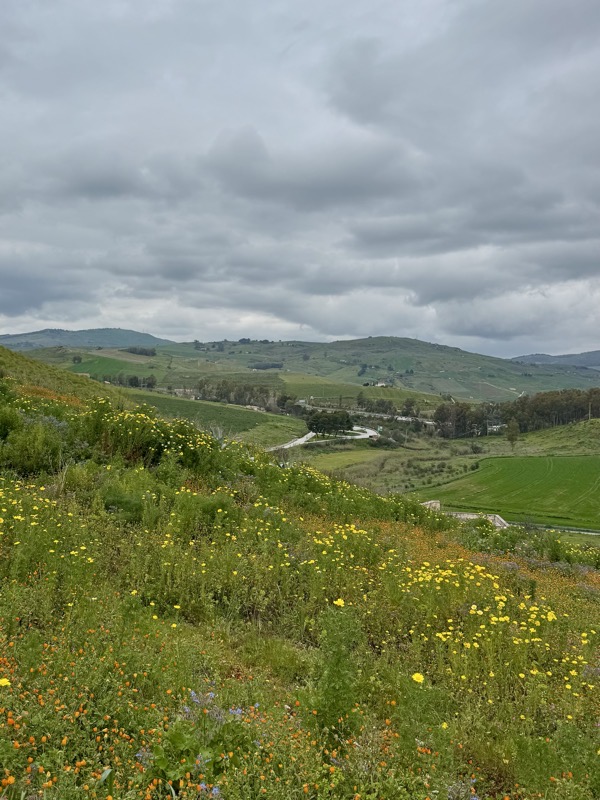
The story goes that a group of Trojan fugitives came to settle in this area after their home city was destroyed. There are other versions of how Segesta came to be, but the Greek influence here is obvious.
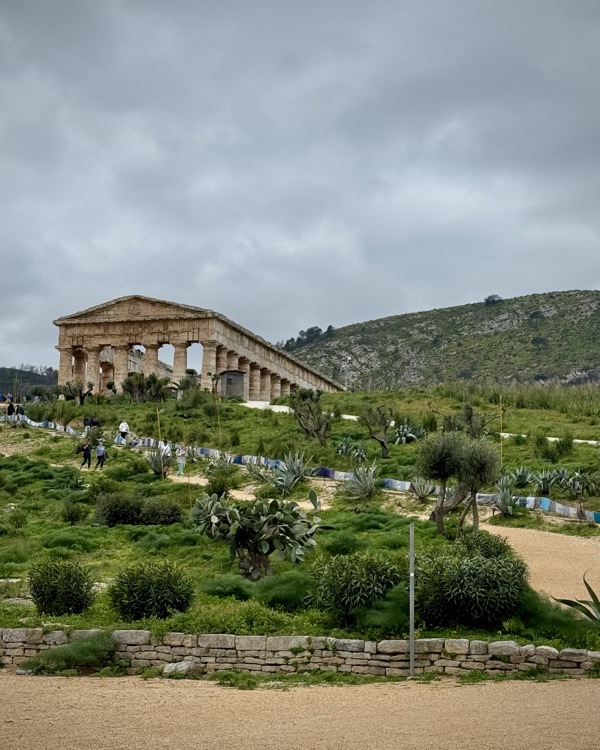
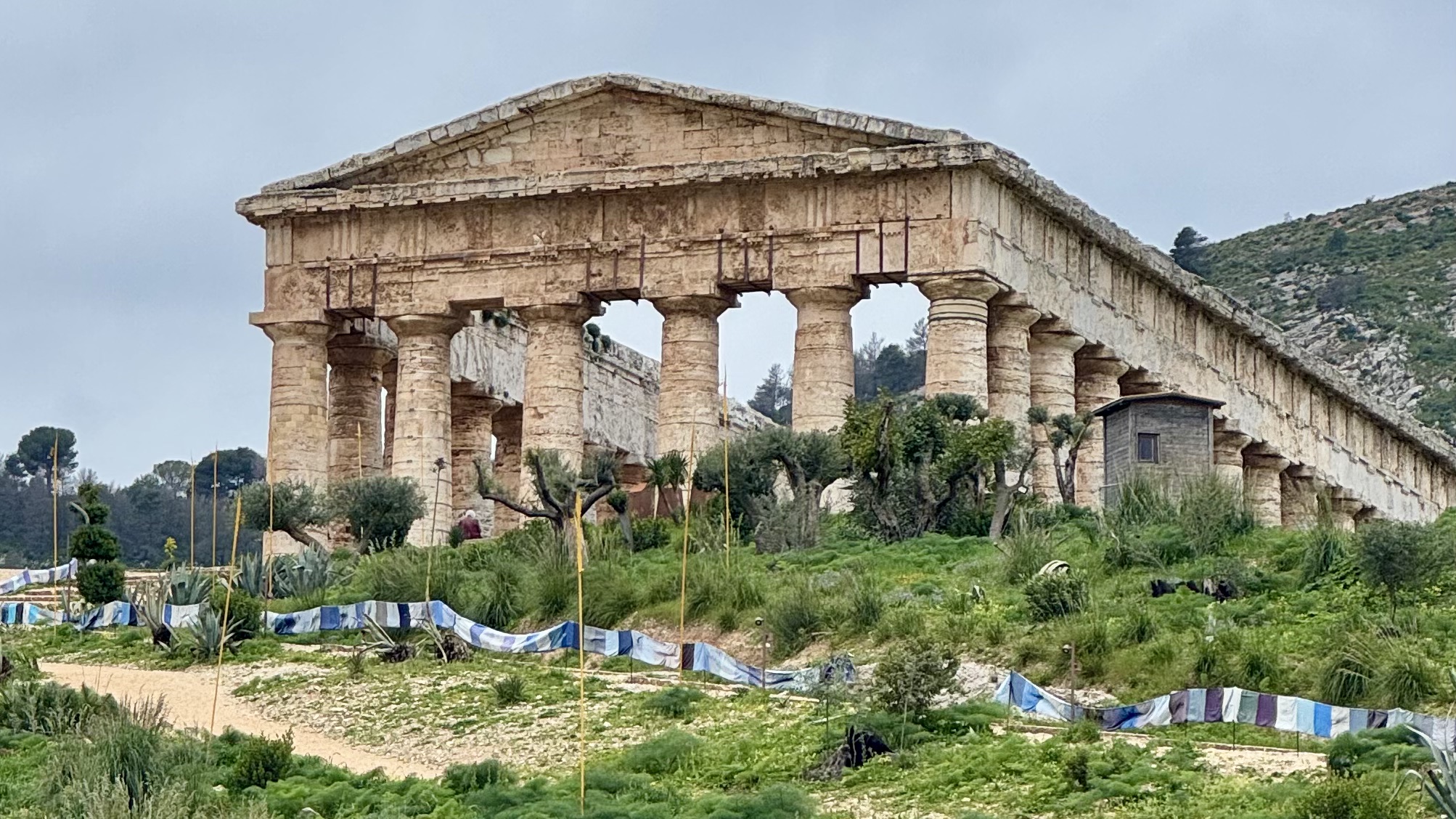
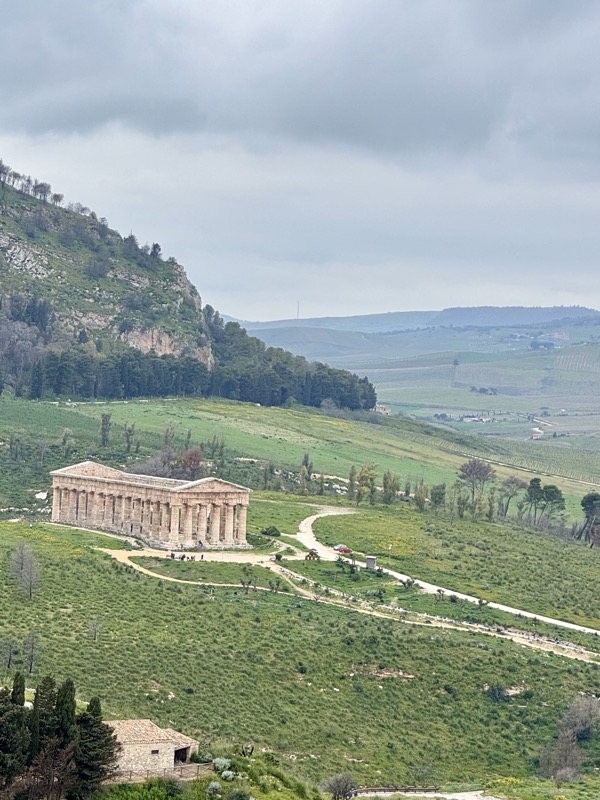
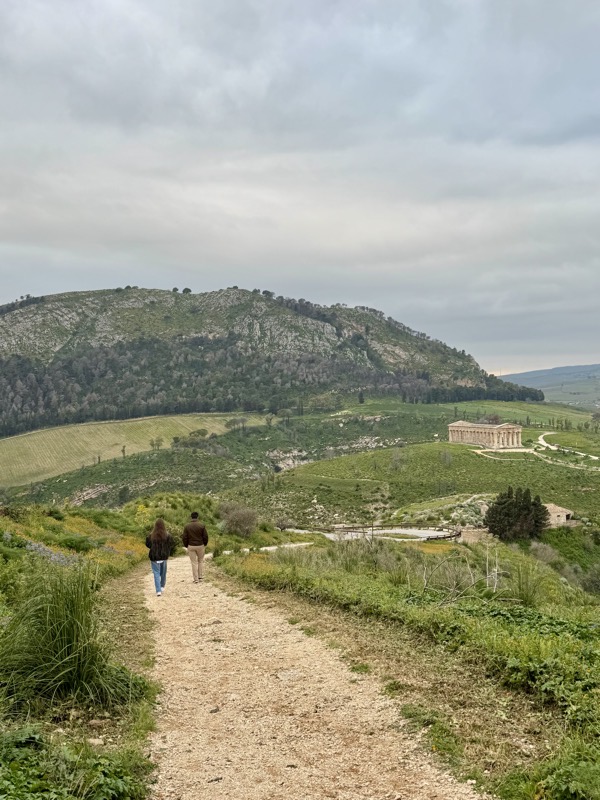
On the hilltop outside of Segesta sits a Doric temple built around 420-430 BCE. The temple was never completed because of the wars Segesta was involved in and, at the same time, none of these wars managed to destroy it.
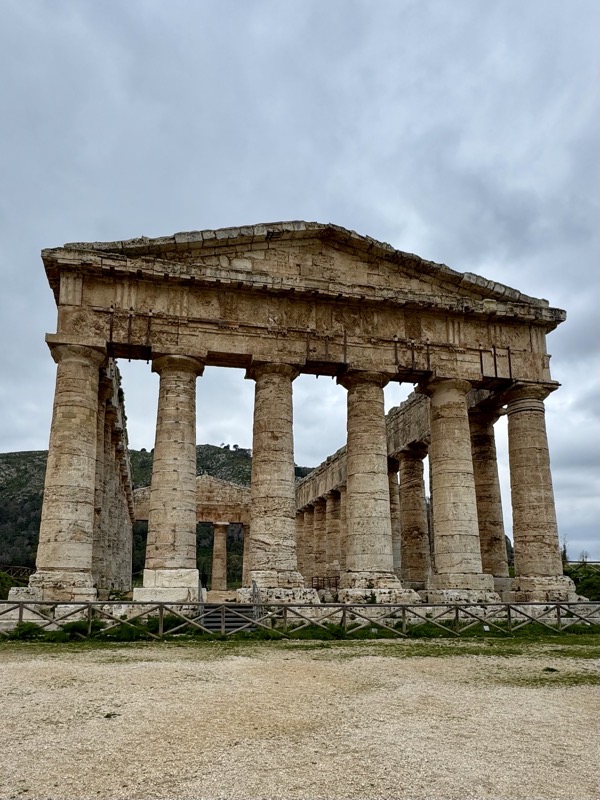
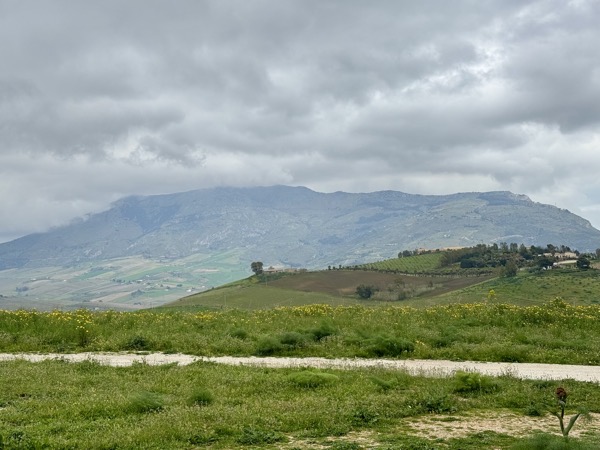
From all sides, the Temple of Segesta is surrounded by spectacular views.
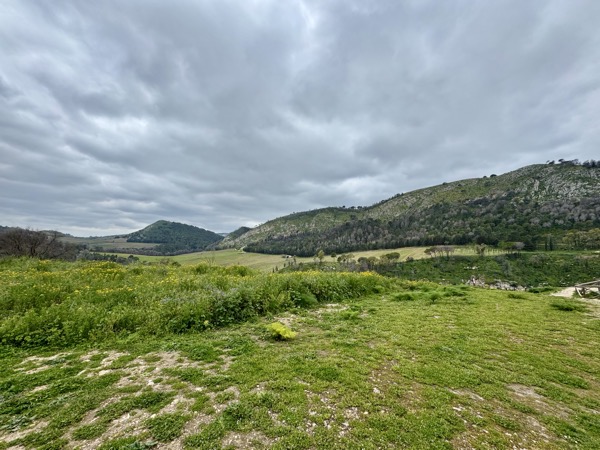
In every direction, this beauty without pretense, without crowds.
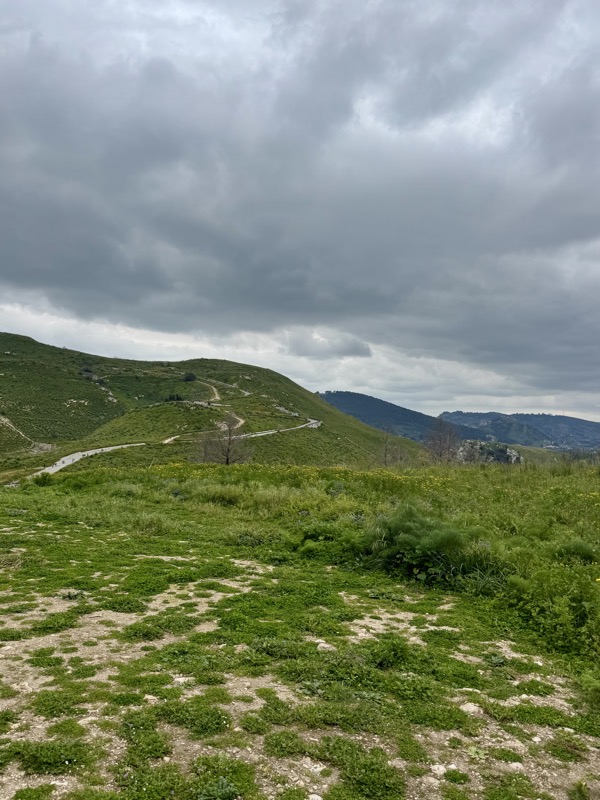
The landscape around was reminiscent of so many movies from the past, stories, and books that the place was quite emotional.
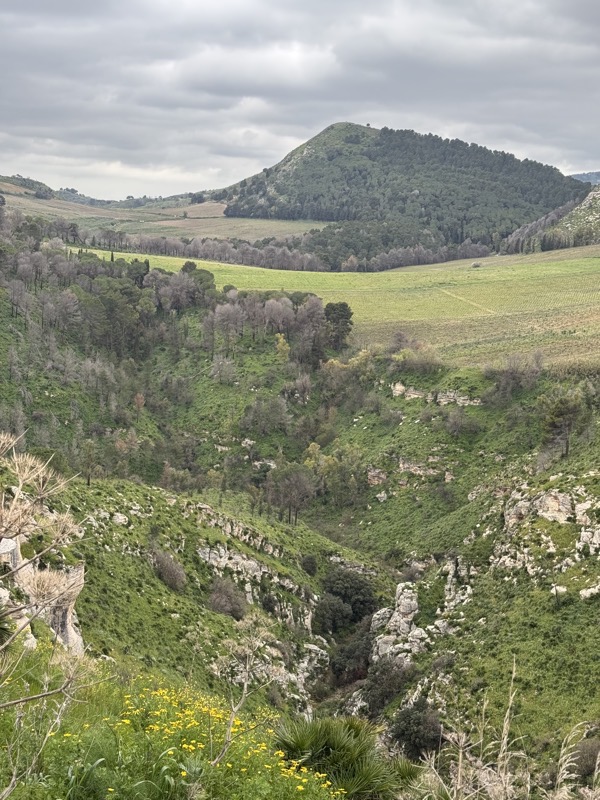
Even the yellow calendulas growing in abundance in every direction stirred different feelings. I don’t remember seeing them growing with such ease since my grandmother’s garden in Kursk.
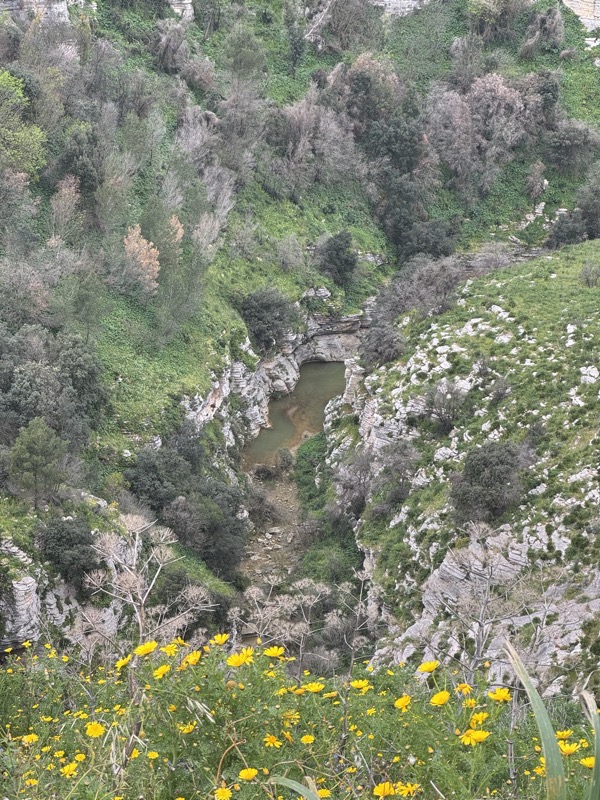
Quiet ruins of the temple that had probably been at some point a statement of wealth and influence.
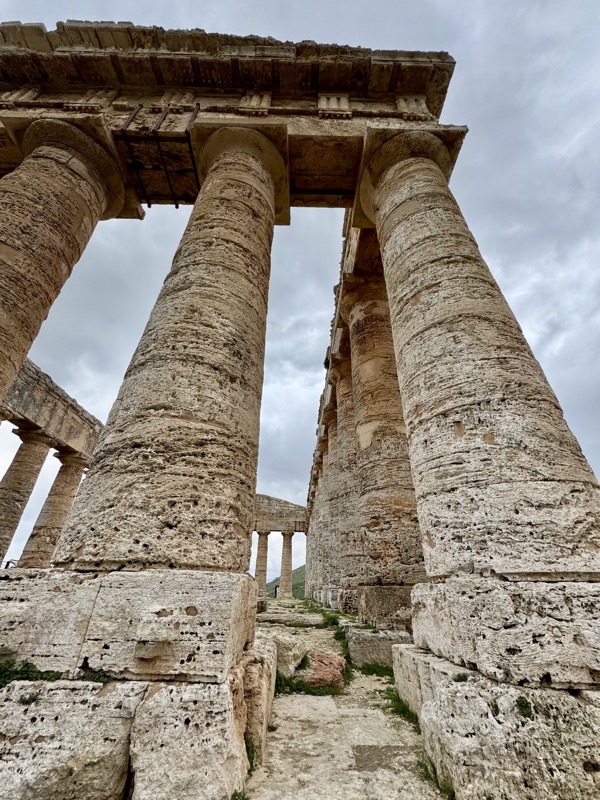
There is no roof, nor floor, the columns are not finished. But even in its unfinished state it looks so dominating and impressive.
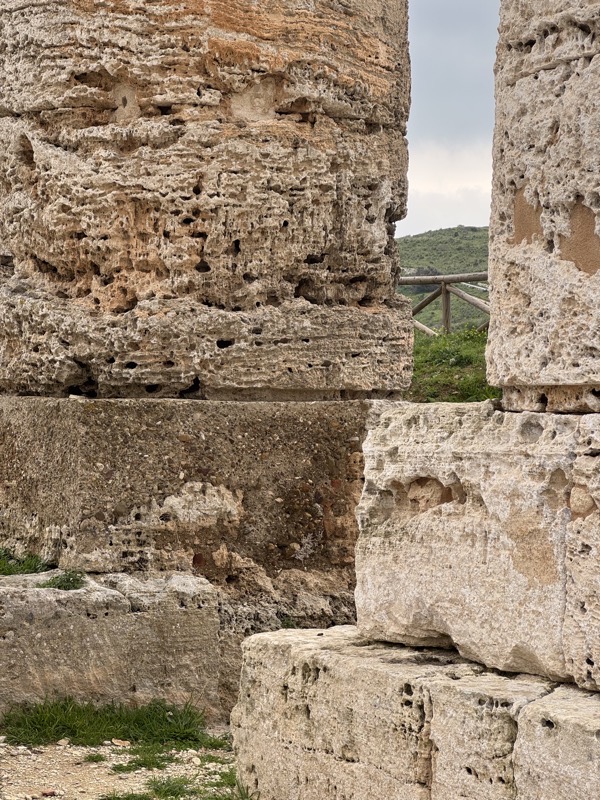
We walked around the temple and went inside. Absence of tourist crowds was a huge benefit. March is definitely a time to experience this place.
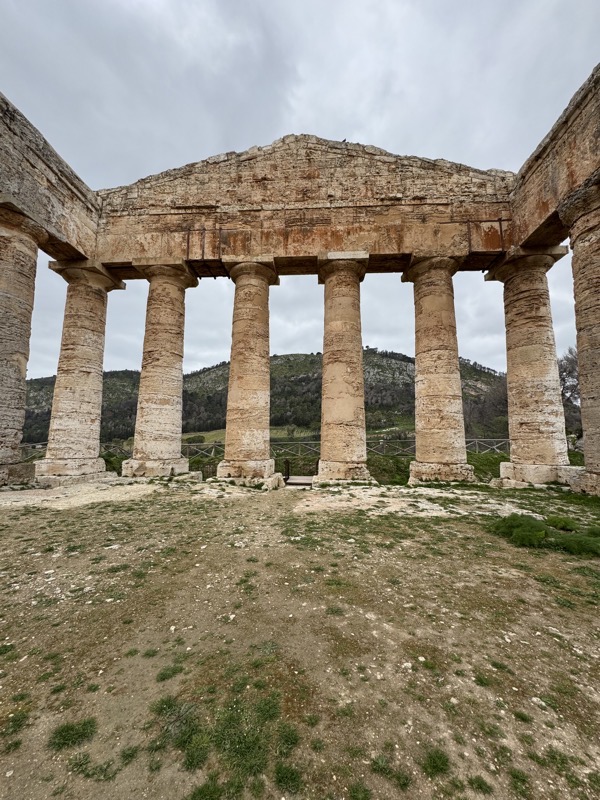
The amazing part is how the temple organically blends into the landscape surrounding it.
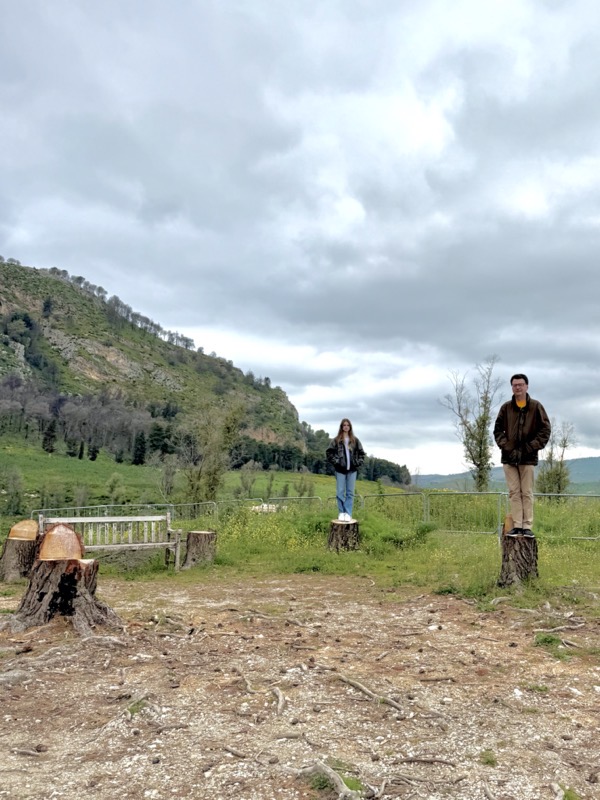
We tried to blend in, too.
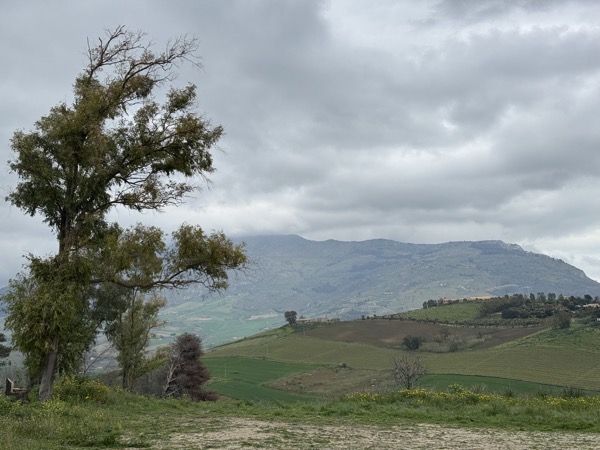
More views towards the Madonie Range in the direction of Palermo.
Somewhere down there in the fog is Gulf of Castellamare.
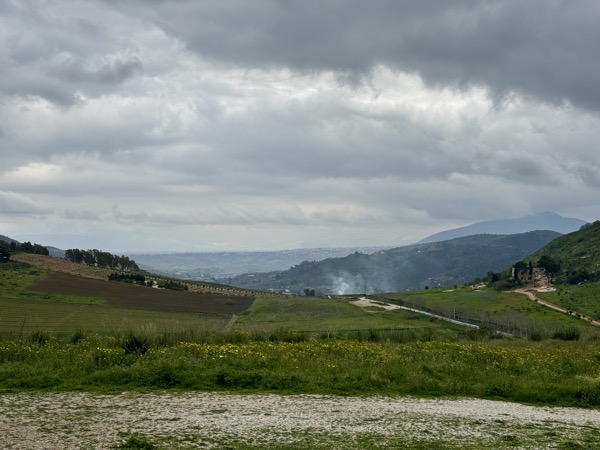
Peaceful and uncrowded. Honestly, a cloudy day was perfect for visiting dreamy rolling hills of the countryside.
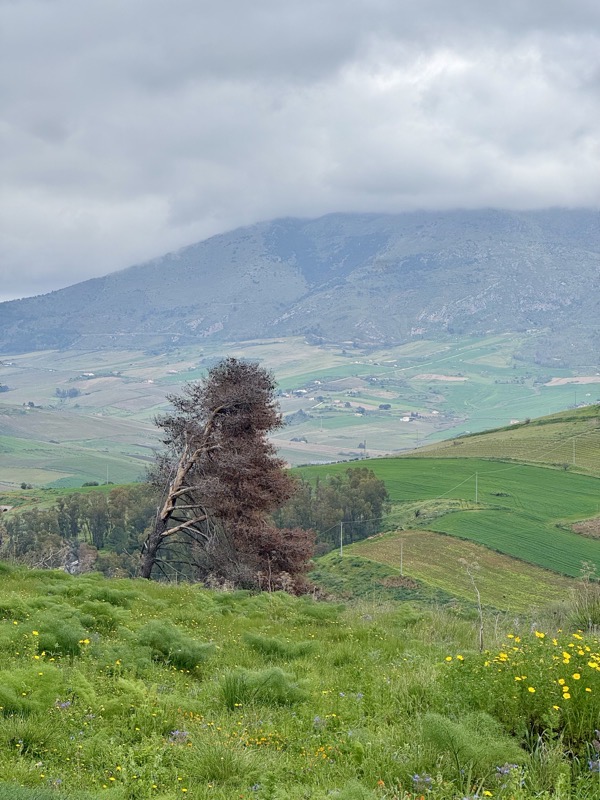
We will move this direction west, towards Erice, tomorrow.
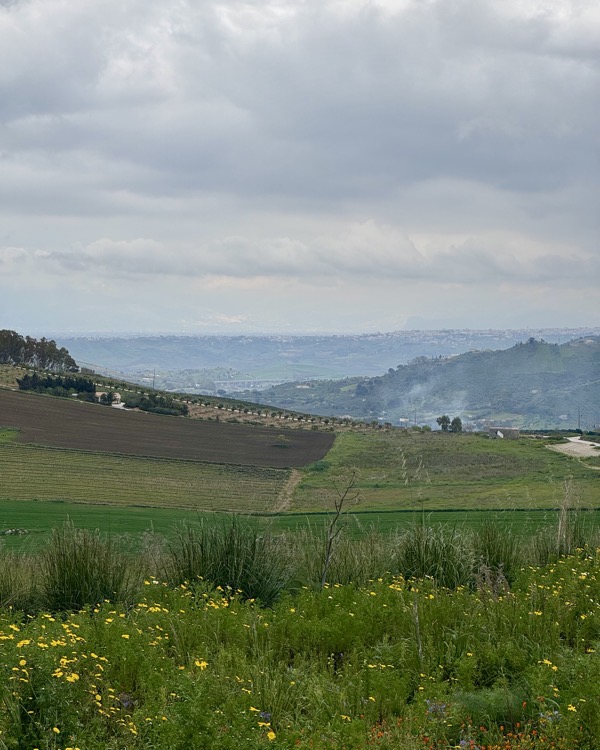
The road up Mount Barbaro towards the Theater of Segesta. There is a bus that can take you up there or you can walk.
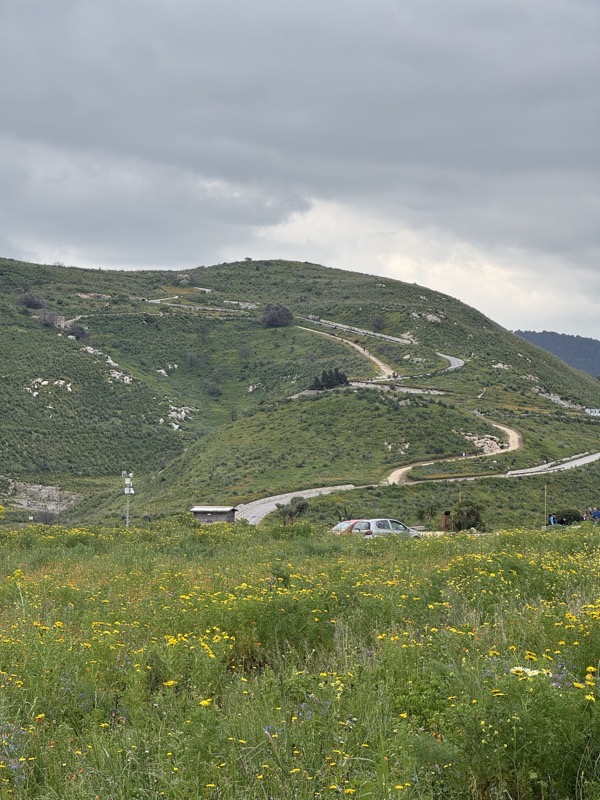
Before heading up towards the theater we walked around the Temple not to miss any views. How often do people come twice to the same place? The world is so big and time is so fast.
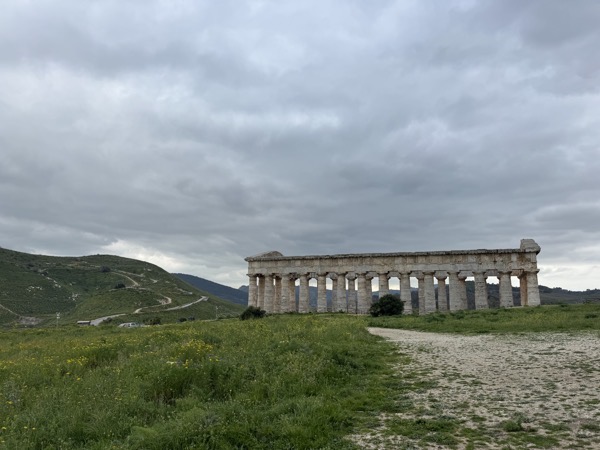
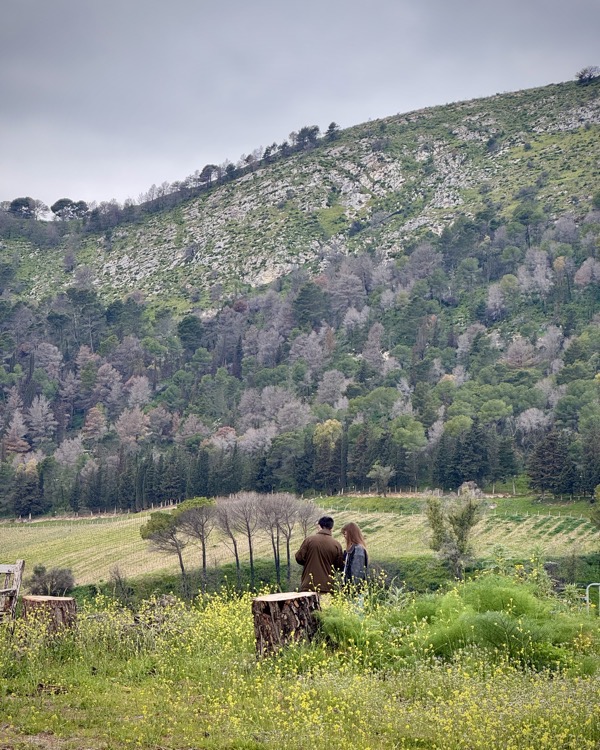
It was the end of March. The leaves were not out yet and the temperature was perfect for climbing up and down the hills.
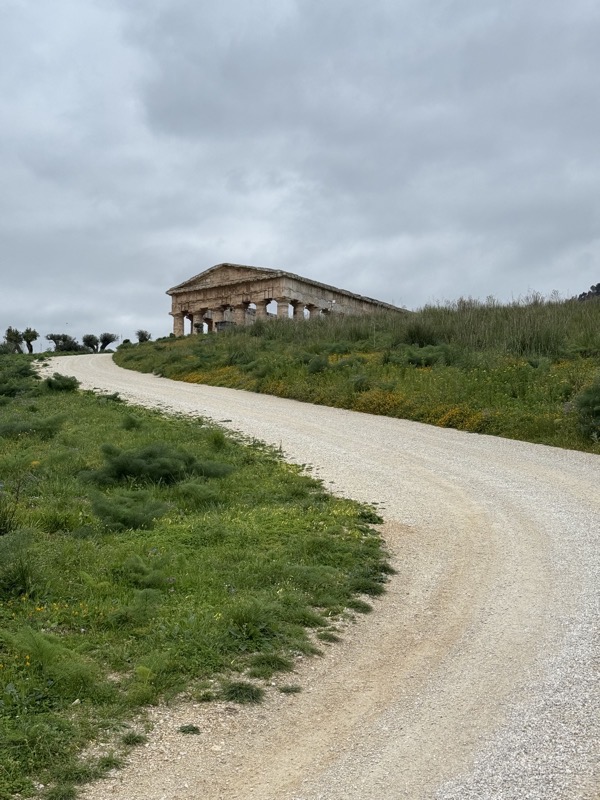
Before going up towards the theater, the road took us down towards the parking lot. Another view of the Temple — how it is visible on the initial approach.
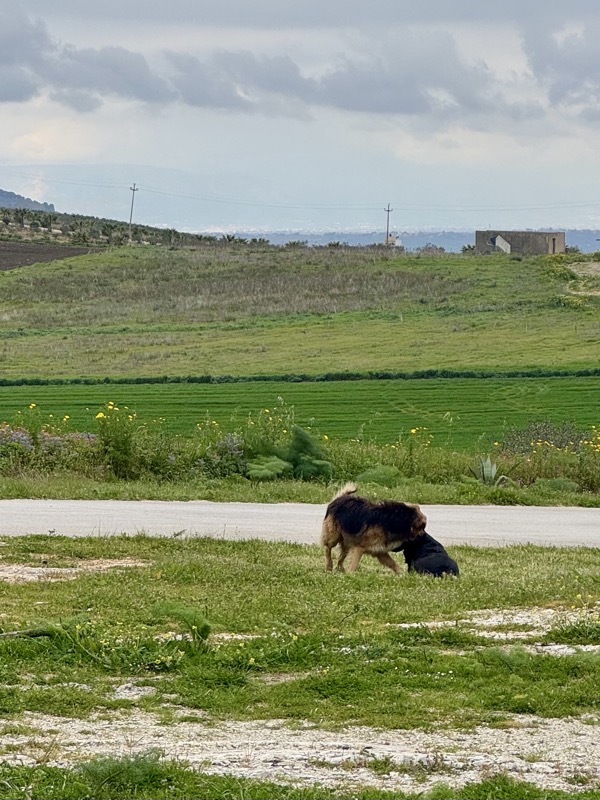
Lucky dogs of Segesta unaware of how lucky they are on these hilltops.
And we’re off to the theatre.
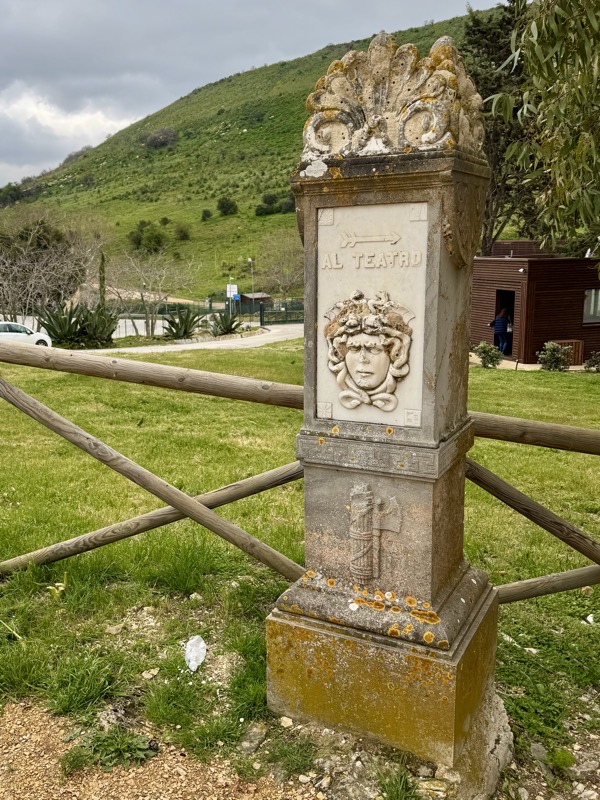
The path from the temple to the ancient theater on Mount Barbaro is a 1.5 kilometer climb. There is a bus that can take you there but we preferred to walk up and back.
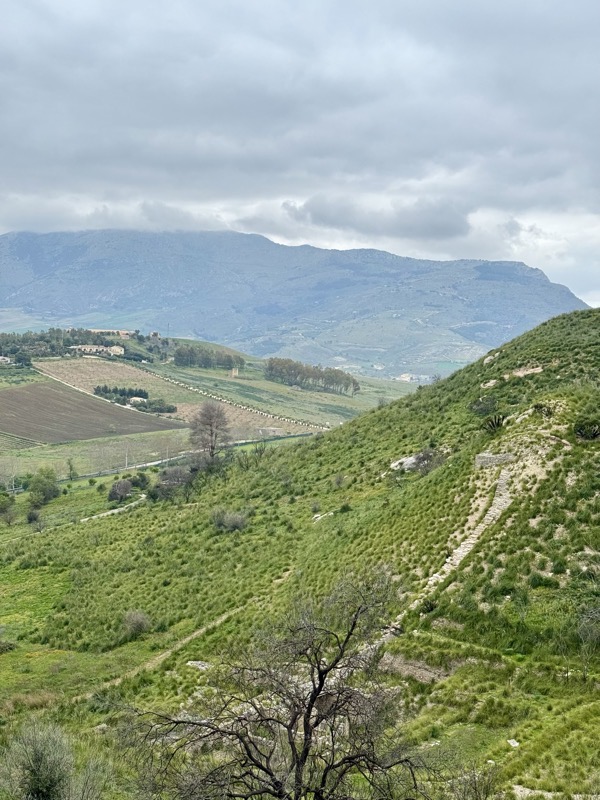
More views of the Temple opened up as we were walking up the mountain.
On our way up, we were taking breaks not to take a rest but to take time.
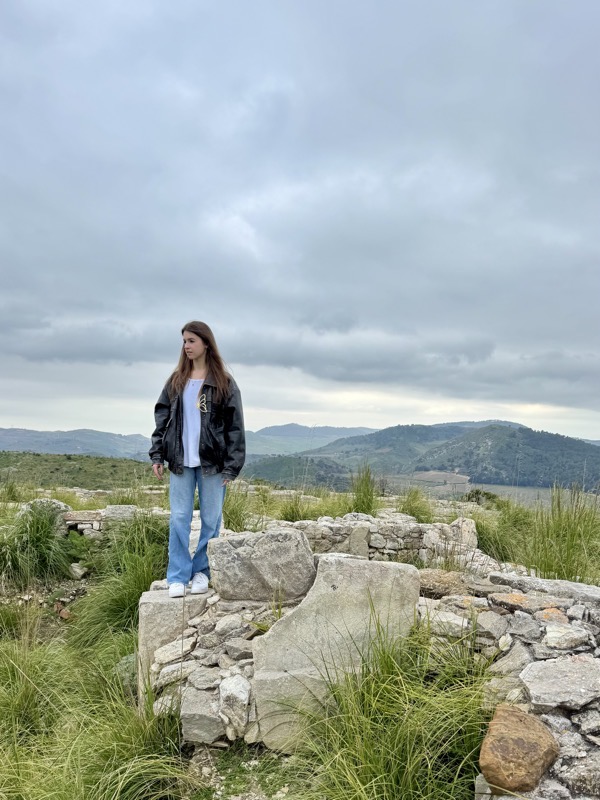
Besides the temple and the theater, remains of other ancient structures are scattered across this archeological park.
Public square is now in ruins but once it was a gathering place and the center of life.
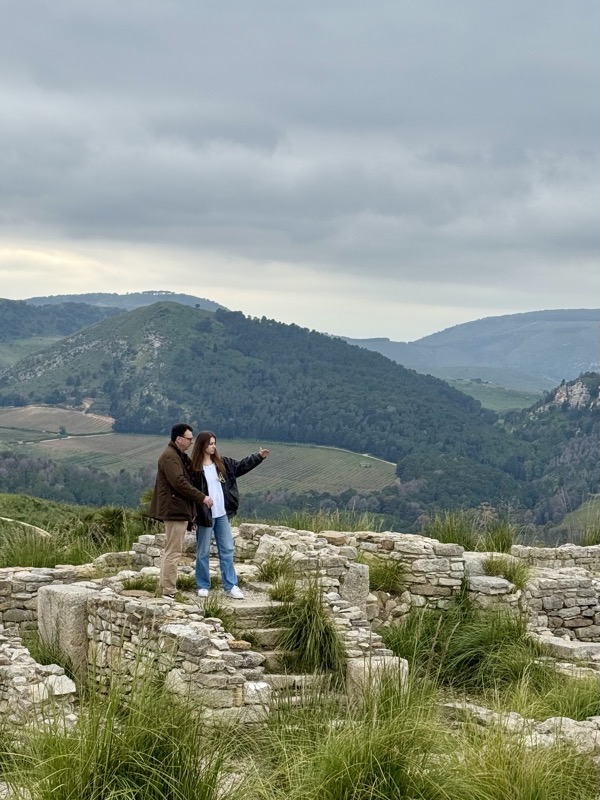
In the distance there are plenty of fields that have be kept farmed and tilled by people, but those people are nowhere visible.
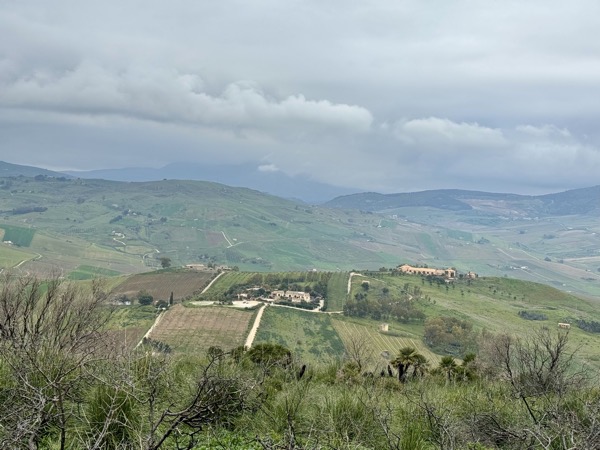
Another view of the temple about 400 feet below the amphitheater.
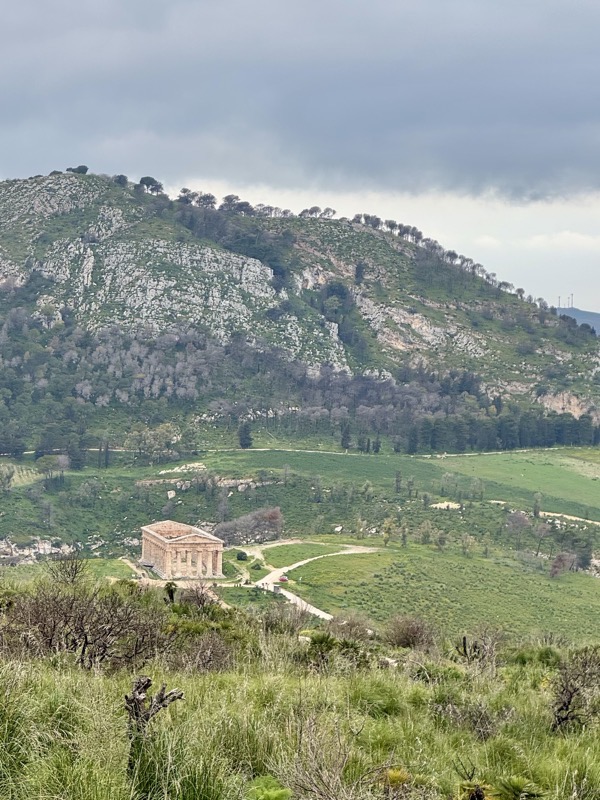
Calendula flowers are everywhere growing and spreading without any trouble like a bright orange carpet. I picked up some of seeds to see if I could get them going around our ancient building in New Jersey to remind us of the trip.
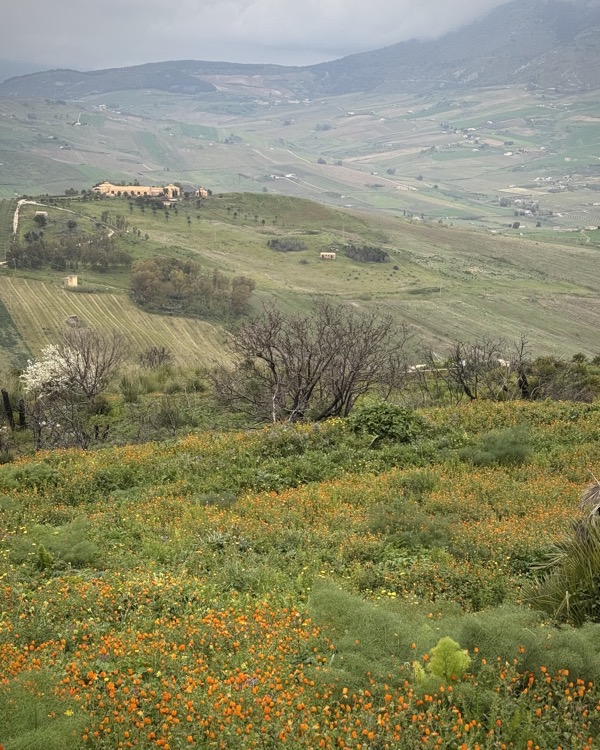
The theater of Segesta sits at top of the mountain and the backdrop here is the breathtaking horizon of Sicily — sea and mountains.
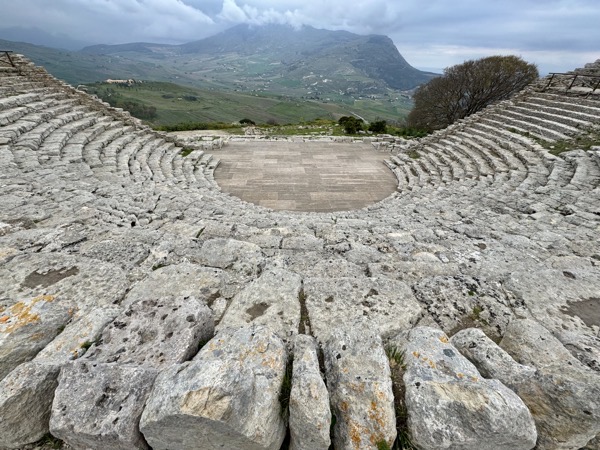
Around four thousand people can gather in this amphitheater carved directly into the slope of the mountain.
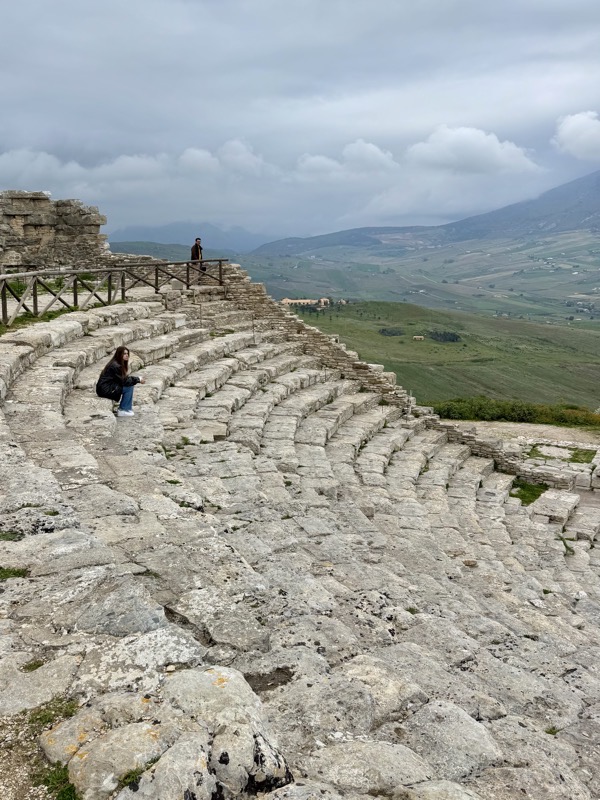
This soft golden glow below the stage.
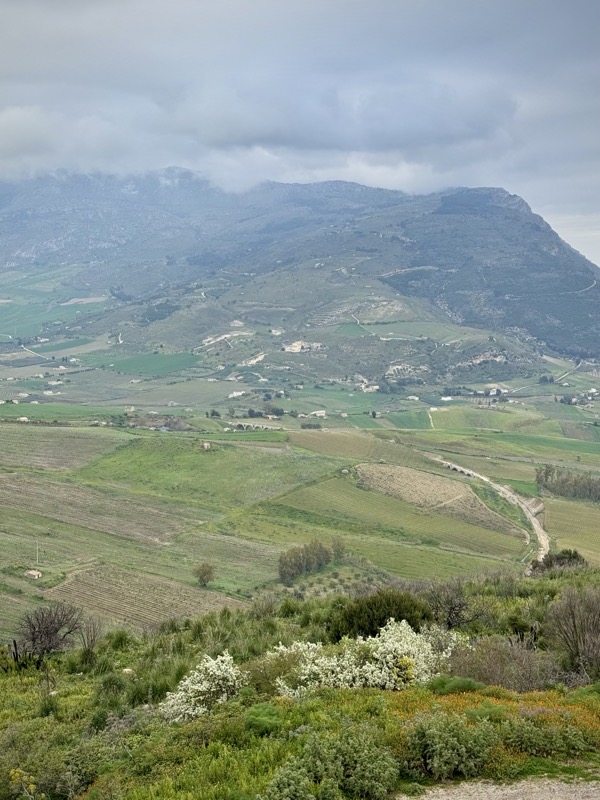
The stage and the orchestra seats are in a perfect condition and during the summer months open air performances take place here. This must be unforgettable to be present here especially when classical works are on stage.
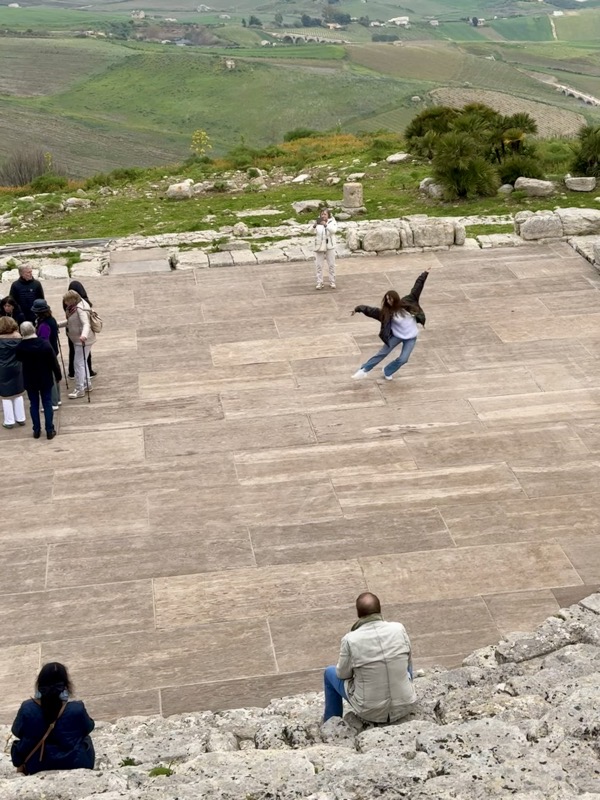
We had a private performance of our own.
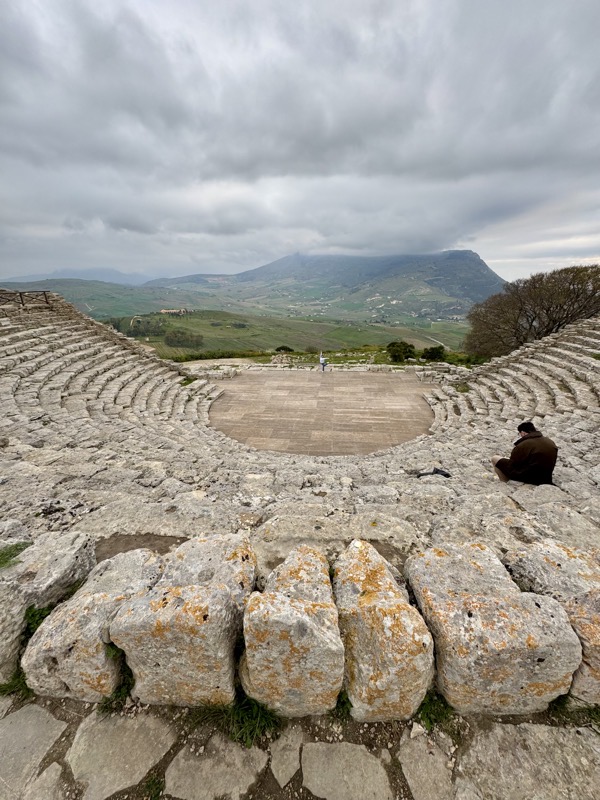
A postcard from Sicily.
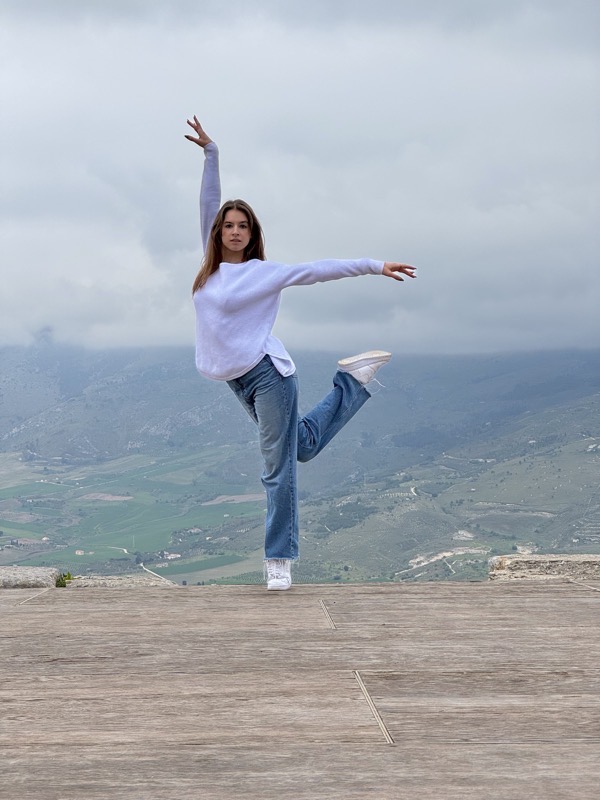
The sky lifted up a bit and gave us a really clear view of Gulf of Castellamare and Tyrrhenian Sea behind it.
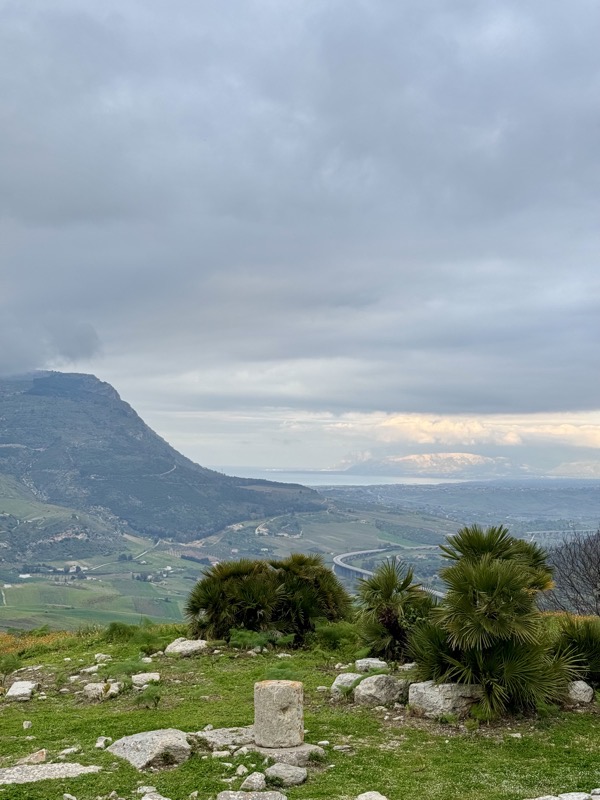
The performance was moving into a sunset.
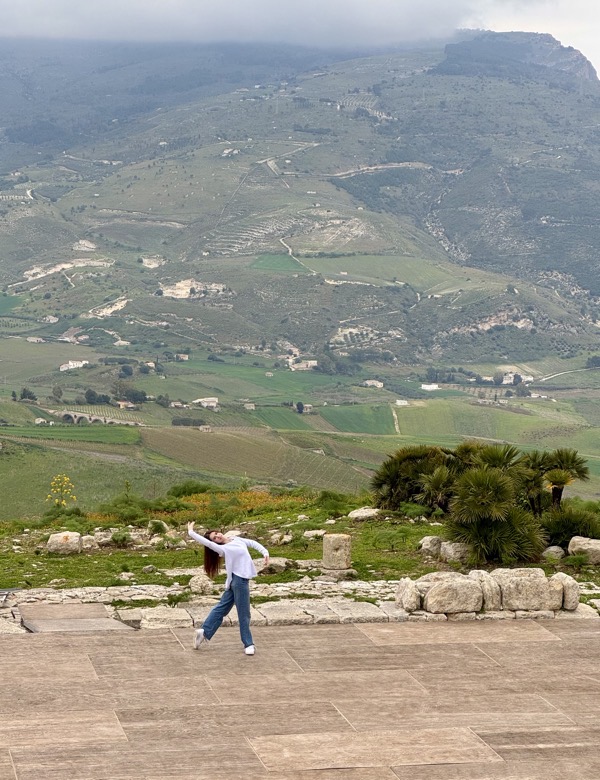
As we wandered from the top down, we went by the foundation of a mosque, a sign of Arabic influence on the island.
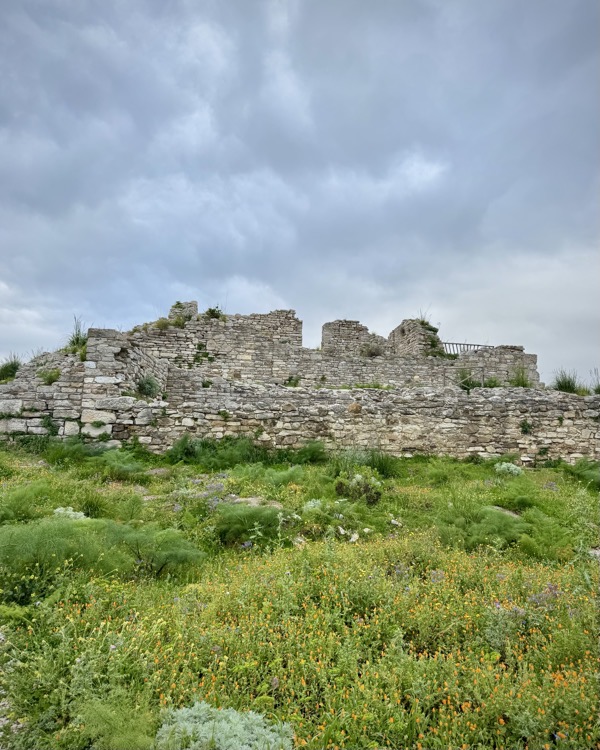
There were remnants of a Norman church and a medieval castle. Walking down step by step was like walking through the layers of time.
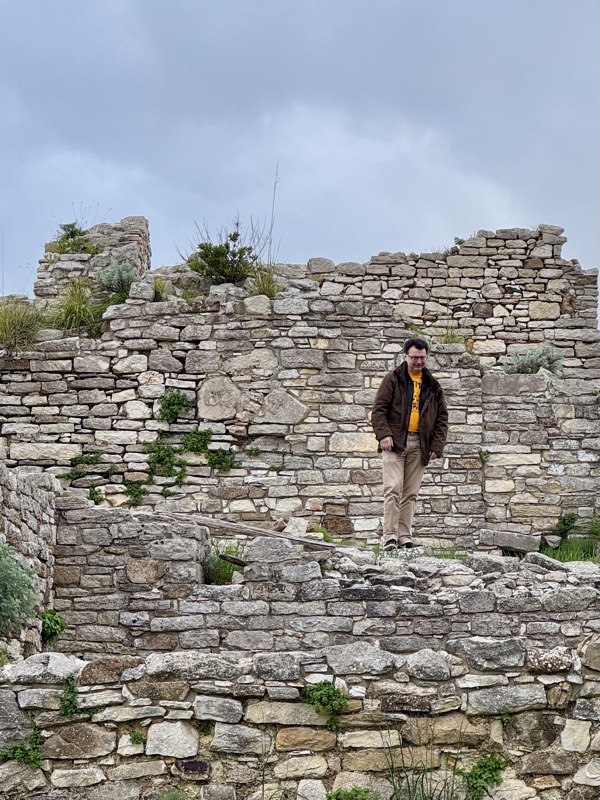
Segesta wore us out. We were circling around a small place but there was so much to see and experience, so many “little walks” that turned into long ones with some serious climbs that only when it started getting darker we realized that we were getting hungry and tired.
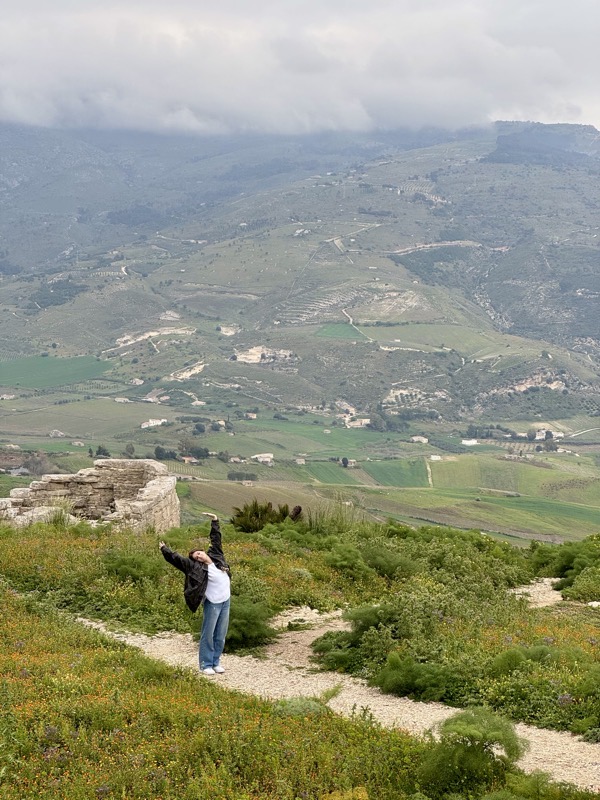
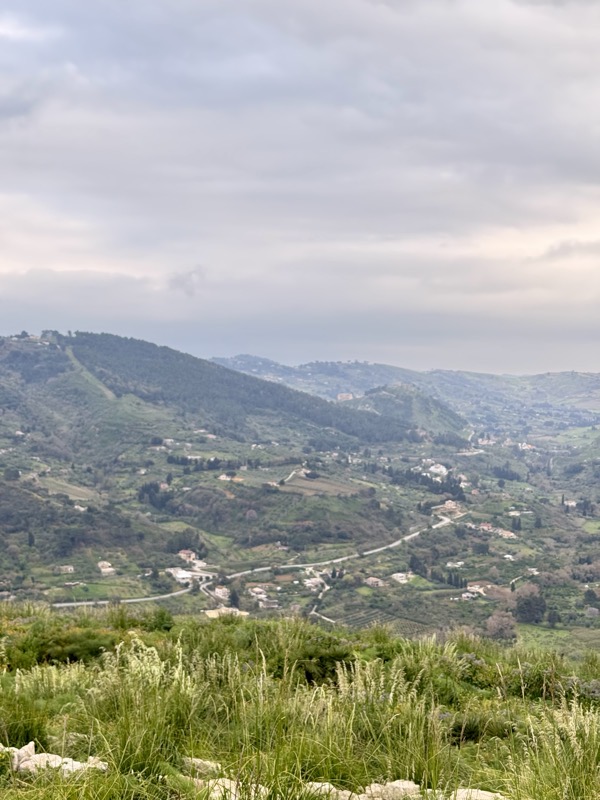
One last look towards the mountains before we hit the road to Salemi.
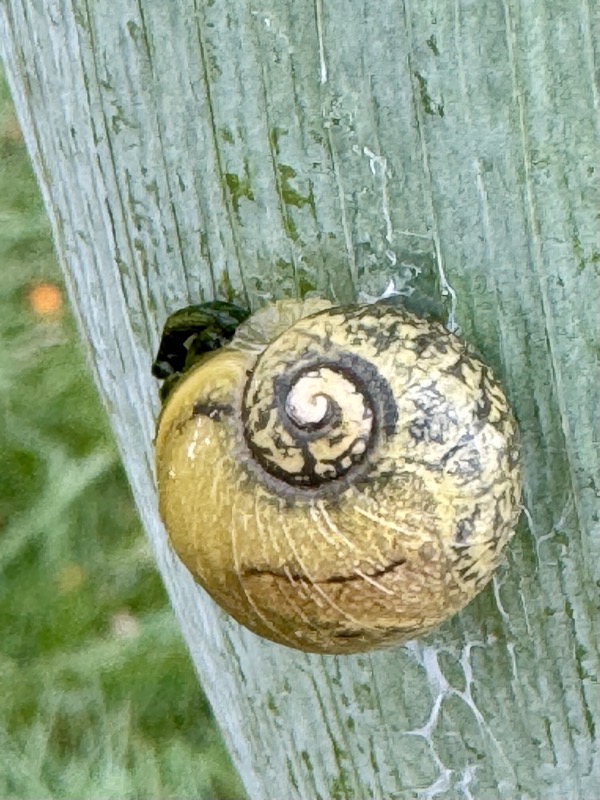
From grand to little. This is one of thousands of tiny snails we saw everywhere in Sicily.
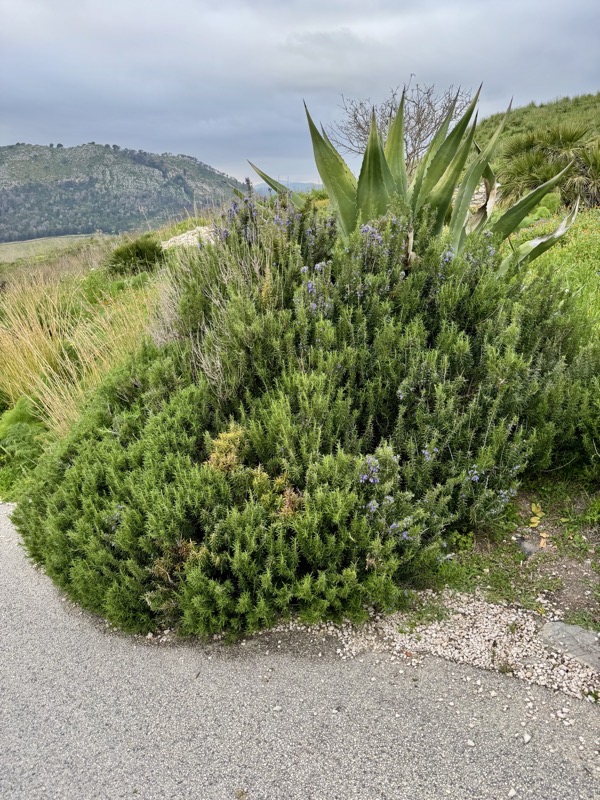
A rosemary bush in Segesta growing just like that on the side of the road. Wild and untended, it is taller than me. Thinking of my tiny plants I try year after year without any success. Oh, what I could have done with the cuttings from this bush!
From Segesta, our plan was to hit the road towards Saleimi, the town where Charlotte was performing that day and find a place for dinner, let Charlotte know and she would meet us there with her friends.
Find a place for dinner? Who would give it another thought taking on this task when in Italy? Little did we know how spoiled we are with 24/7 New York.
Back into the car and on the road with anticipation of something good to eat.
There are no pictures from the ride towards Salemi. It was pitch black the entire way and we were the only car for miles.
When I say pitch black I mean pitch black. The road was maybe one step up from the dirt. Maybe dirt — our car was shaking and clanking — it was a bumpy ride. At one point another car did pass us in the opposite direction on the seemingly one way lane — the magic Knight Bus style:
— Mind your heads, guys!
Salemi met us with more darkness. No street lights, no businesses along the roads, no cars, no people — everything was closed. GPS indicated a few eating establishments. None of them happened to exist in real life.
After a few attempts and circles around empty and dark what one would call a “business downtown,” we pulled over towards a single lit up window with a real person moving inside — an older woman mending something on the sewing machine. Dry cleaners? Atelier? Something like that.
Delegated on a reconnaissance mission, I went in with my culinary knowledge of Italian:
— Mangia? Ristorante? — with three fingers pinched together towards my mouth I shrugged my shoulders and produced a pleading expression.
The woman understood but looked puzzled. She pointed to the clock and shook her head: too late.
I popped out my phone with the GPS findings and showed them to her. Giving it a thought, the woman broke into an enthusiastic flawless Italian, hands and all, speech flailing both arms towards the left along the road. I listened and nodded.
Not having understood a word of what she said, I returned to the car and confidently pointed:
— We should go left.
— What is there?
— Food.
After a few minutes on the road, we saw lights and a group of young fancy dressed people congregating around one corner with bottles in their hands. They must have gotten those bottles somewhere close by.
Confident after my chat with the seamstress in my ability to communicate in Italian, I headed towards the group with three fingers pinched, “mangia,” and a question in my eyes.
Hallelujah! One person in the group spoke English. She pointed me “up the hill to the right, then down the road, then around through the arch to the right, then left, then right, the down again.”
— There should be a door with no sign that looks like an apartment but there would be food.
Hesitant and irritated, my hungry companions got out of the car and followed these vague directions.
Indeed, there was a door at the end. And there was food behind that door, at Palazzo Monroy.
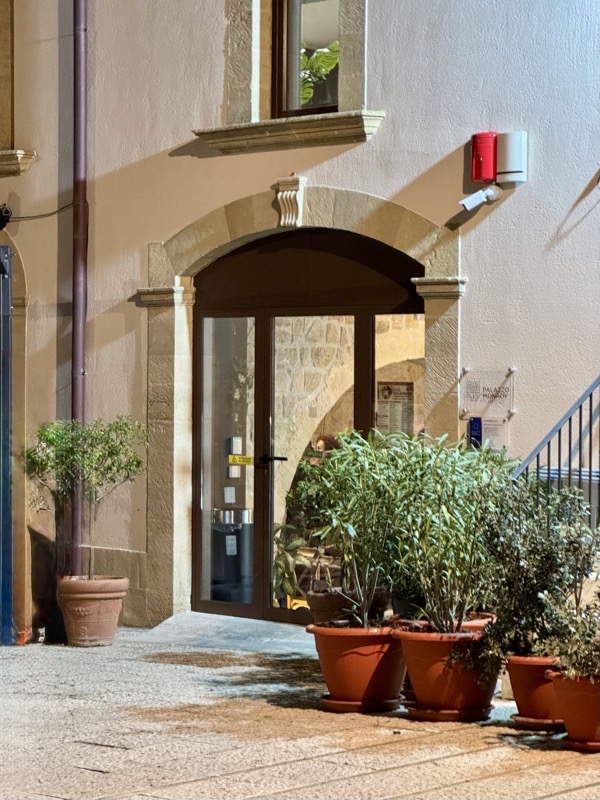
A shocking contrast after a dark long and empty search in what felt middle of nowhere to see this chic setting with dressed up people. Despite the late hour, they were definitely gearing up for some serious party.
At first, the restaurant staff felt skeptical about us. It seemed like they did not want their gathering smudged with strangers. But once we were recognized as harmless and hungry foreigners, they found a table for us and brought up a menu.
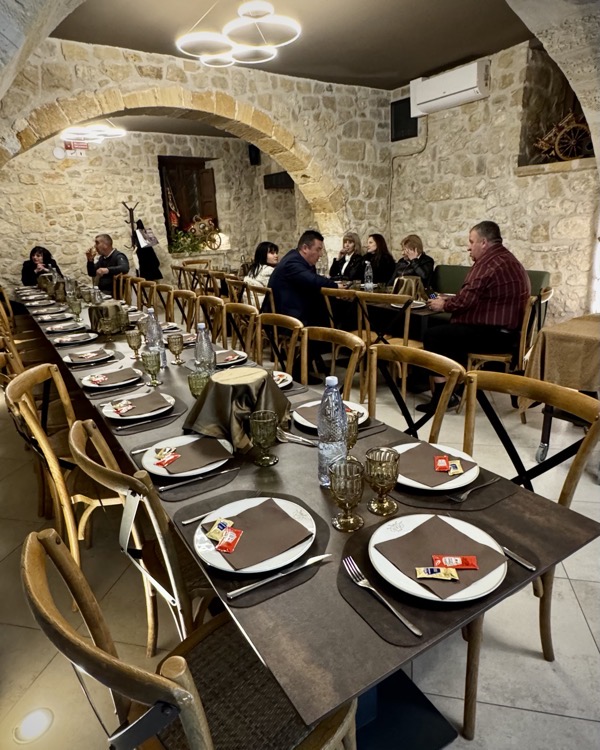
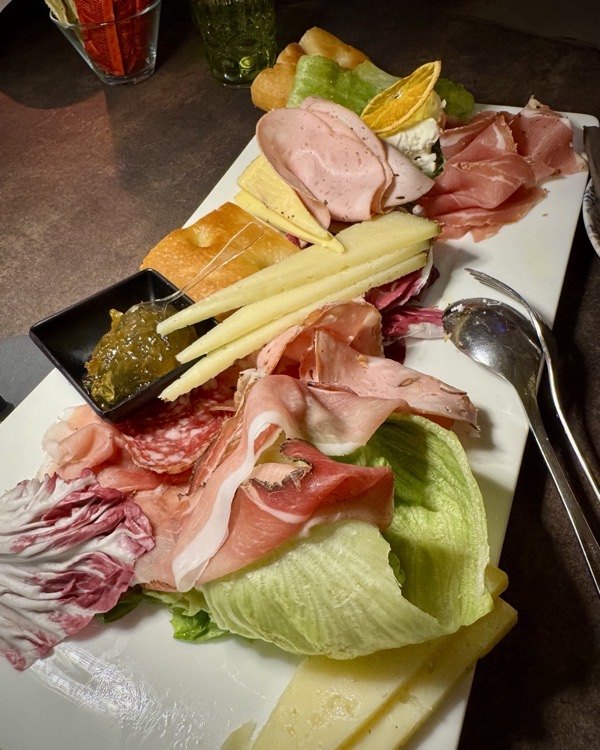
Once at a legitimate place with food, we texted Charlotte and ordered an obligatory platter of degustazione di salume e formaggi.
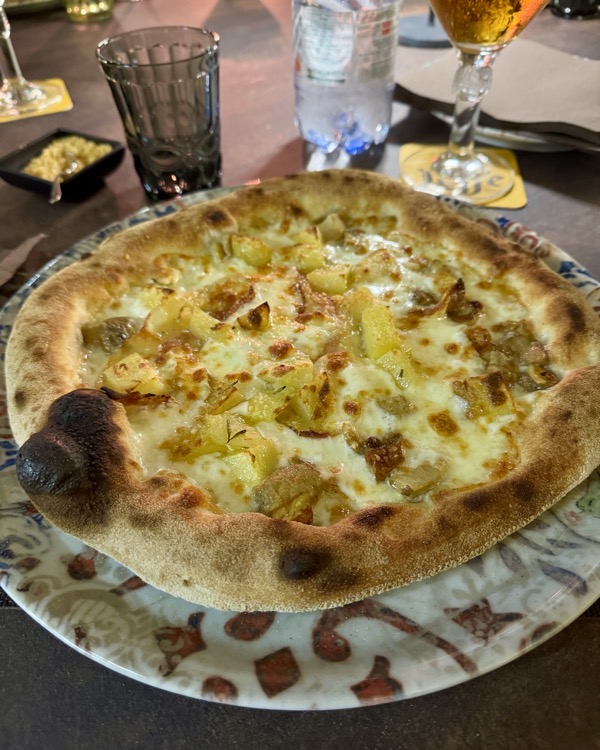
When the actors found us and joined the table it was all pizza, pizza, pizza.
I think this one was mine — Monroy — with mozzarella, scamorza, porcini, guanciale, parmegiano, and rosemary fried potatoes. What got me was “la plù apprezziata” printed next to it. I know my culinary Italian.
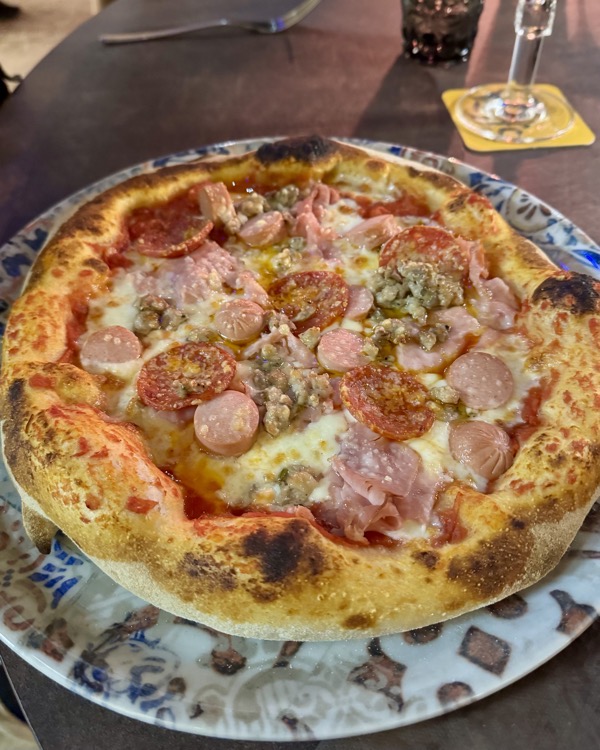
This is Sapurita with prosciutto cotto, salsiccia wurstel, and salami picante.
This one seemed to be San Danielle with prosciutto crudo.
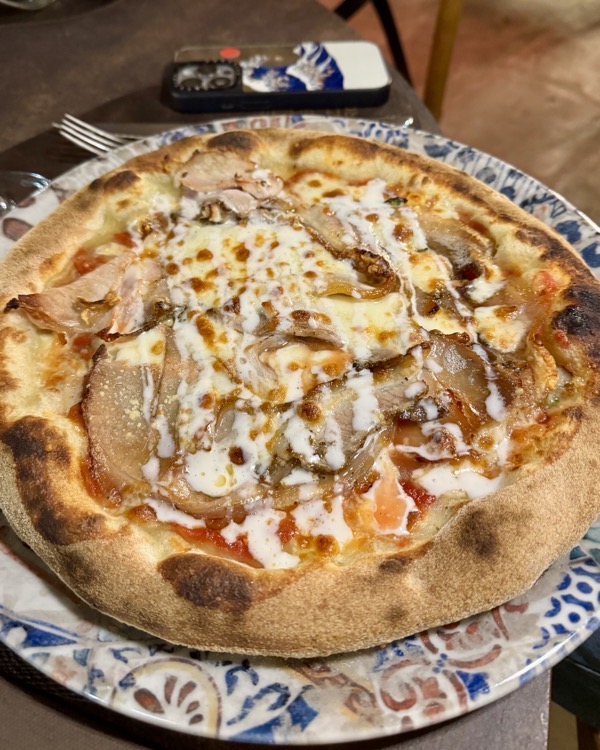
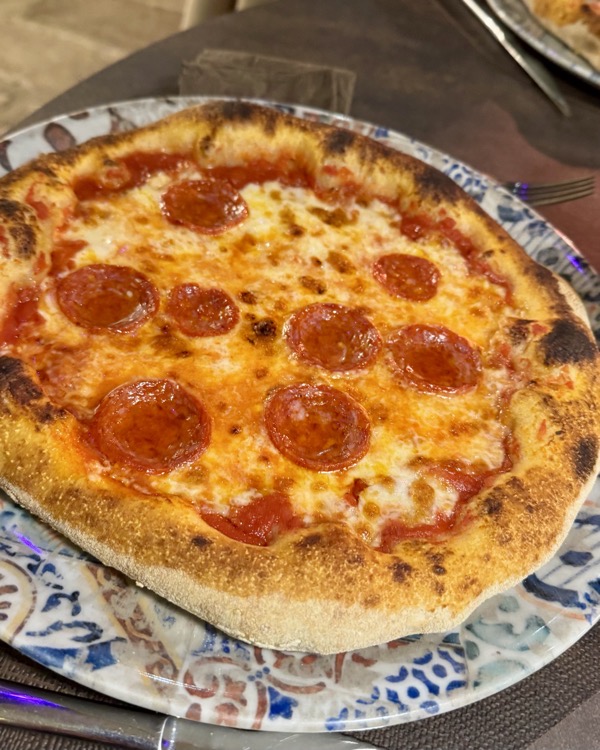
This one had to be Diavola with salami picante.
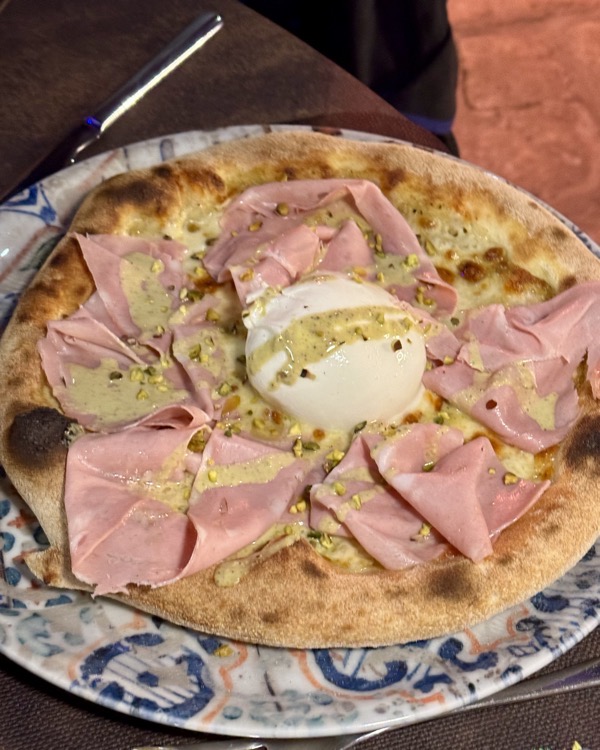
The picturesque envy of the table — Pizza 4 Castello with burrata from Puglia, mortadella, and pistachio pesto.
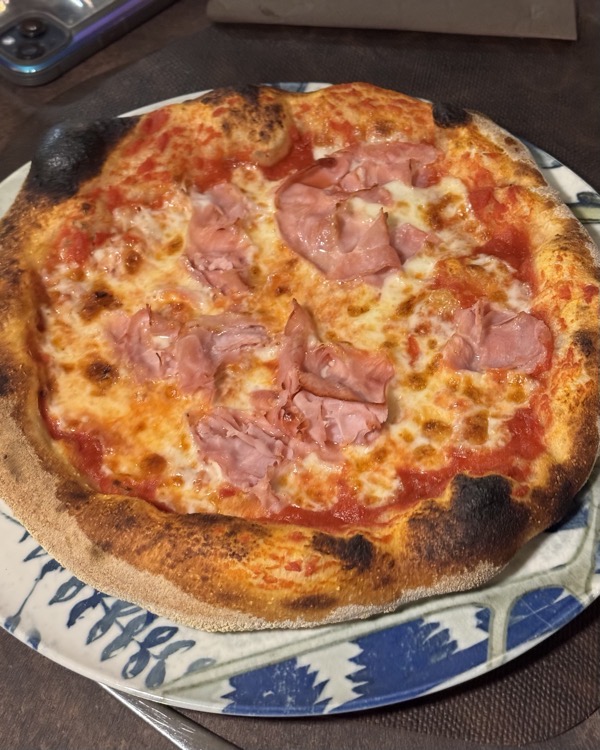
This one was Romano with mozzarella and prosciutto cotto.
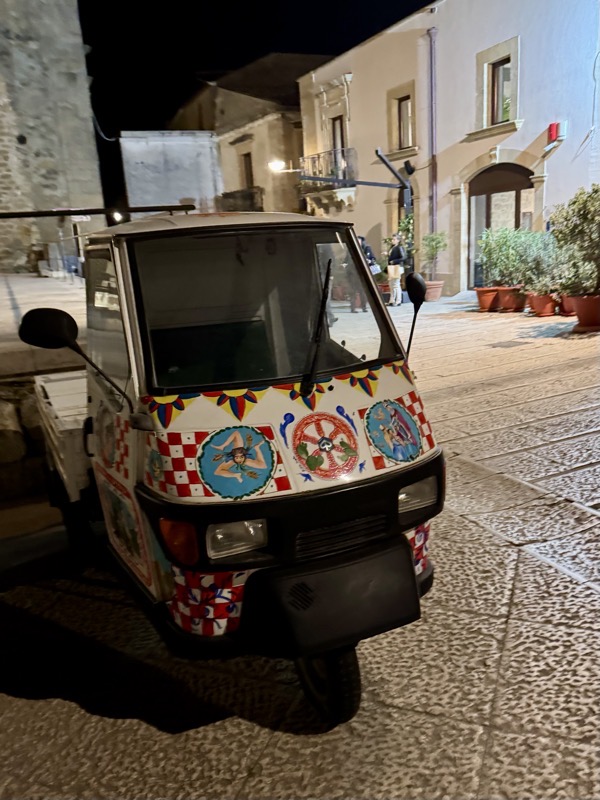
A colorful tuk-tuk with Trinacria on the bumper was parked in front of the restaurant for a stranded tourist.
Salemi Castle, another Arab-Norman monument. On this tower, Giuseppe Garibaldi raised a tri-color flag when, for a day, Salemi was declared the first capital of Italy.
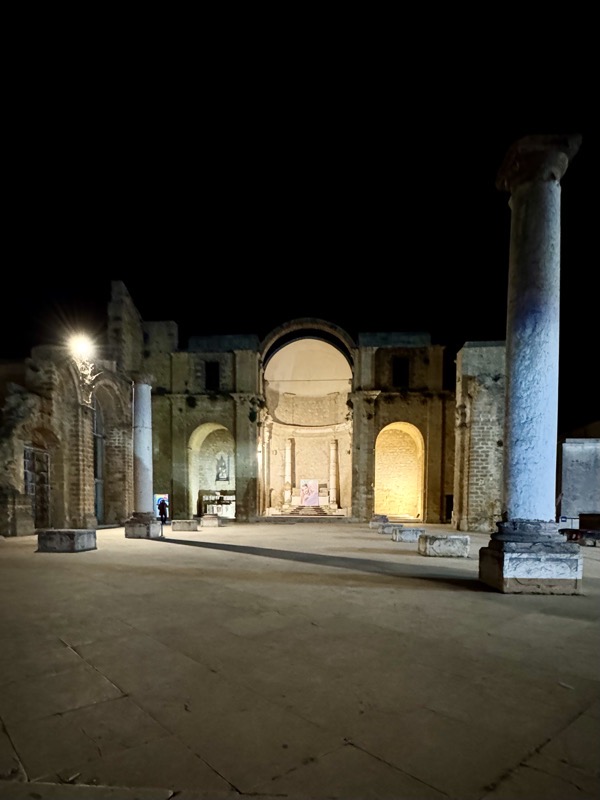
By the end of our dinner it was very late, indeed. We had a ride to Trapani ahead of us. Charlotte and her crew also needed a good night sleep before the next work day.
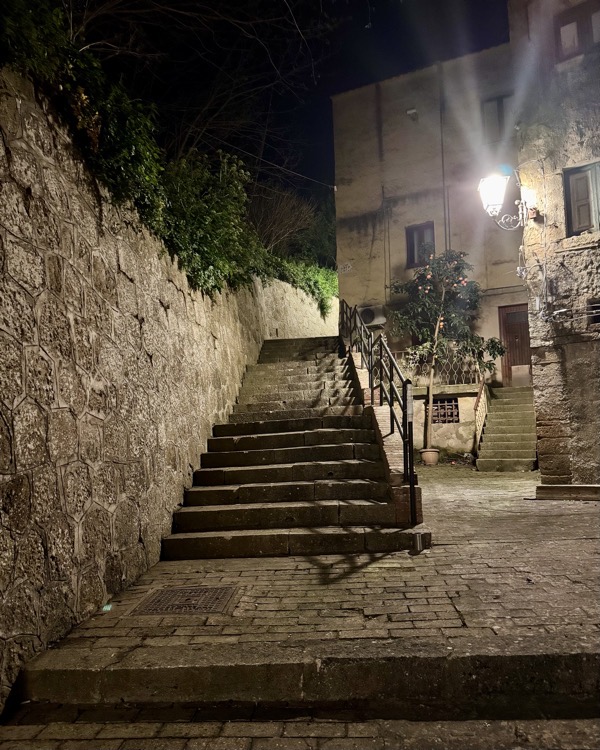
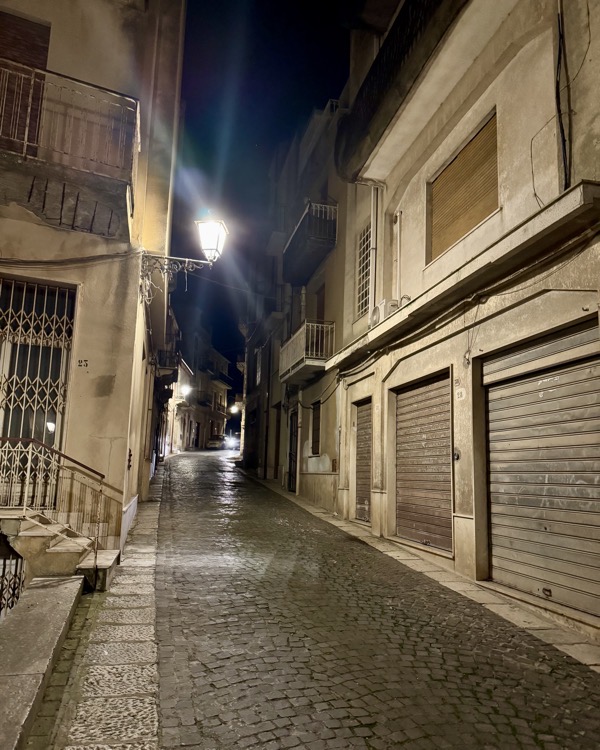
Wandering through absolutely deserted streets of Salemi towards our cars.
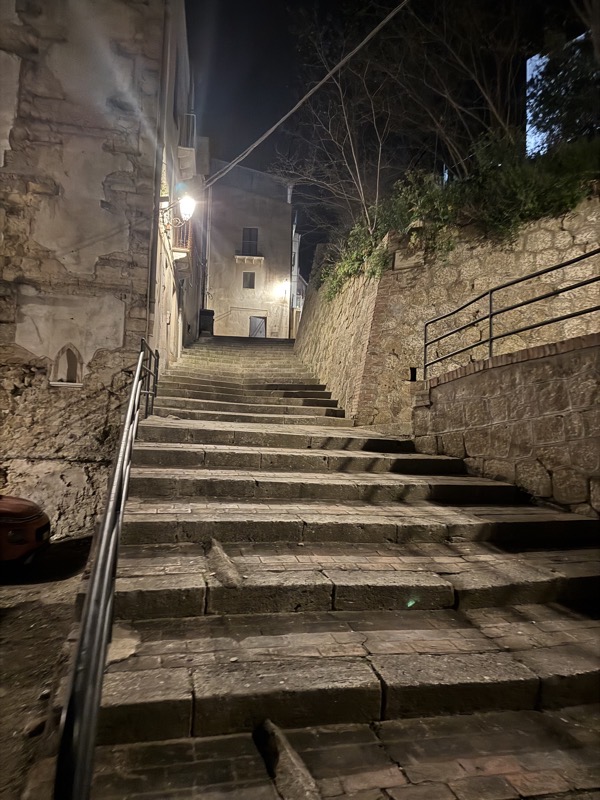
Not a single soul in sight.
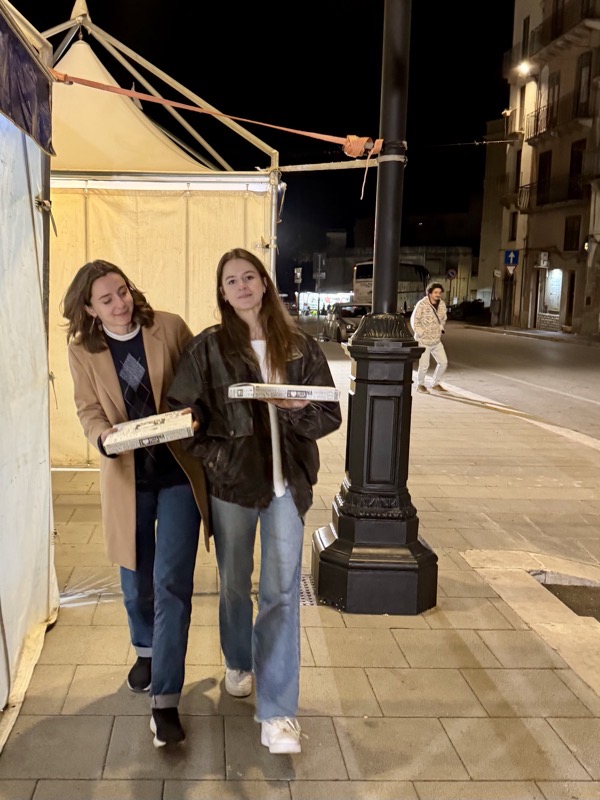
Honestly, I could not understand the attitude of Italians towards leftovers — are they pro or do they look down on that practice? Anyway, we did not leave ours at the restaurant.
The actors and their traveling wagon moments before we parted ways.
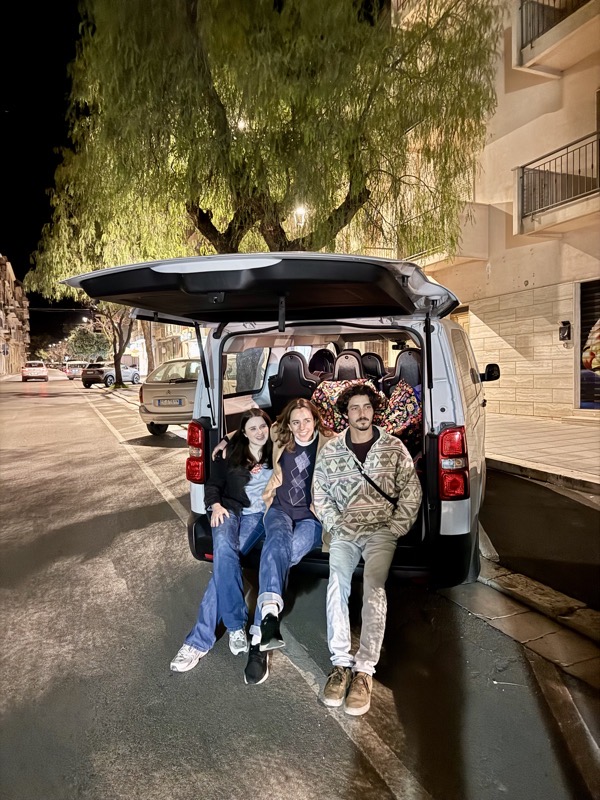
Meanwhile, there was at least another hour for us to get to Trapani. Back to the car, back to pitch black empty roads — are they dirt? one lane or two? — and unfamiliar terrain in complete darkness and solitude. Through the entire ride, no one passed us, no one trailed us, and only one car went in the opposite direction.
We entered Trapani at about 11 at night. It was a ghost town — not a single person, not a single car on the street. A few street lights.
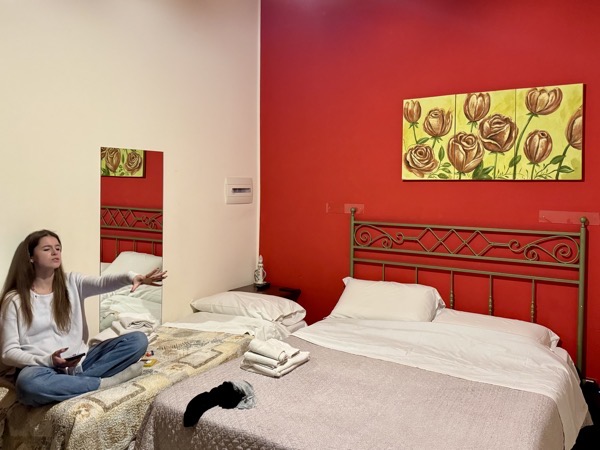
Tom had lodging arrangements lined up: not at a hotel where you can show up at any time day or night and be greeted by a receptionist but at what they call in Italy affittacamere where you have to make an appointment for someone to show up at an arranged time and give you keys.
Poorly marked streets and buildings, darkness — eventually we pulled over to a door. No one answered it, no one answered the phone.
— I have another one, — said Tom and we moved on.
A few circles around a potential new place — the same story. No one picked up the phone, no one answered the door. It now was almost midnight.
— There’s another one, — Tom started to sound frustrated.
At that third address, we couldn’t even find the house number mentioned. Tom got out of the car to check the street name and the door. Nothing of what he had written down.
Next to where we pulled over happened to be a bar. The door was open, inside were light and people:
— Let me go and ask them, — I suggested while Tom was searching his phone.
— What are you going to say?
— I don’t know.
Tom’s frustration was at the tipping point. I got out out of the car to show off my Italian.
By the entrance to the bar, at the register, there was the man pictured below and a bunch of other guys. They were having a slow lazy conversation:
— Inglese? — I said with a question in my eyes. The men got quiet and stared at me.
— Inglese, — said the barmen affirmative.
Having used up all of my Italian vocabulary, I showed a screenshot of the address and the name of the person who promised us bed for a night. The barmen pointed out of the door to the left. His Inglese seemed to be up to par with my Italiano.
Outside the bar, next to a recessed door, there was a domophone: the vertical row of buttons with paper tags next to them. Some names were scratched, some handwritten, some were missing. After staring at this monkey alphabet for a few moments, I went back to the bar. By now, everyone there got emotionally involved in my search and eagerly anticipated more story. I said:
— Inglese?
— Inglese.
I pointed to my phone, to that door and broke into a detailed description of our situation: how we travelled from Palermo to Segesta, from Segesta to Salemi, then, here, how we are stranded Americans with a child, visiting another child, how we made arrangements for a place overnight and now cannot find this place. And on, and on — in my perfect second-language English.
They all listened with great interest not interrupting me and obviously not understanding a word out of my mouth. The barmen picked up a flashlight and waved me to follow him. With a flashlight, he carefully examined the domophone and compared it with my screenshot. He pointed to a button and nodded. I nodded, too. He pushed the button — it was past midnight. No response. Again. Same. He shrugged his shoulders and went back to his counter. I stayed by the domophone and continued to push the button in hopes to do it better. Nothing changed. I returned to the bar:
— Inglese? — I am not the one to give up.
This time, no one answered but everyone turned to me expecting the story to go on. I continued.
Folding my two palms together I brought them under my left cheek, tilted my head to the left and closed my eyes. When I looked up, they were still staring at me anticipating more entertainment. I pointed at myself, at the door and showed them three fingers. Then I opened my arms in the fan gesture towards the street that baroque opera singers do towards the audience at an emotionally charged moment: ‘O sole, ‘o sole mio!
— Room. Sleep.
The barmen pointed his index finger up and said:
— I have room.
Inglese! Beautiful Inglese!
The simplicity of his response and such an unexpected quick resolution of our problem startled me. It seemed suspiciously easy and I panicked. What if he is a murderer? Mafia? We are in Sicily. There is a reason they filmed La Piovra in Trapani and not at any place else. This is a plot to lure in unsuspecting tourists.
Hiding my frantic thoughts I said with a forced smile:
— Moment,— and went to the car.
Over the thirty plus years Tom I spent together, my poor husband had to deal with and correct so many consequences of my hasty decisions that I have learned to consult him before acting. Sometimes. This seemed to be the time.
— Tom, they have a room. But I don’t know what kind of people they are.
— What kind of people could they be?
— I don’t know. Mafia?
— What are you talking about! — Tom got out of the car and went in to check.
In a few minutes, he came back and opened the trunk:
— Let’s go!
— Are you sure?
— About what?
— The people.
— Come on — it’s a room!
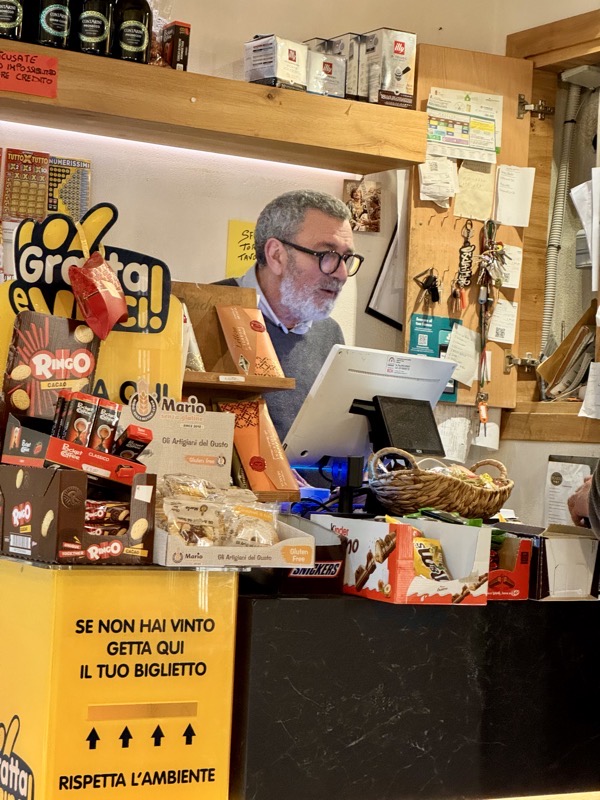
We walked in together with this group of Italia’s finest and they made me feel at ease.
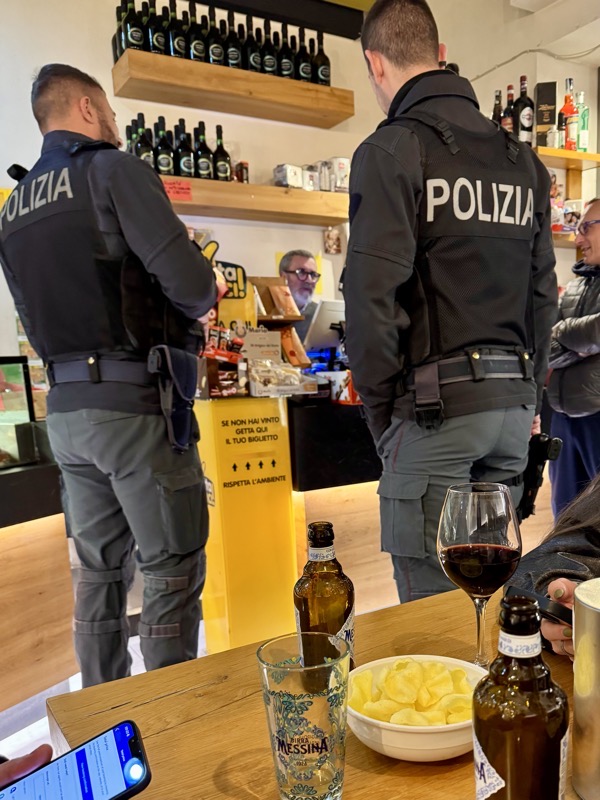
Relaxed and now excited we even had a drink before heading upstairs for a night.
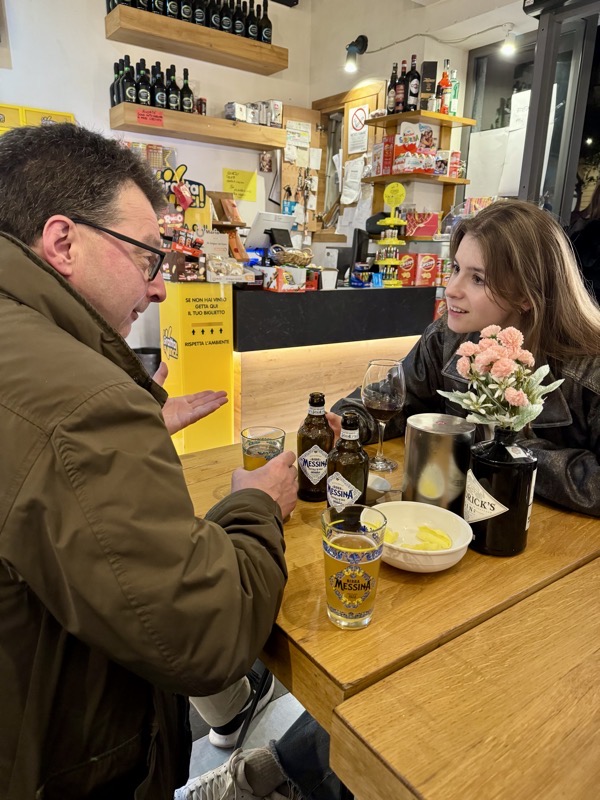
And a selfie with our ‘mafiosi’ friends — Gaston and Queen — who gave us roof for a night.
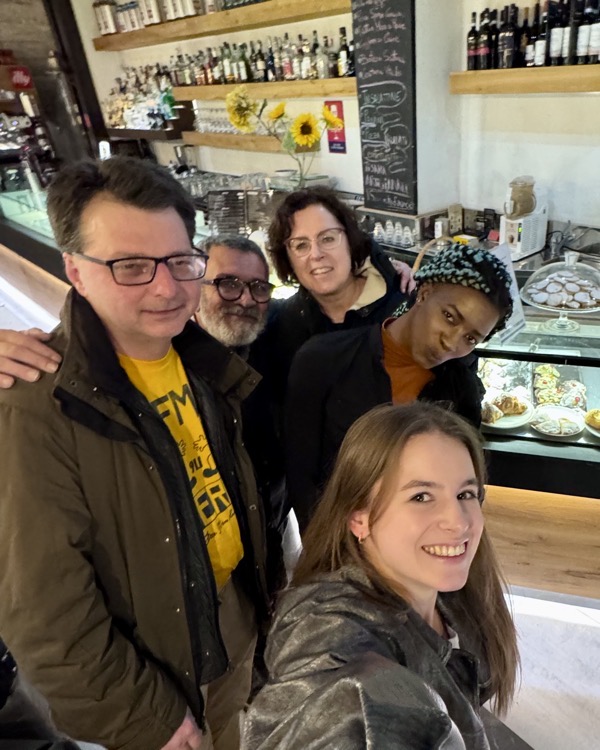
Gaston suggested for Lizzie to take a separate room. Not sure completely, I couldn’t go that far and asked for a cot next to our bed instead. I wouldn’t let them take my Lizzie alone that easy. It’s Trapani after all — if they take us down, they take us down together.