Sicily. Day 2. Palermo. Monreale: Monreale Cathedral. Back to Palermo.
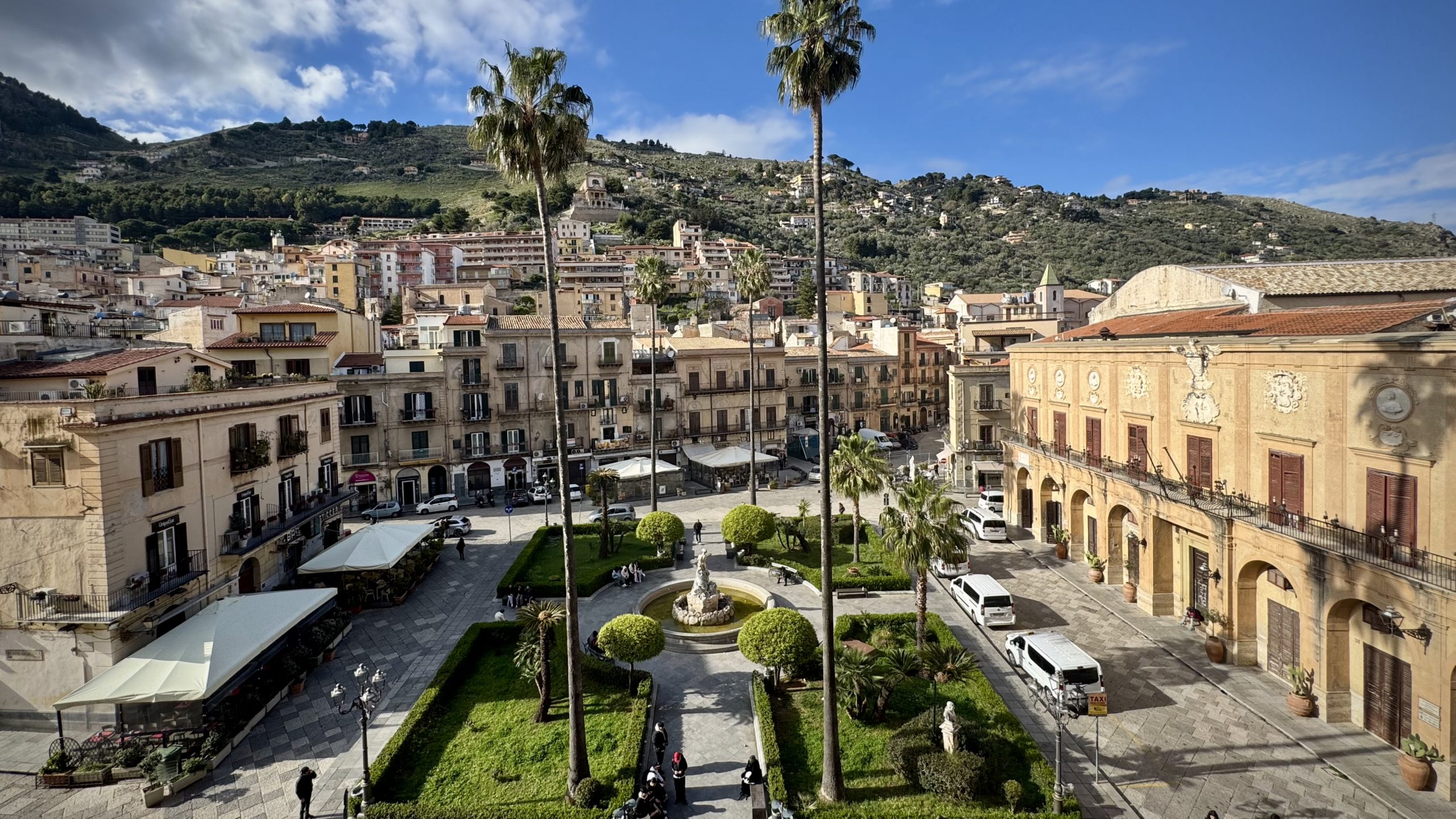
The next morning started with a reunion on our balcony. The sleep-in was not as dramatic as the morning before and we almost flawlessly fit into Charlotte’s Italian timing. It was her day off and Tom made plans.
The little balcony of our room felt so nice. Even with the walls of the building across the narrow alley being so close, there was a nice cozy feeling and anticipation. When I first stepped on it a thought went through my mind that I could easily stay on this balcony for the entire duration of our trip examining things below and they all can go explore Palermo and Sicily without me.
This is the panorama from the balcony: from Colonna Dell’Immacolata on Piazza San Domenico, along Discesa Maccheronai with all its eateries, towards Vucciria on Piazza Caracciolo. I don’t know if there is a more hip and hopping location to stay in Palermo.
Le Stanze di Triyah affittacamere where we stayed has a business deal with a little cafe around the corner, Di Noto Teresa Maria, where visitors can get a complimentary breakfast.
The weather was the most beautiful one for being outdoors: not hot, not cold, not rainy, not sunny, not windy — just perfect.
Whether it was the balcony of our room, or these tables outside, everything made me want to hold that moment and make it last. But our time in Sicily was limited and our list had a lot on it to see and visit.
Tom kept us in check making sure we weren’t dawdling.
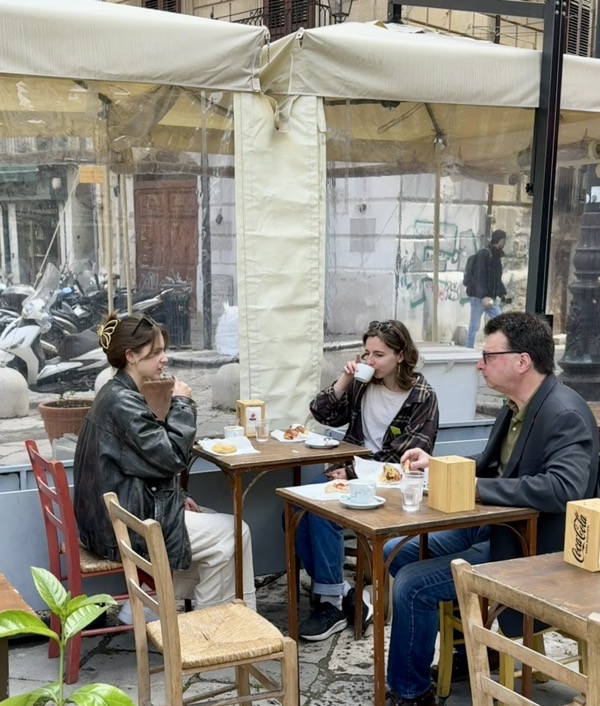
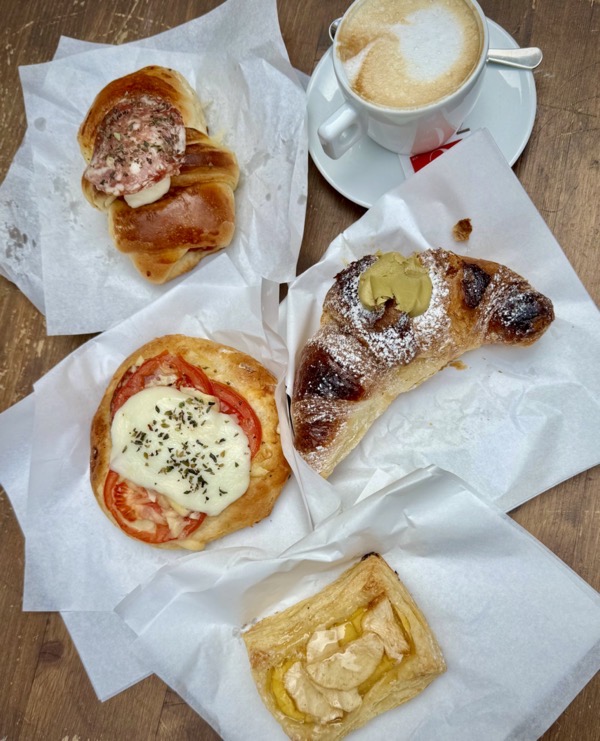
Quick pastries with cappuccino and we were off to the next adventure. It was one rare day when all four of us could stay together. Charlotte had a day off.
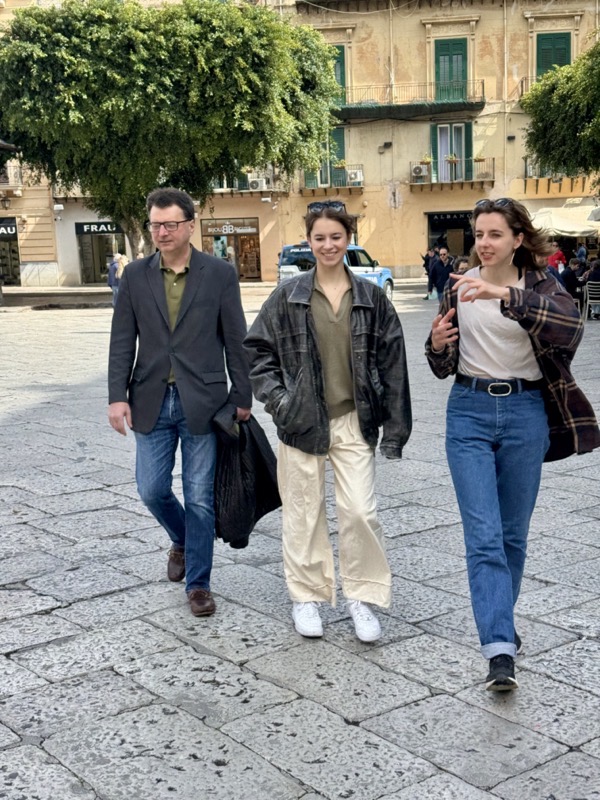
We are used to New York not being driving or parking friendly. Parking and driving in Palermo has its own challenges. Coming from the spacious roads of the US suburbs, in Palermo you really want to stay away from driving.
Streets are narrow, windy, lined with uneven cobblestones. Many of them have no sidewalks. I can’t tell for the rest of the country, but Sicilians are taking street signs as suggestions rather than rules and vigilance has a new meaning here.
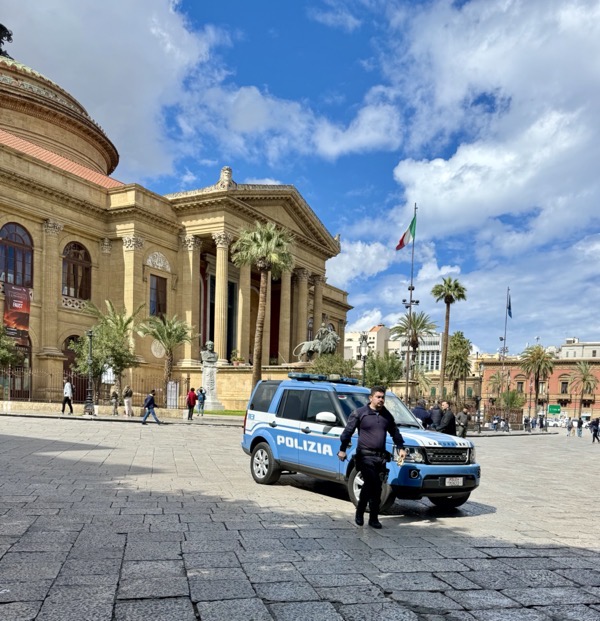
Parking is also scarce and complicated. There was no place for our car anywhere close to the hotel and we had to leave it at an underground municipal parking lot behind the Teatro Massimo within a 20 minute walk.
Teatro Massimo in a daylight looks less mysterious but more grand. The square in front of it was empty but we heard that summer crowds here are prohibitive.
And off we were to the town on Monreale.
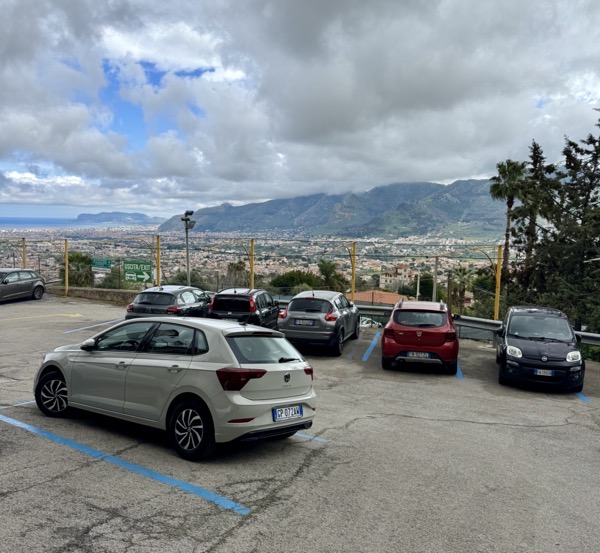
Driving through narrow Italian streets is challenging, but parking is even more so. Parking spots can be marked at the most tricky angles to each other and hilly terrain creates the most unusual parking lots. Plus, manual transmission. From here, even San Francisco hills feel like a walk in the park.
It’s hard to tell by this picture, but our car is parked angled down and to the right while those cars that are perpendicular to us are angled up. Somehow, Tom got not only in but also out.
And off we were to the town of Monreale, a municipality of Palermo located at a much higher altitude on the slope of Mount Caputo.
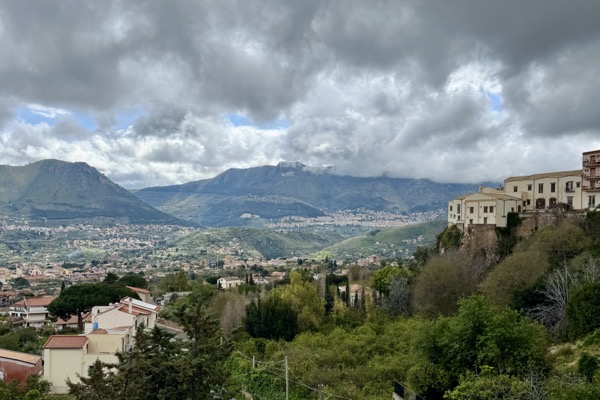
Down below and a few miles south, this is Palermo and Tyrrhenian Sea.
Long time ago, this hilly terrain was used for hunting by Norman royalty. With time, to accommodate hunting parties, palaces were built, houses for people to tend to the royalty. Then the cathedral appeared.
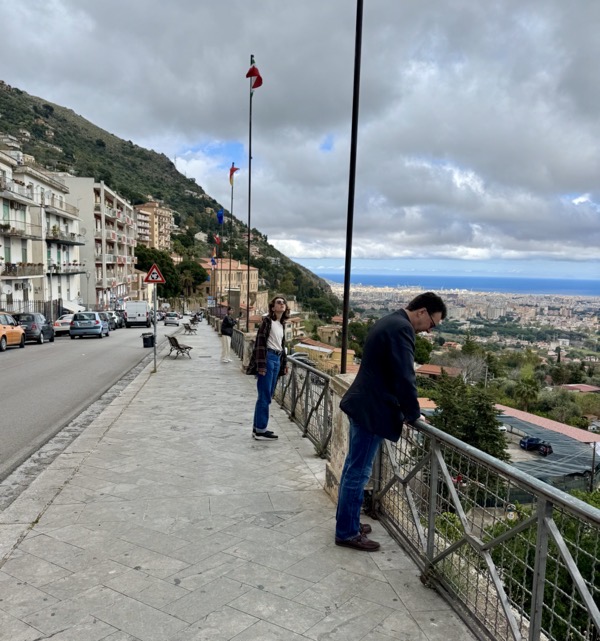
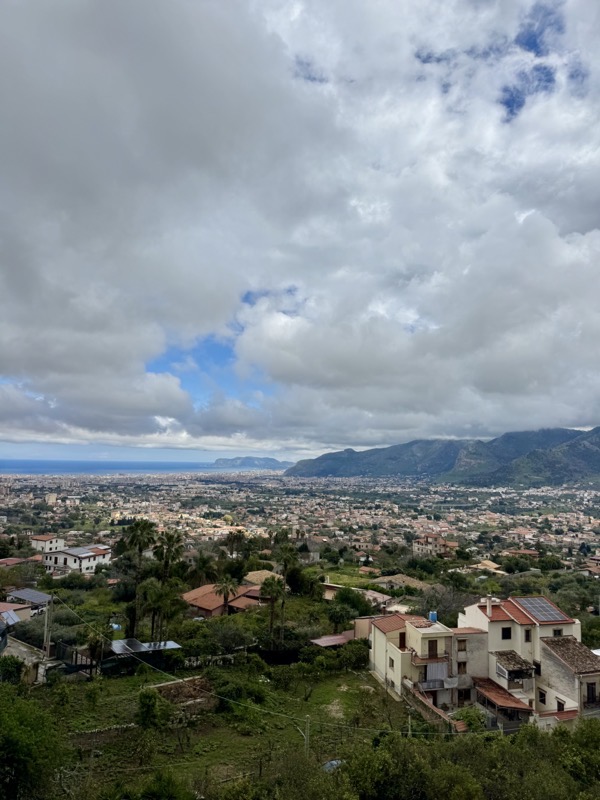
Our trip to Monreale happened on a cloudy, comfortable, chilly day in March. Between the sea, the mountains, the landscape dotted with roofs, dramatic clouds, the views from the terrace towards Palermo Valley were breathtaking.
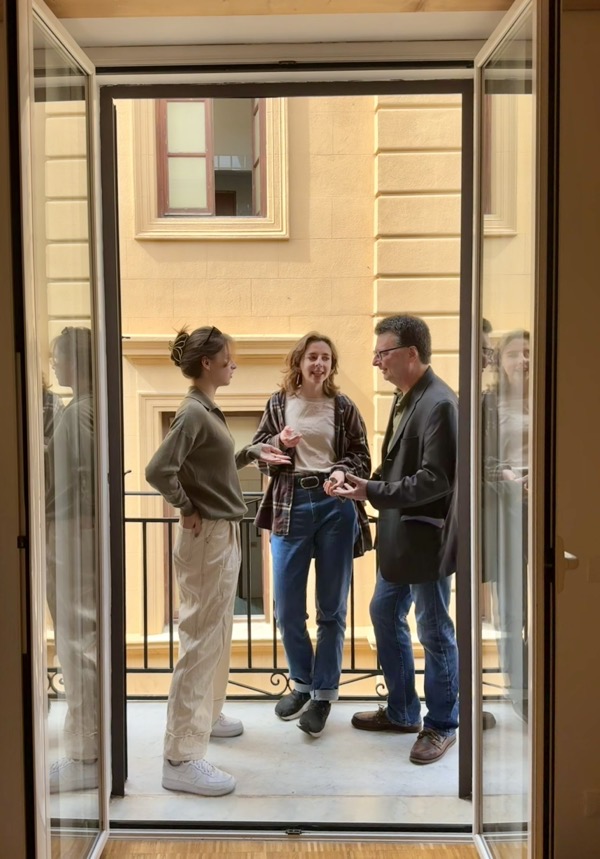
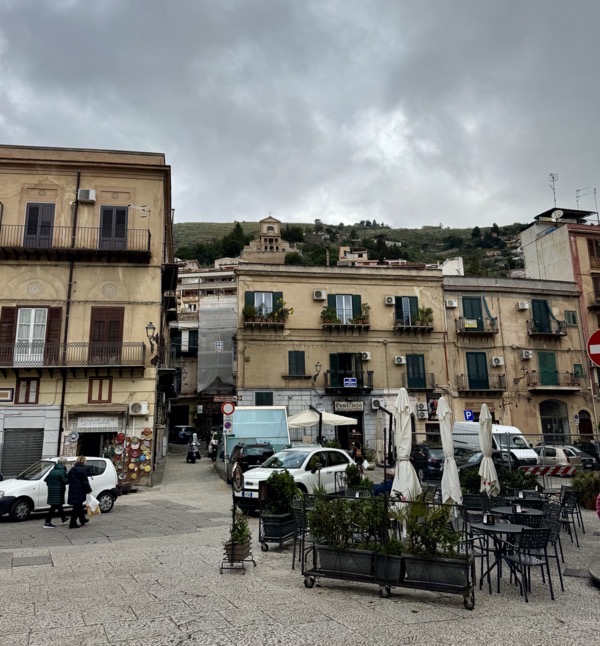
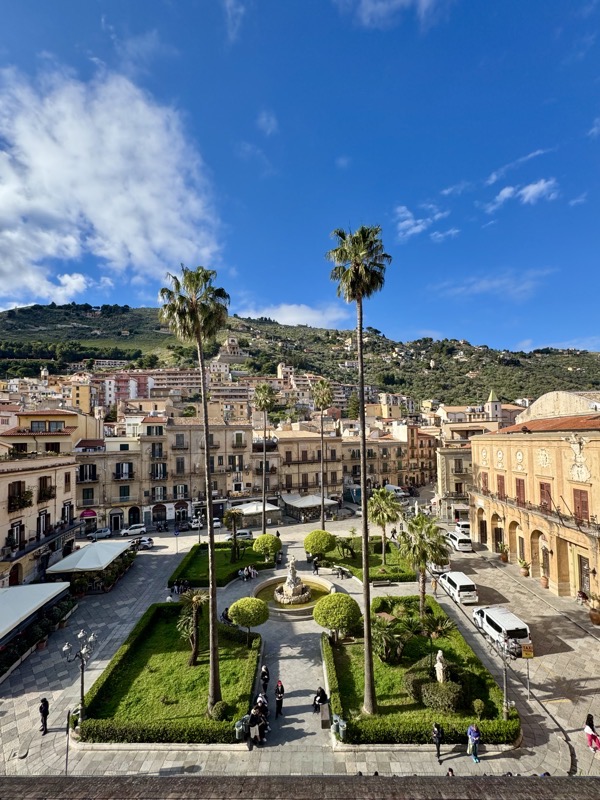
This is Piazza Vittorio Emanuele, the main square in Monreale so easily recognizable in pictures by these two tall palm trees.
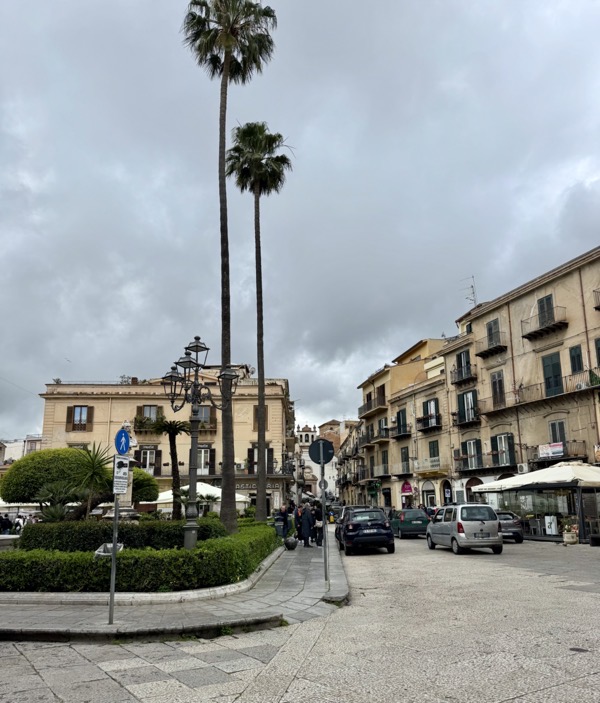
Like Palermo, this town, too, is abundant with little bars, shops, and restaurants. But during our visit, most of the umbrellas were closed and tables were empty. Not the season.
Not the season.
This was our first look at Monreale cathedral, famous for its mixture of Arab, Byzantine, and Norman styles. Back in the 12th century when the cathedral was built, Christian and Muslim worlds were blending here evenly.
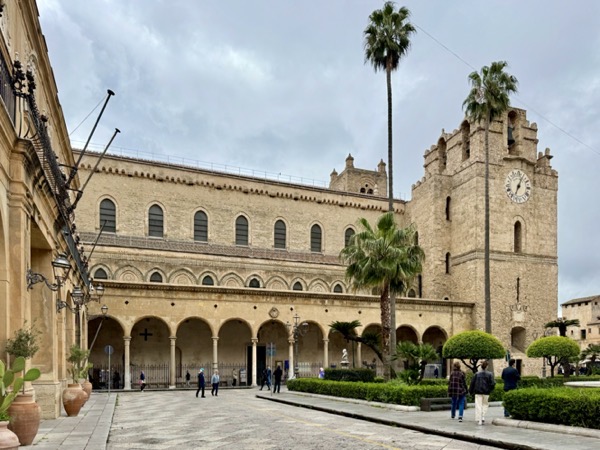
Not in season has its disadvantages and advantages. Some things are closed but streets are mostly empty and museums are easily accessible. It also seemed like we hit a major construction spree in the center of the village. With that, no picture of the magnificent front of the cathedral for us.
But plenty of medieval vibes from every other angle.
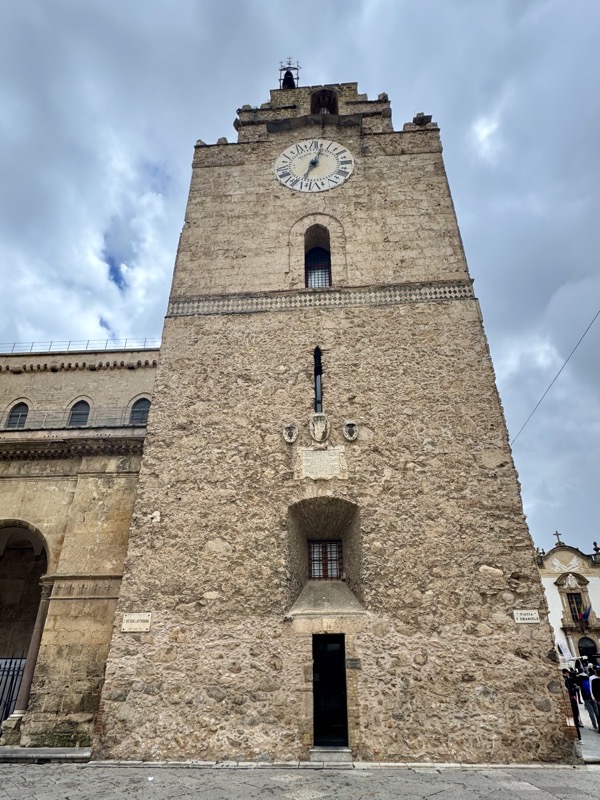
Before going inside, we took a walk around the cathedral and the village and had our lunch.
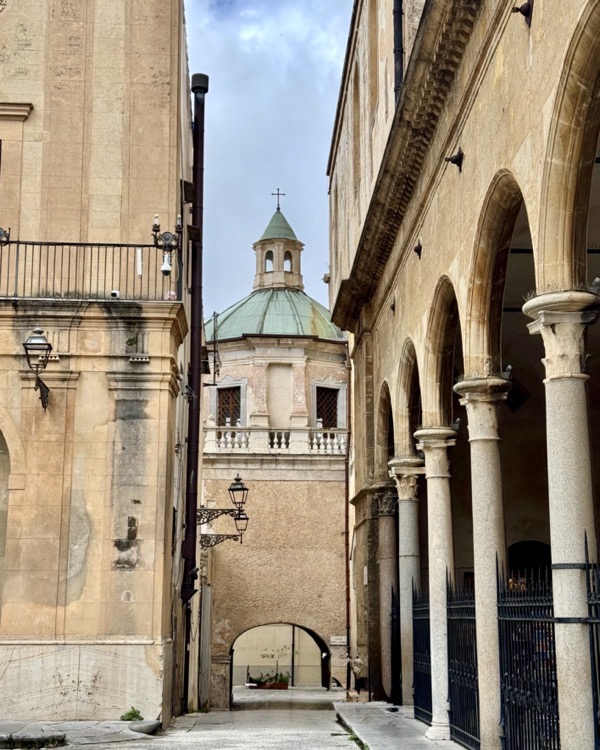
After that walk, the town of Monreale will forever stay in my memory as a place of peachy beige hues. In March, these colors stood out and were very distinct against the backdrop of the gray sky.
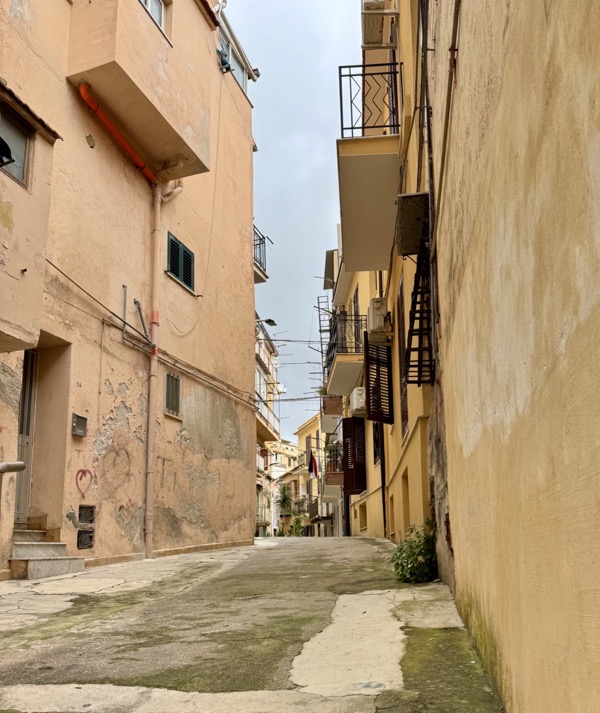
Narrow alleyways between the rows of buildings of this hilly and multilevel town frequently were just narrow staircases with steps of various widths and heights – somewhat similar to the Great Chinese Wall.
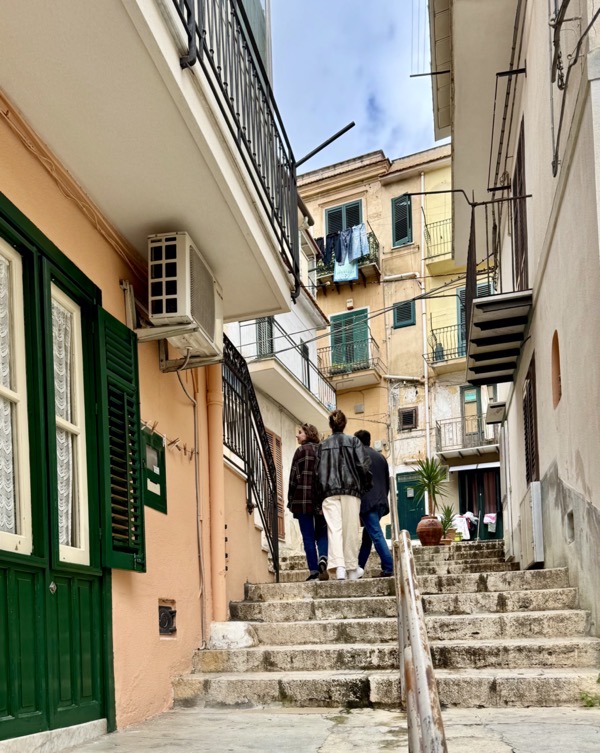
An obligatory Italian laundry
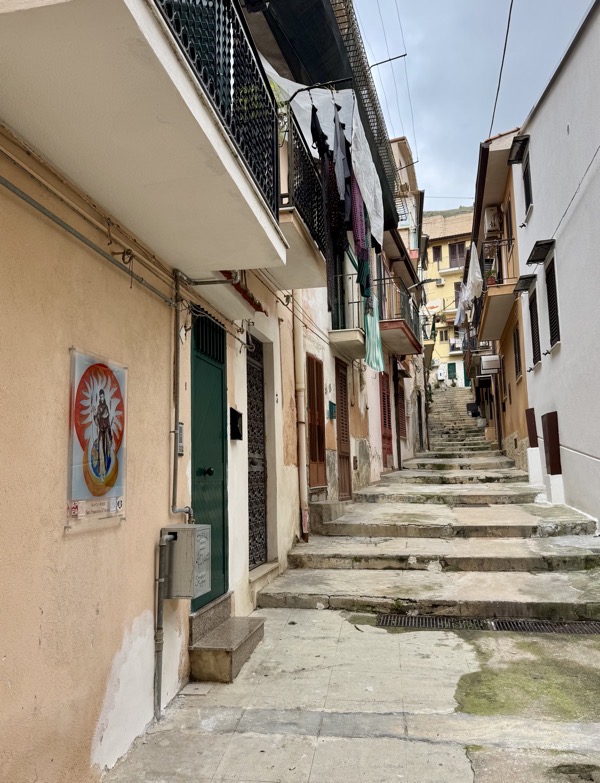
Like in Palermo, everything around was asking for some care and repairs. In the summer, under the bright sunlight and with crowds of tourists, it is probably not that striking. In March, these streets were empty and gloomy weather made disrepairs stand out.
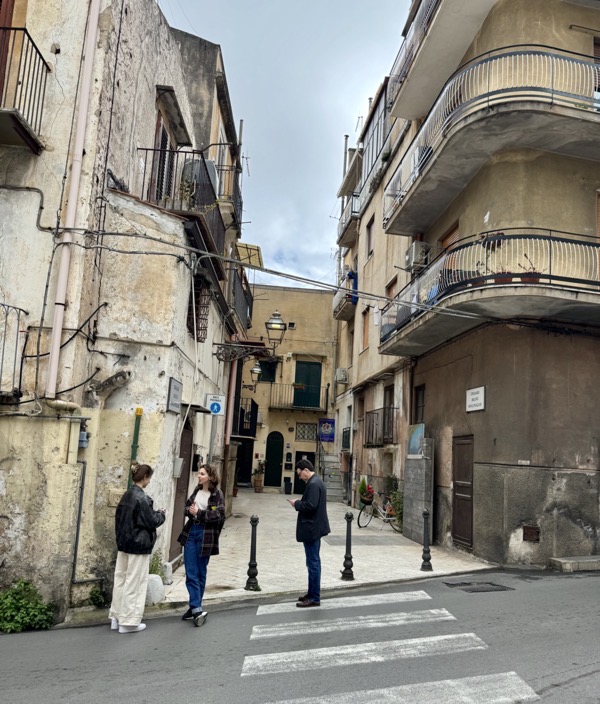
There were not that many tourists, but occasionally here and there we stumbled on an opening the wall with a local life. Our group of four probably stood out as touristy and local merchants did not bother us with their bargains.
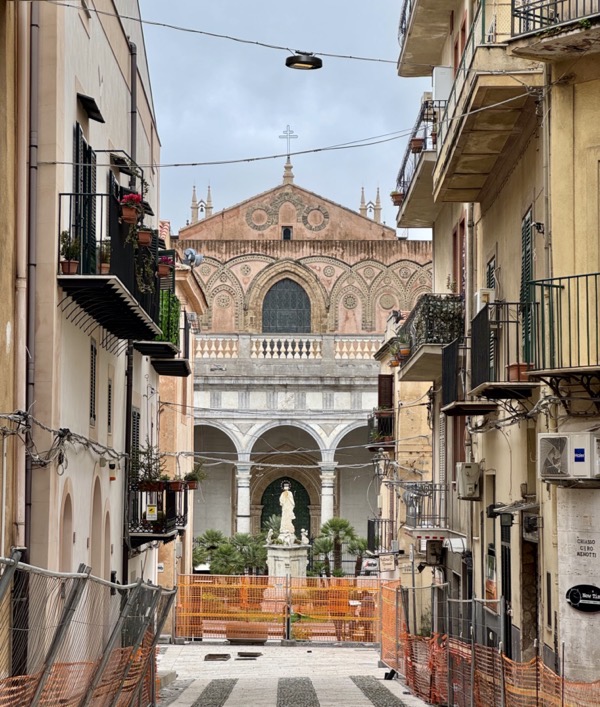
We passed by long stretches of the orange netting but there was no visible activity anywhere even though it was a middle of the work week — more like in Moscow than in New York where repairs do not stop. Although I am hearing that, these days, Moscow is clean, beautiful, and taken care of.
A few courtyards we walked by have already been cleaned up and prepared for outdoor dining.
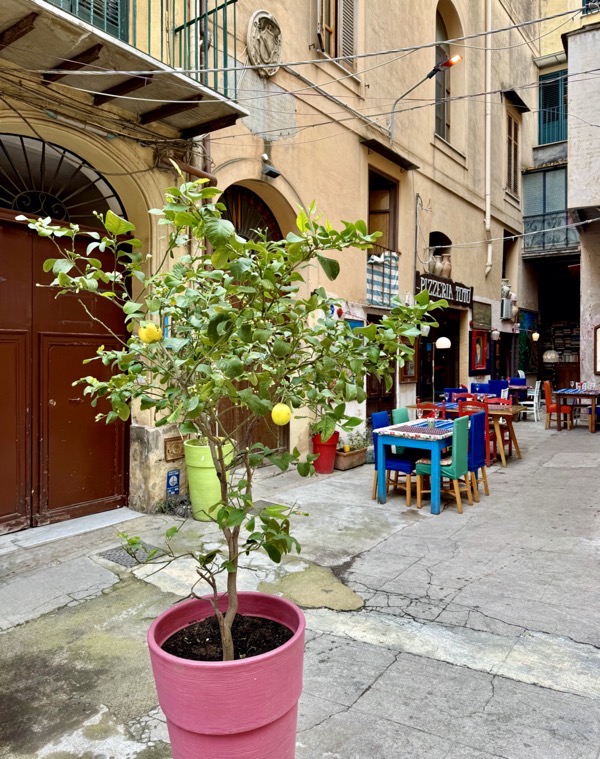
But it was not the outdoor season yet. It might be tempting to experience Monreale at the peak of summer but I am such not a fan of crowds.
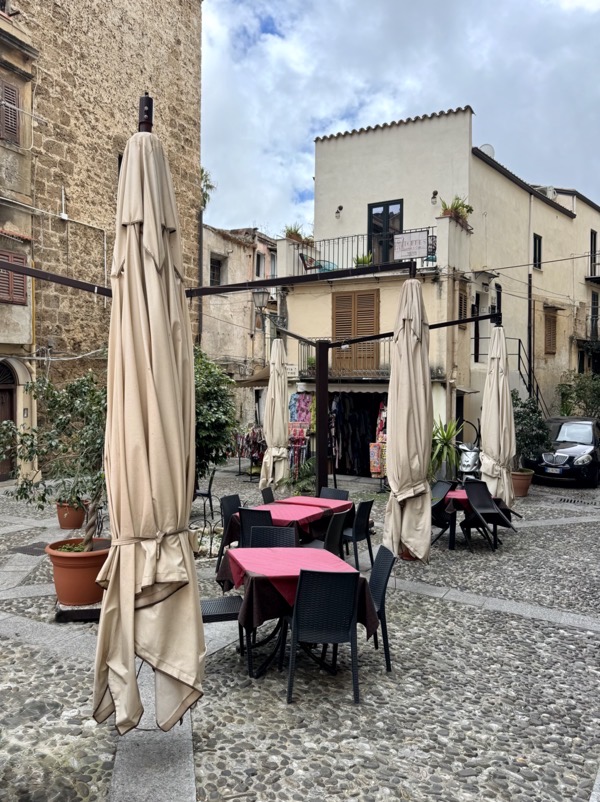
We circled back to the main square with thoughts about lunch.
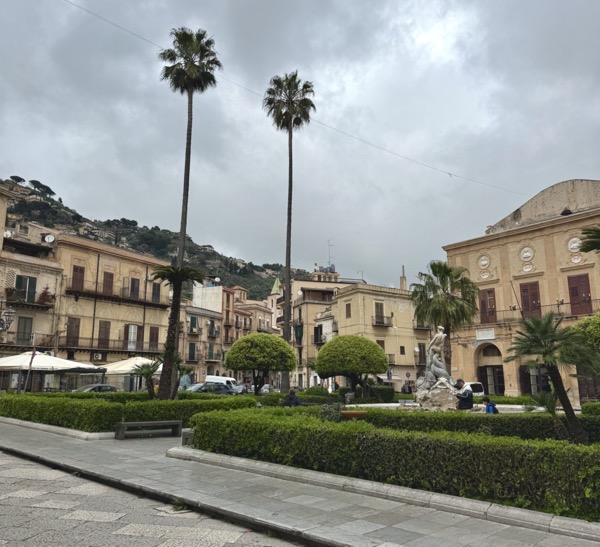
Every view, no matter where you look, was a postcard. My phone was overheating. I was grateful for the extra storage and extra data Tom purchased before the trip. It is a lot to go through now at home but so interesting — all these memories.
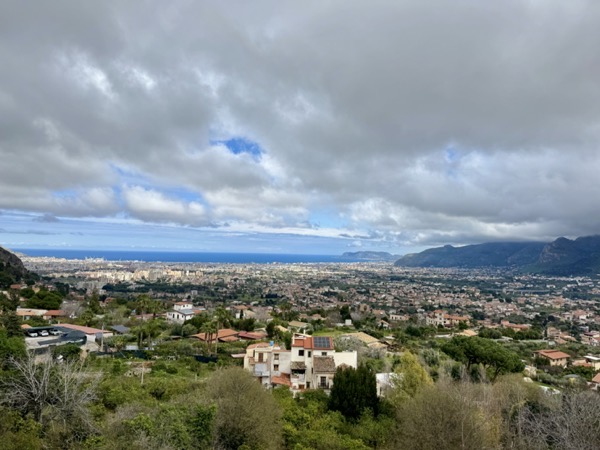
The girls are already in their twenties but they still like being on the road with us. We’re grateful for that opportunity.
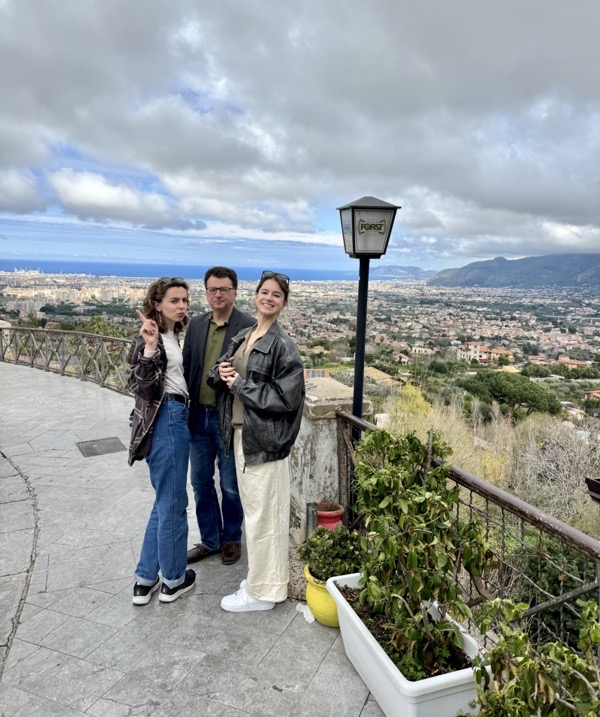
Views, views, and more views…
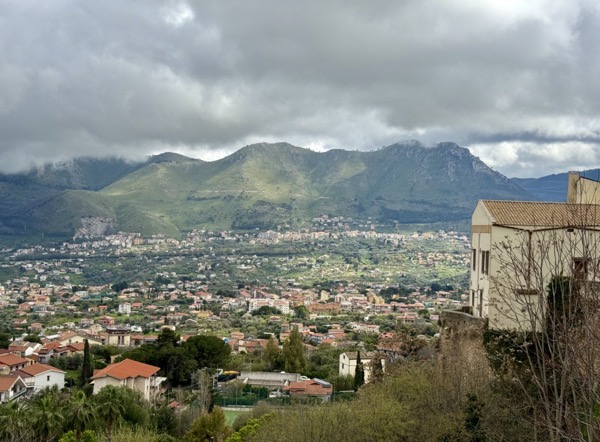
And decisions… After a walk around town before entering the cathedral we needed lunch. Lots of places to choose from and none known to us. The view from a restaurant situated on the edge of a cliff was a decisive factor.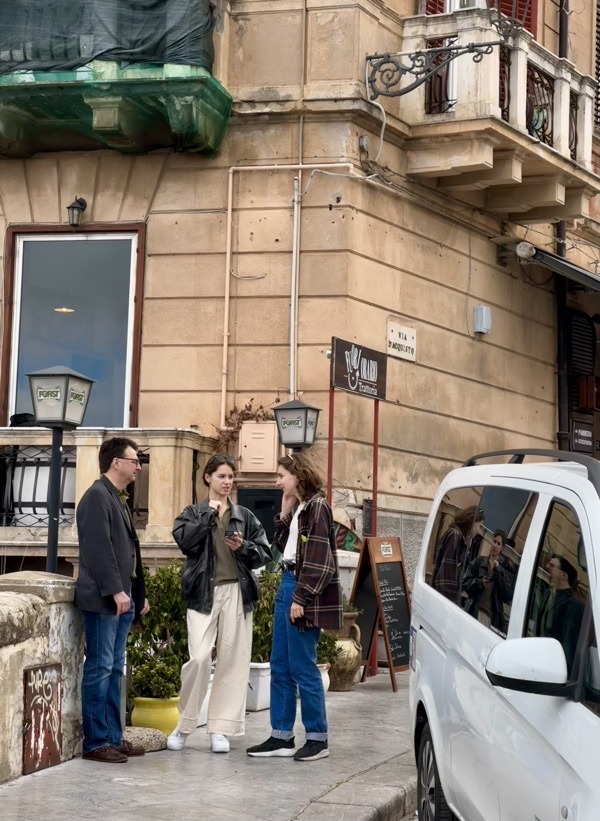
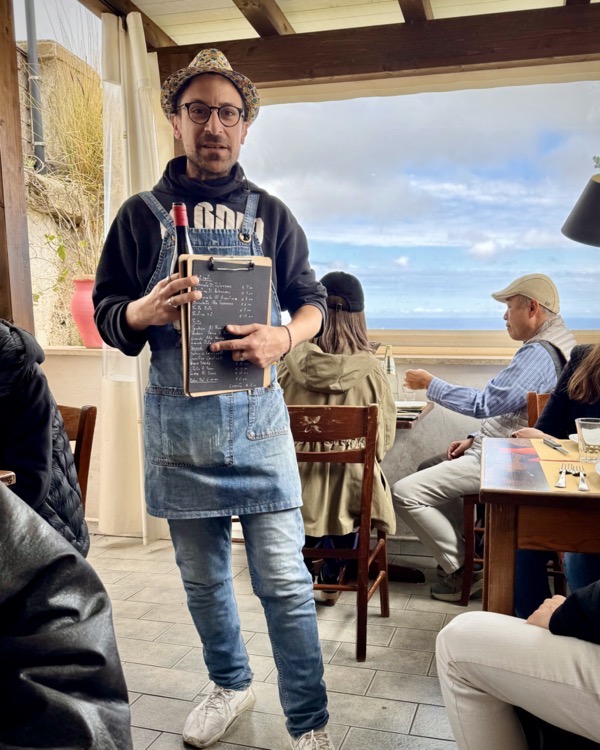
A fun fact: our animated and ironic server shared our last name. Not sure if that irked or excited him but he did pay us special attention.
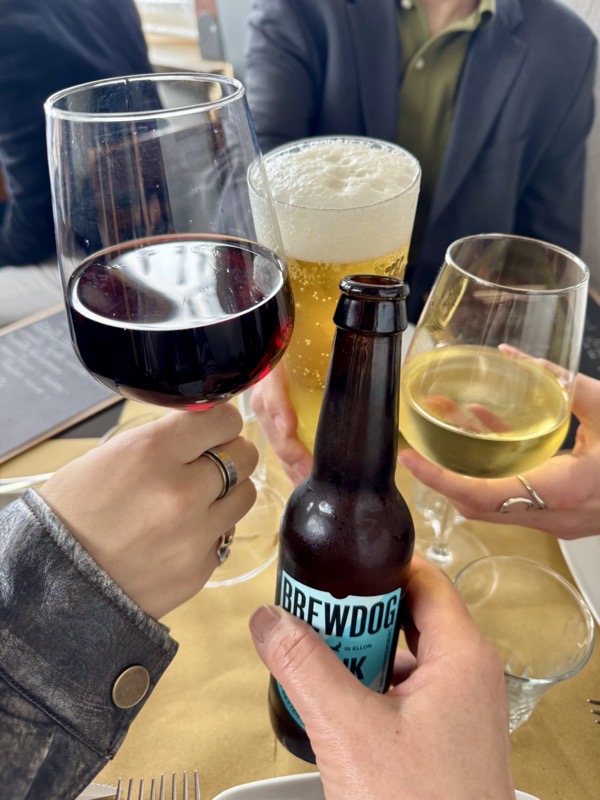
An obligatory toast to start the meal — a tradition that started six years ago in Moscow on Red Square. Easy to tell whose hand is whose.
An interesting mishmash gathered on this patio: our American-Russian group, directly behind us was a couple from Poland, by the big window overlooking Palermo Valley sat a family from Japan, and an older couple from Germany by the other window. Looks and languages were telling.
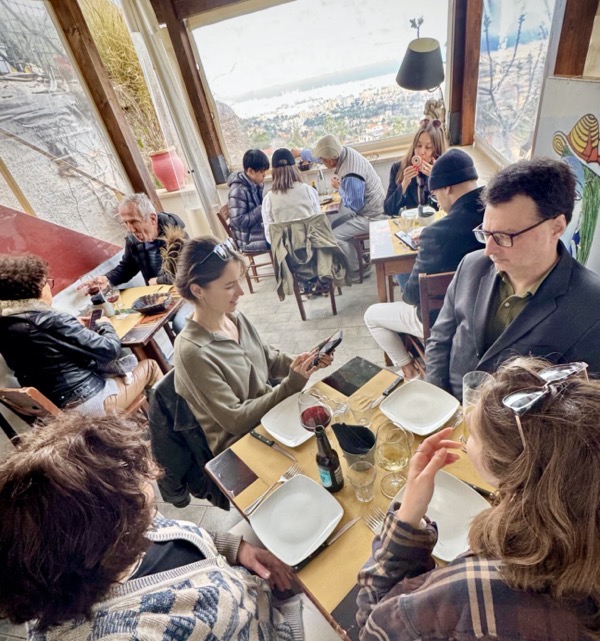
Although in Europe now, we still tend to eat Asian style ordering for the table and sharing.
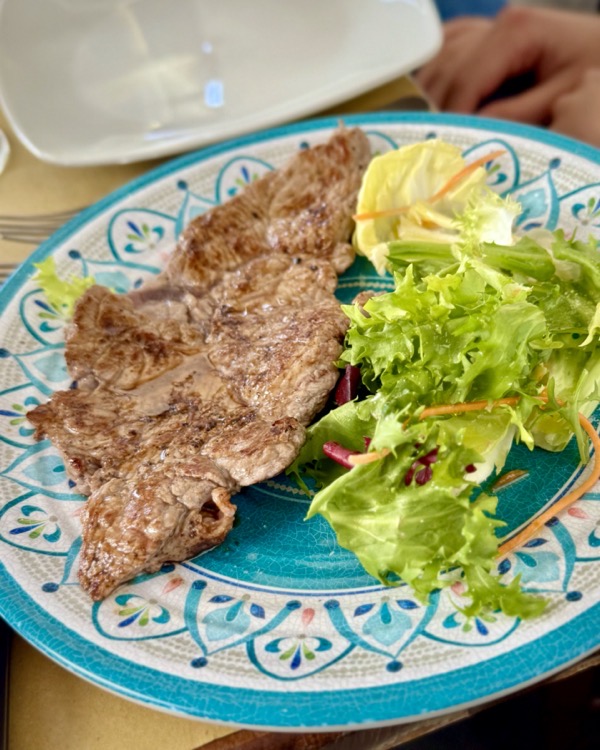
Here’s my choice — veal — can’t do without meat.
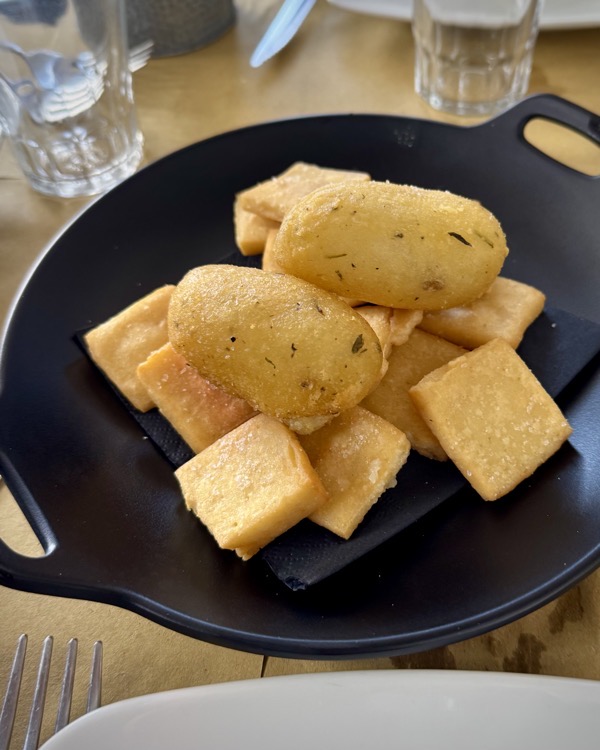
Frito misto was another choice.
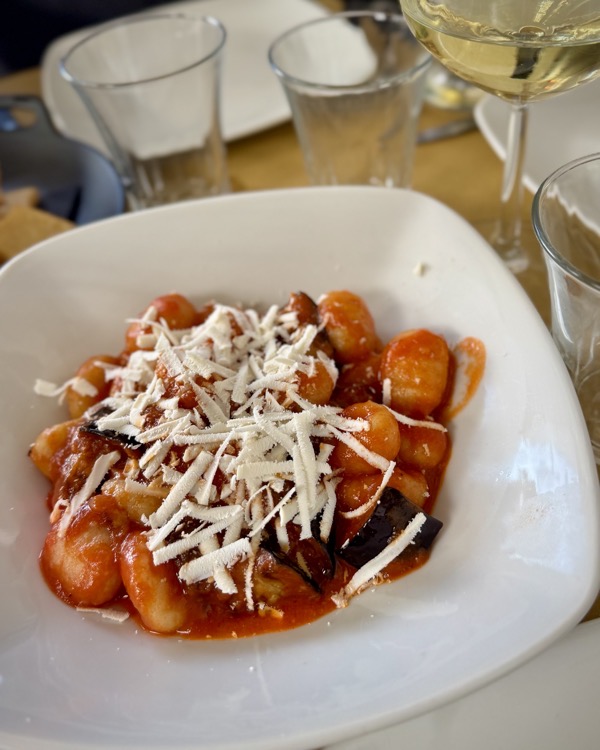
And gnocchi alla Norma. Because Sicily. Legend has it that Italian composer Vincenzo Bellini, the author of Norma, the opera, when first tasting this dish in his native Catania, exclaimed:
— This is the real Norma!
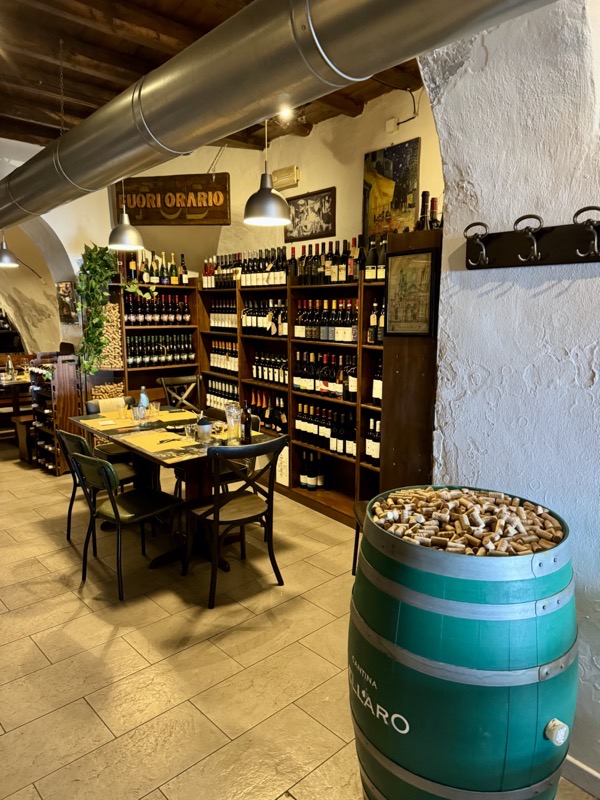
A step inside the restaurant from the patio to feel the vibe.
Our tour of Monreale Cathedral started from the rooftop. First we climbed to the side that opened to the Benedictine Cloister. The precision of the lines and details of the garden was unreal. And peaceful.
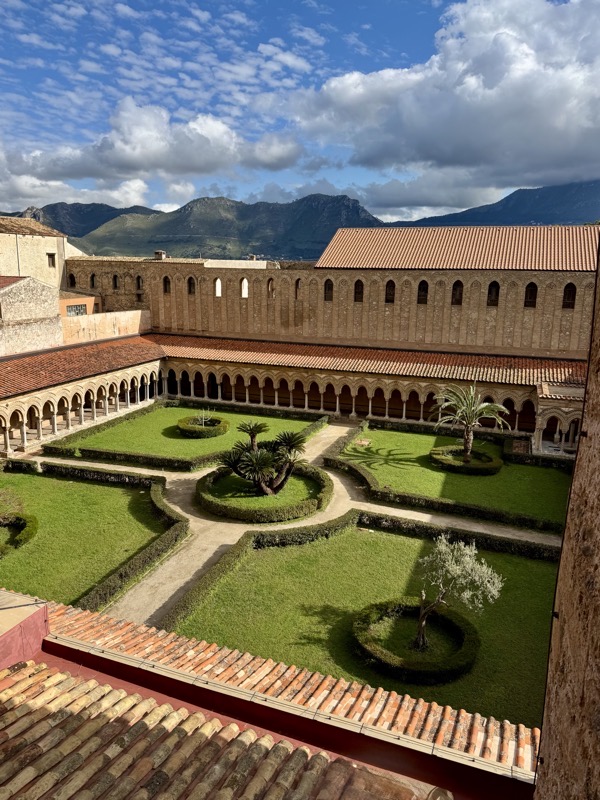
Walk a little further and a narrow circular terrace opened views in other directions.
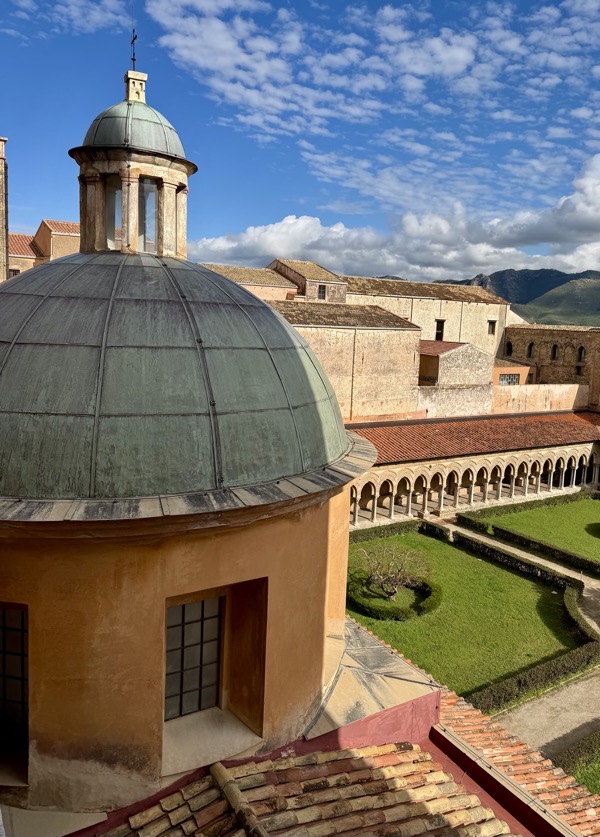
Moorish arches in the garden are supported by twin columns. Out of 228 pairs no two are alike — some decorated with moscatos, some with carvings. In the garden, instead of flowers, there are figs, pomegranates, olive bushes, palm trees to follow the stories of the Bible.
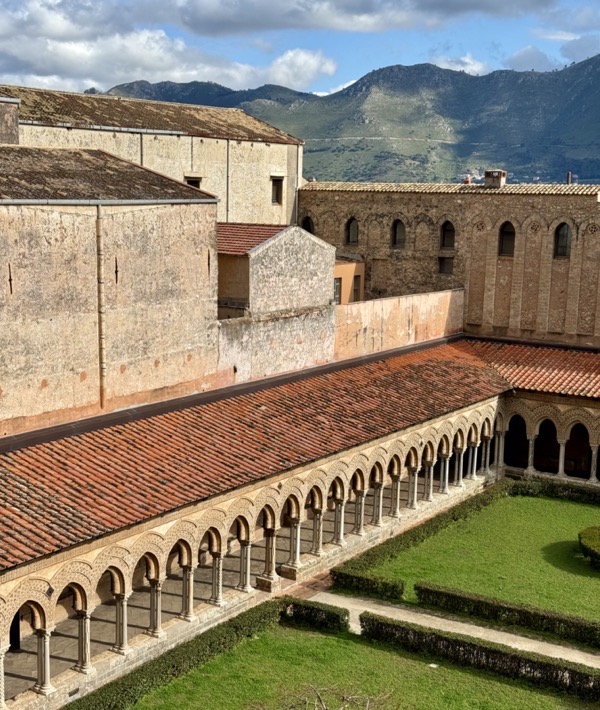
In one of the corners of the cloister is a fountain — water an important symbol of purification.
In medieval theological symbolism, the Cloister is supposed to represent Paradise on Earth.
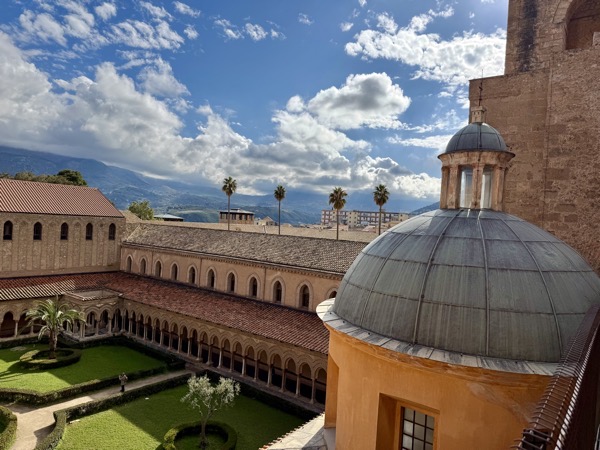
After a cramped and narrow passageway to the top, the feeling of the air and sky was liberating.
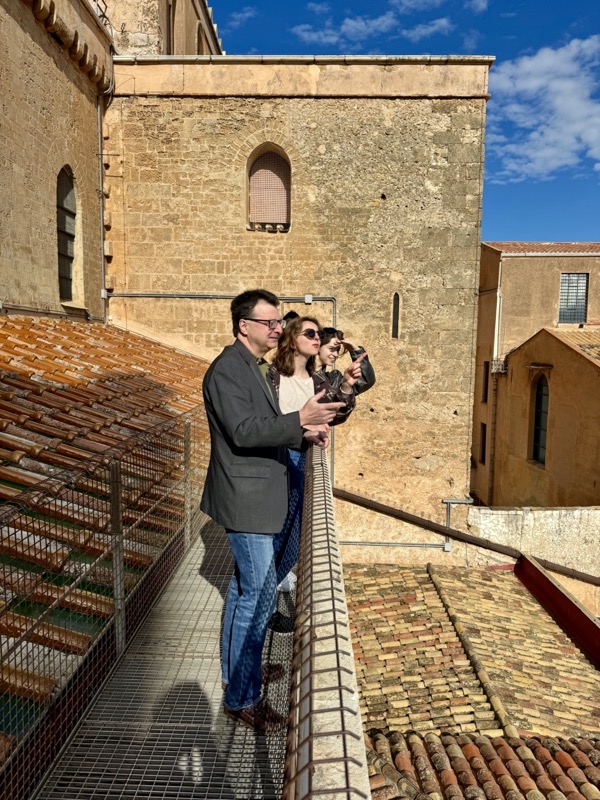
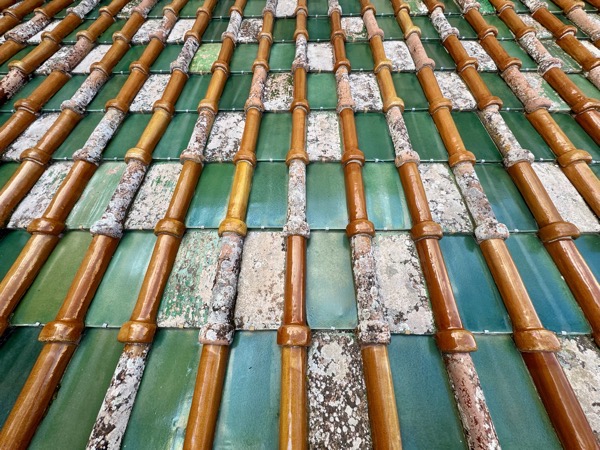
Beautiful colors of the rooftop shingles glowing in the sun.
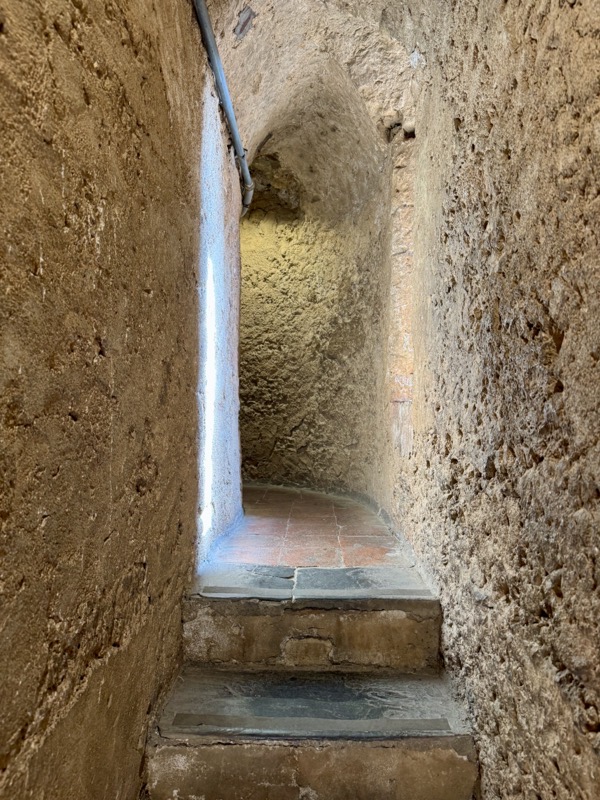
Back into even more narrow passages to get to the other side of the rooftop and different views.
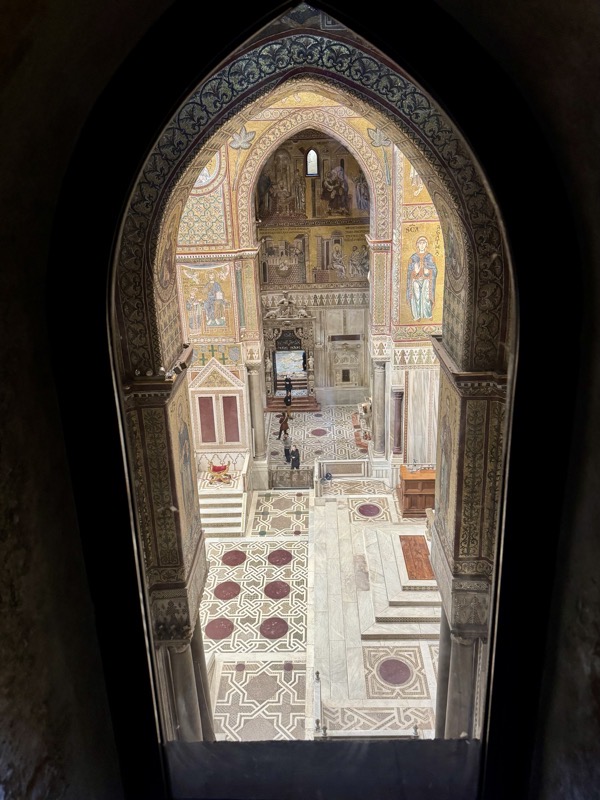
Openings in the passage walls towards the indoors offered bird’s views of the mosaics.
On the other side.
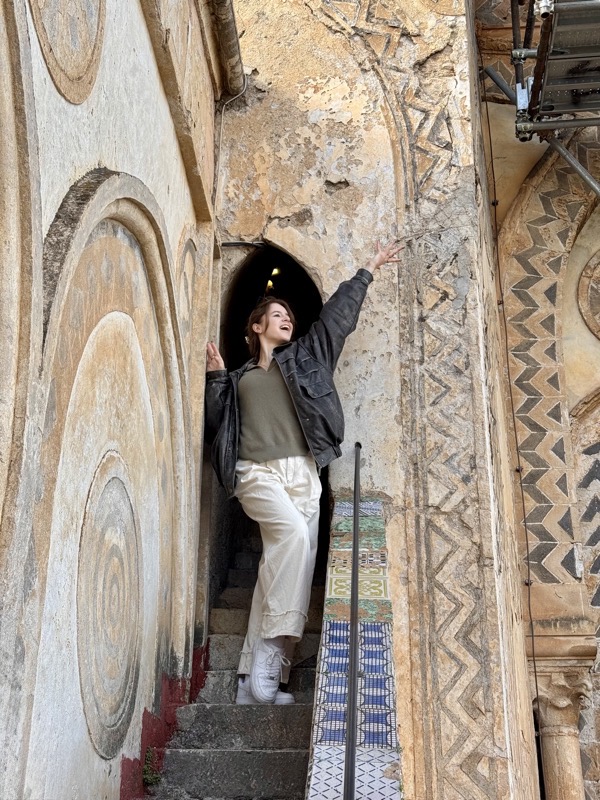
Incredible views in all directions.
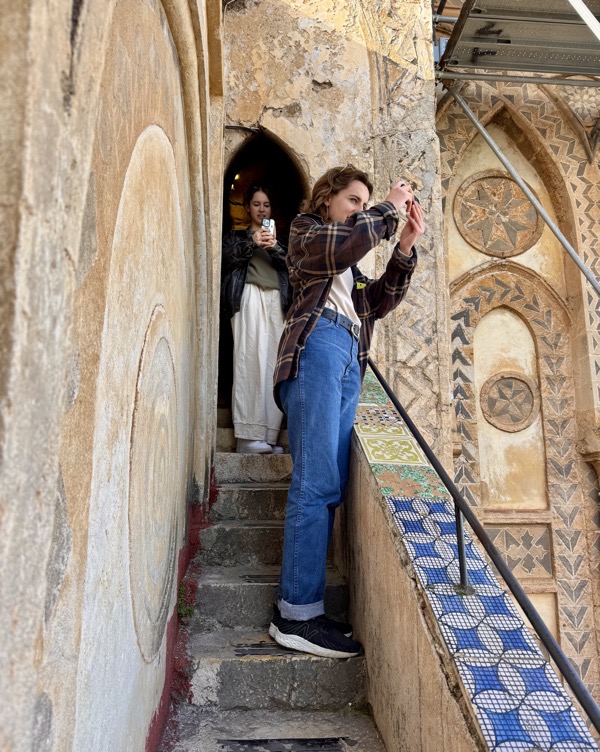
This side faces the Conca d’Oro valley.
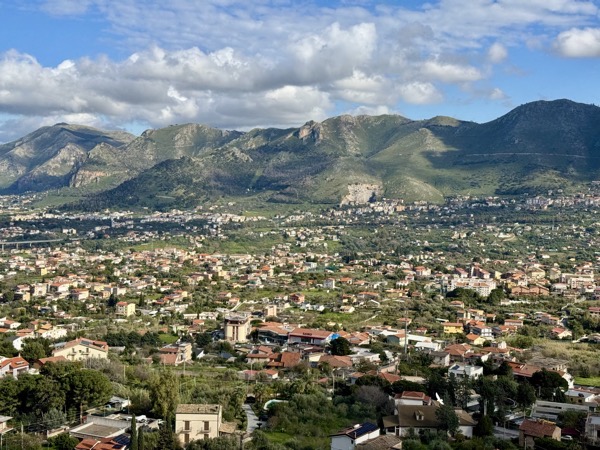
Here is Palermo in the distance.
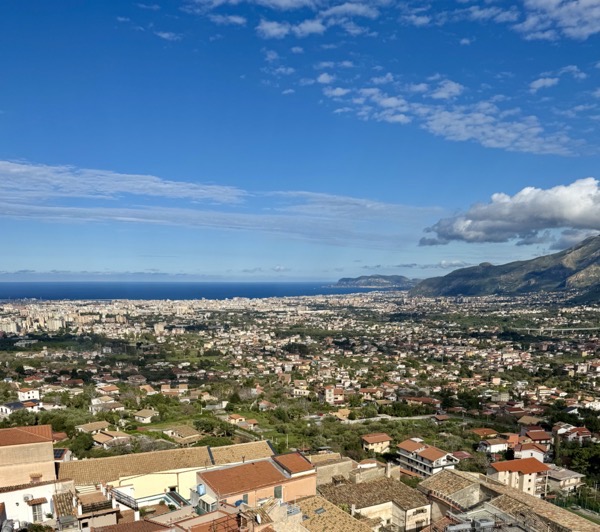
And the views of the Monreale.
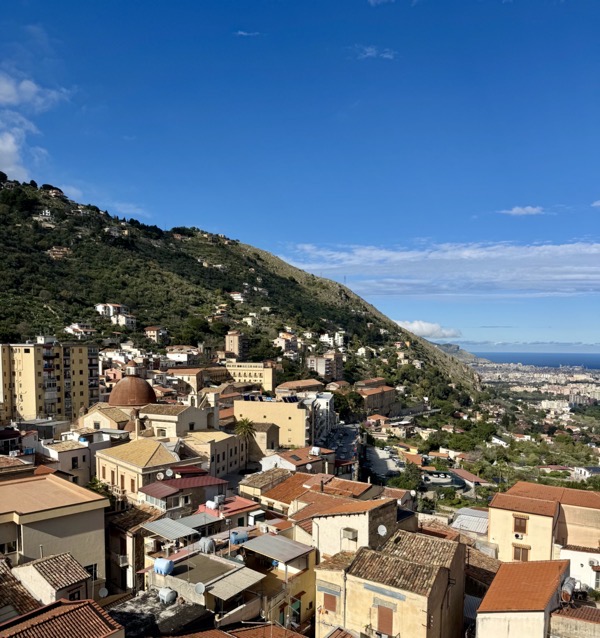
Some scenery is reminiscent of the Godfather’s Italian pastures where Michael met Apollonia.
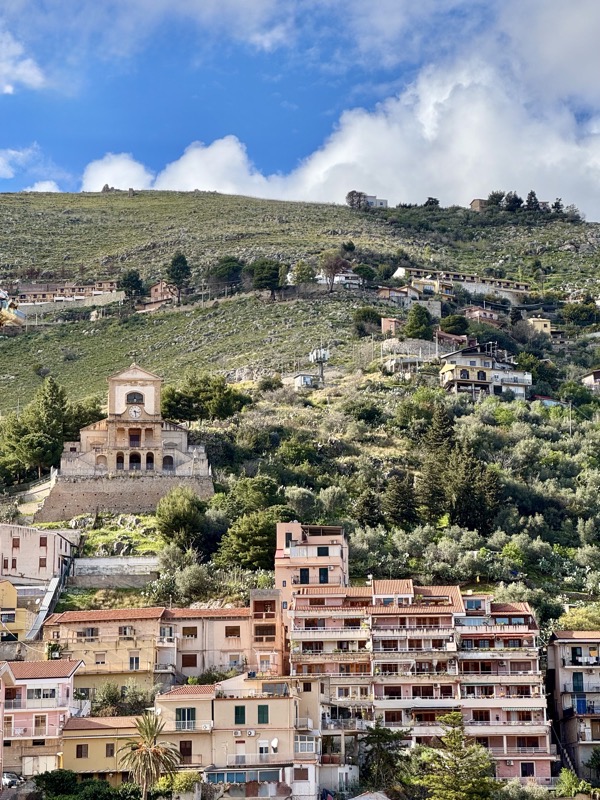
The main square of the town as seen from the top of the cathedral.
Back off the rooftop we moved down the stairs to see the inside of the cathedral.
According to tour guides, the walls of Monreale Cathedral hold more than 2,200 kilograms or 4,850 pounds of pure gold. And it shows!
In the central vault there is a huge mosaic of Christ Pantocrater that glows like the sun from above and no matter where you go in the cathedral his eyes seem to follow you.
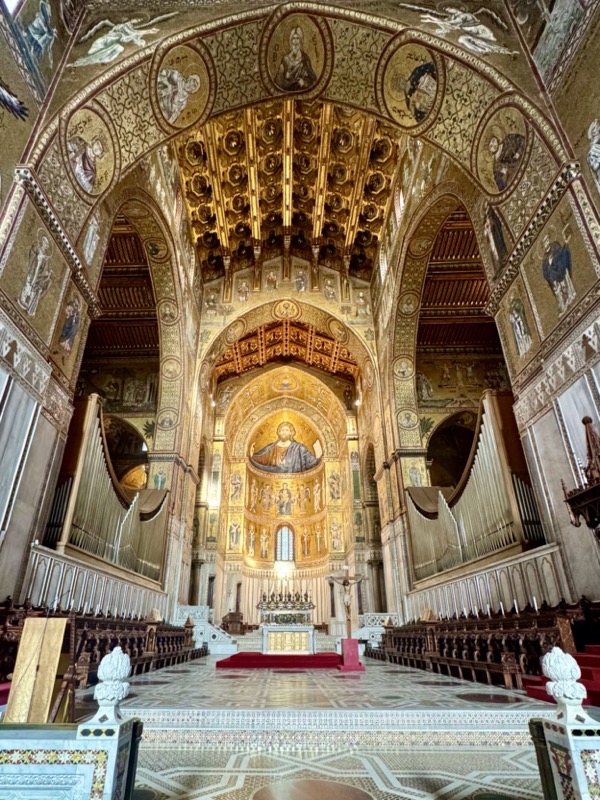
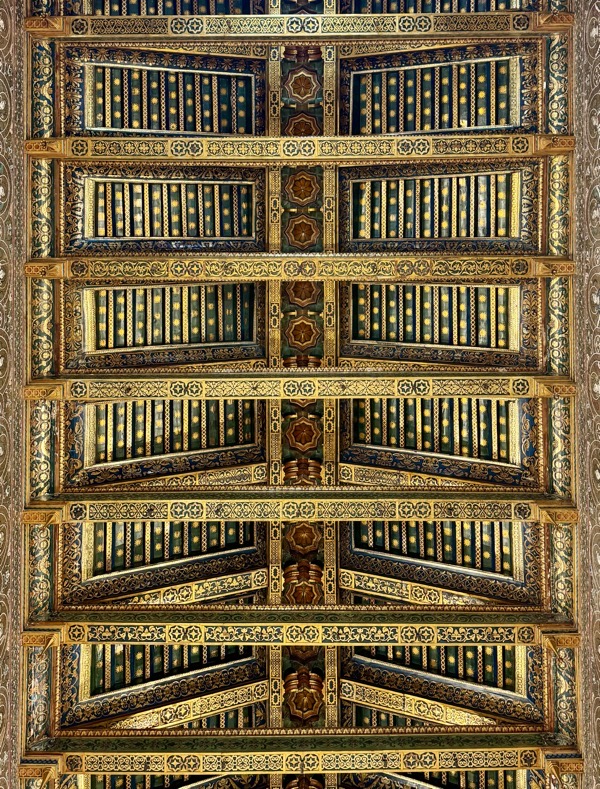
The ceiling of the central nave of the cathedral — also gold — is not original. The first one was destroyed by lightning that caused a fire and later rebuilt.
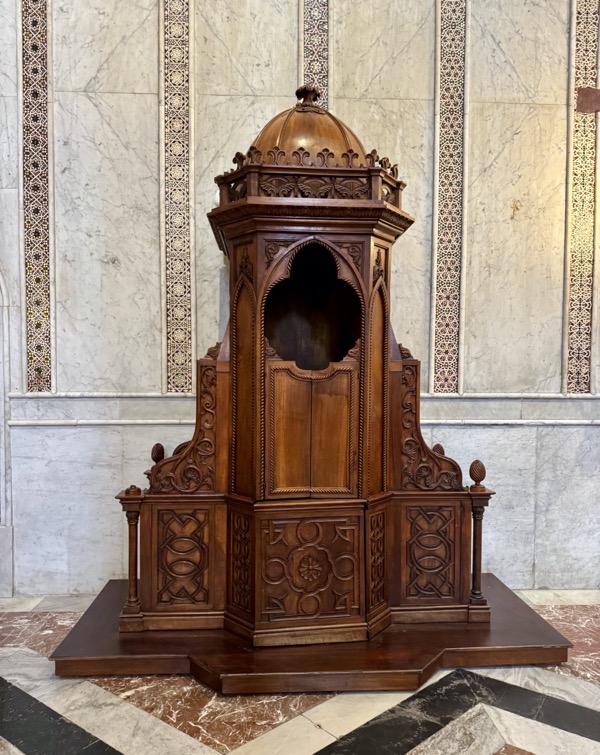
Confession booths terrify me. If these walls could talk… How much has this wood heard over the course of the centuries, absorbing it all?..
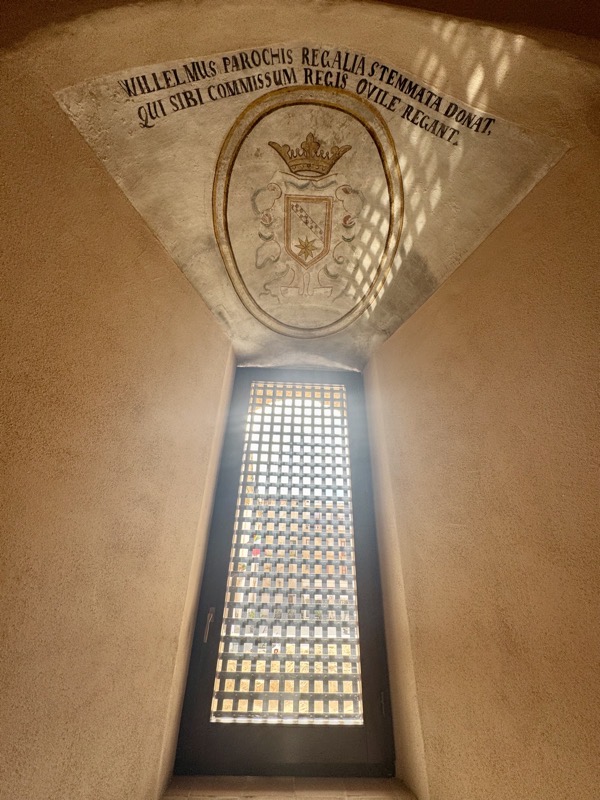
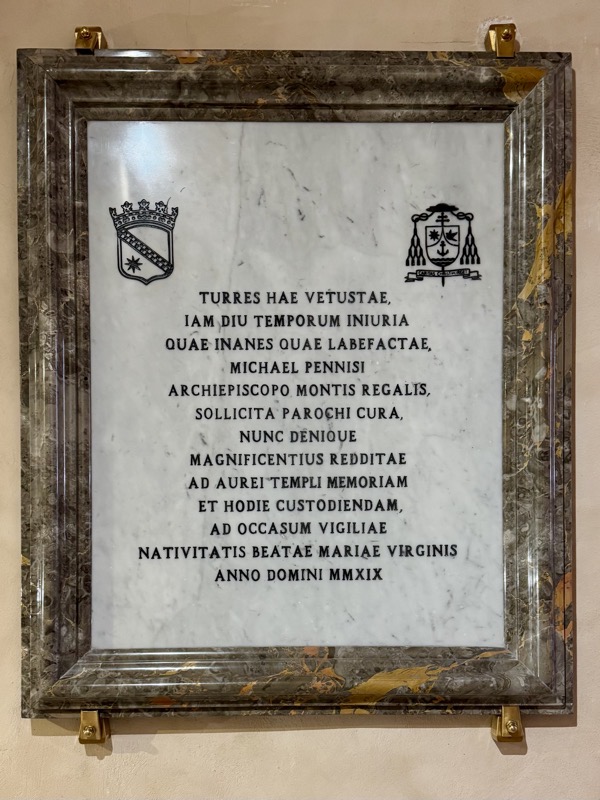
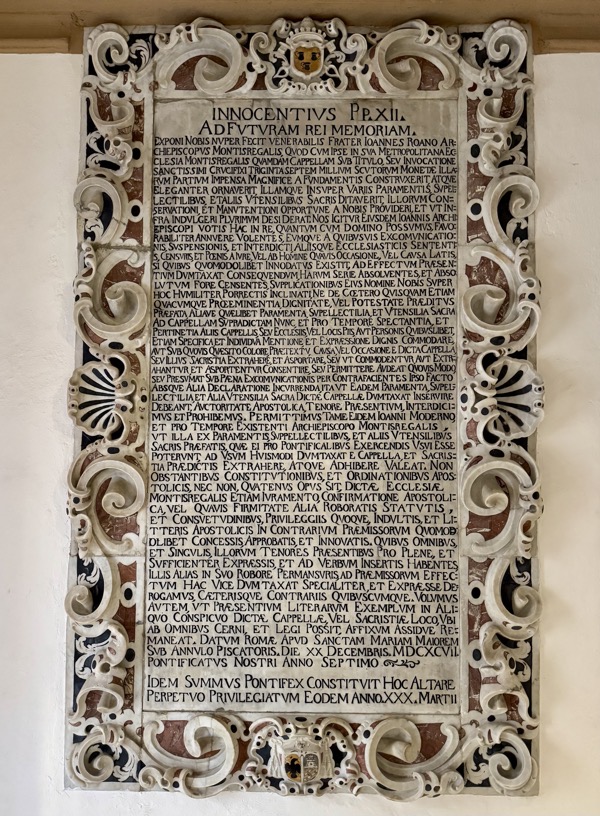
Throughout the cathedral on the walls, there are multiple marble plaques praising clergy that contributed to its creation.
“These old towers survived the pressure and damage of time and were restored thanks to the care of Michael Penninsi, the archbishop of Montis Regalis, and made even more grand to preserve the memories of the Golden Cathedral…”
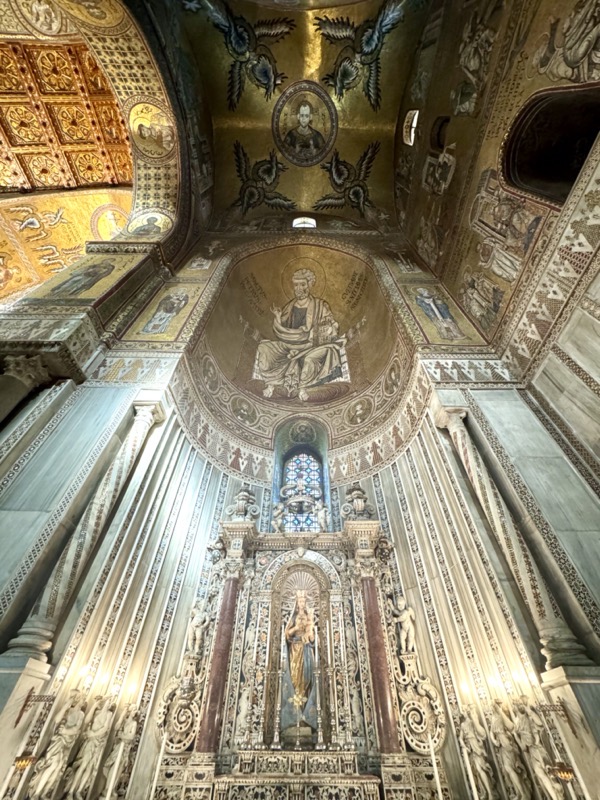
The interior still looks exactly like it did in the 12th century. The walls are completely covered with golden mosaics that rise really high from floor to the ceiling.
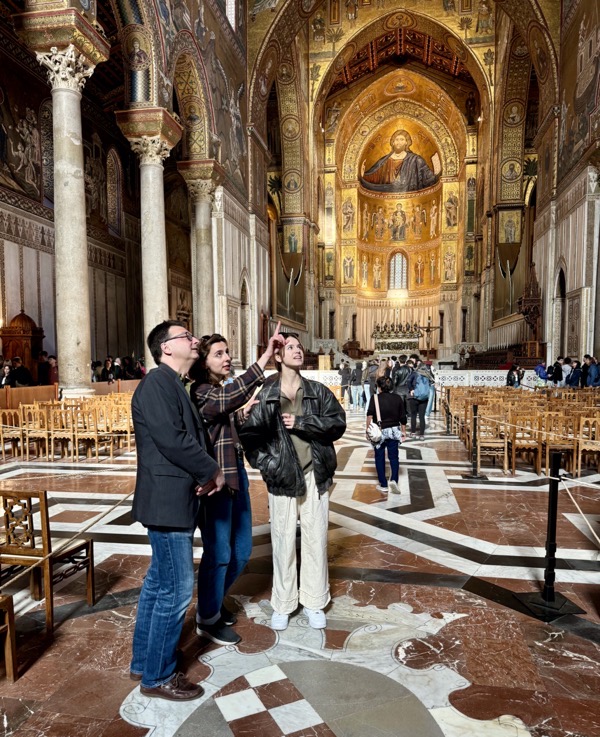
The mosaics are quite realistic. They mostly picture characters and stories from Genesis — from the creation to the assumption —like a story book for those who cannot read.
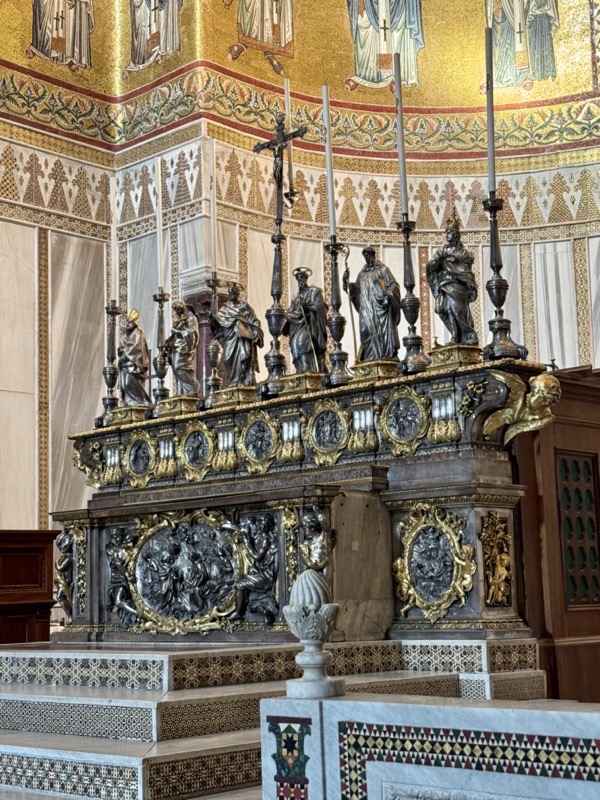
To complement the golden grandeur of the altar, in front of it, there are six silver figures of saints standing between the candlesticks on bronze pedestals
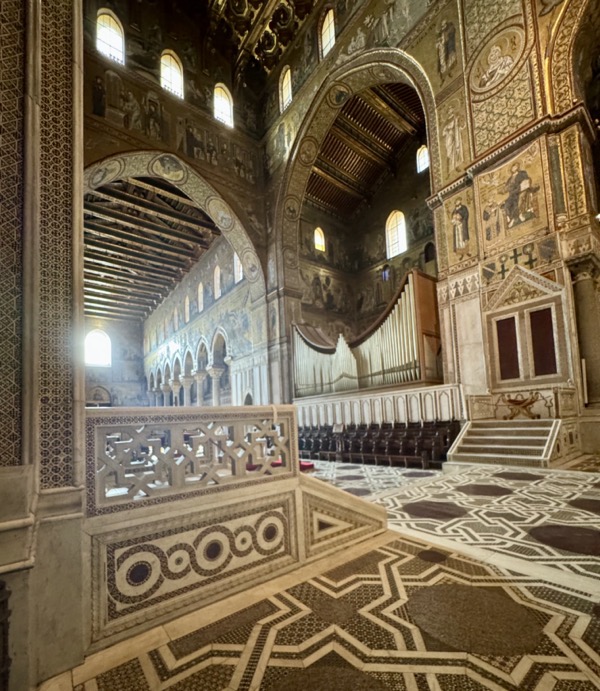
The effect of the sun rays illuminating the interior is truly spectacular!
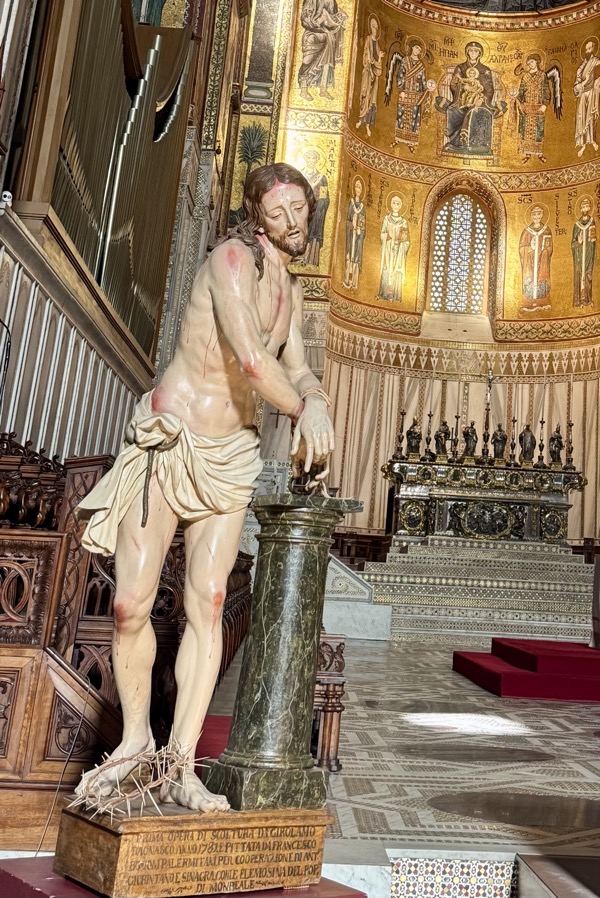
Statue of Jesus in the choir of the cathedral in front of the altar.
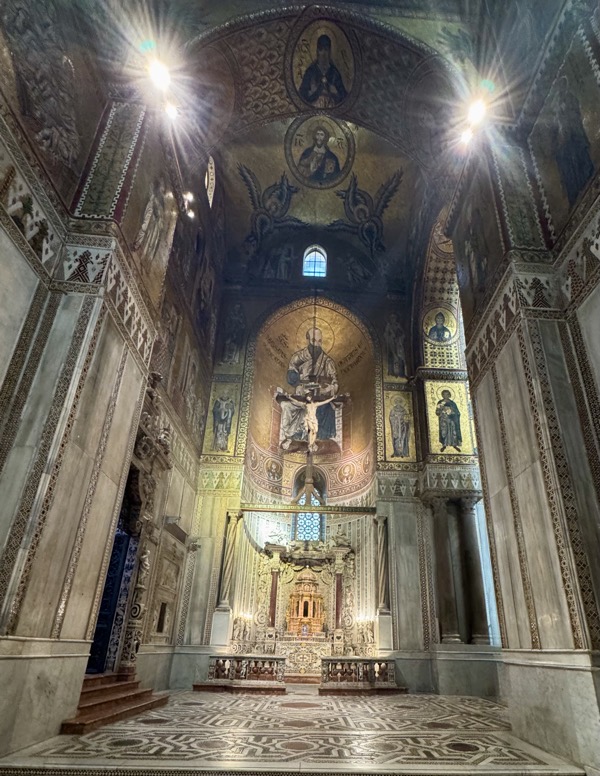
Near the entrance, there is a Chapel of the Crucifix. With all the overwhelming gold around, the chapel can be outshined and missed — it is somewhat secluded from the rest of the cathedral.But there is a special warmth and peace in it that make it more memorable than the central part.
By the entrance to the chapel, there is another marble plaque. This one bestows praise on the archbishop Giovanni Roano who contributed to the creation of the Chapel of the Crucifix that is also known as the Roano Chapel.
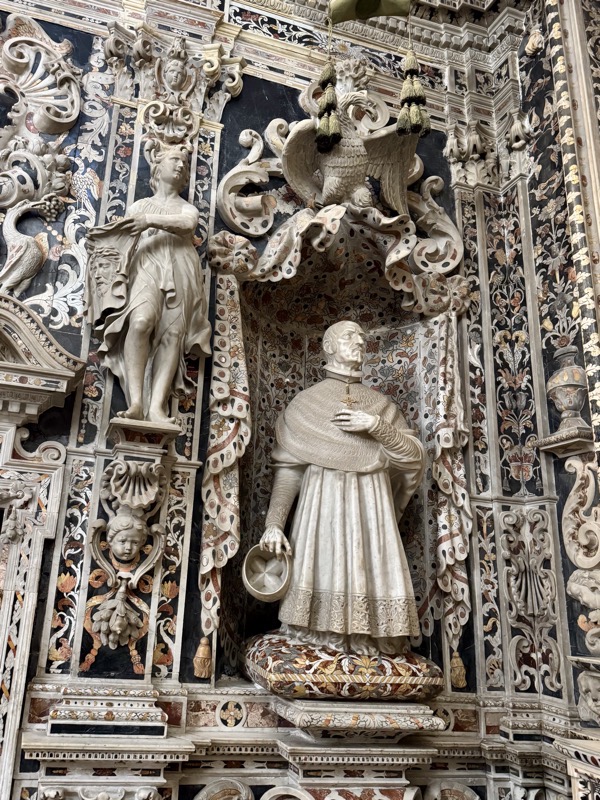
A combination of marble figures with colorful inlaid decorations on the walls and floor is a striking contrast to the gold. It easily can take hours to explore the details and stories carved on these walls.
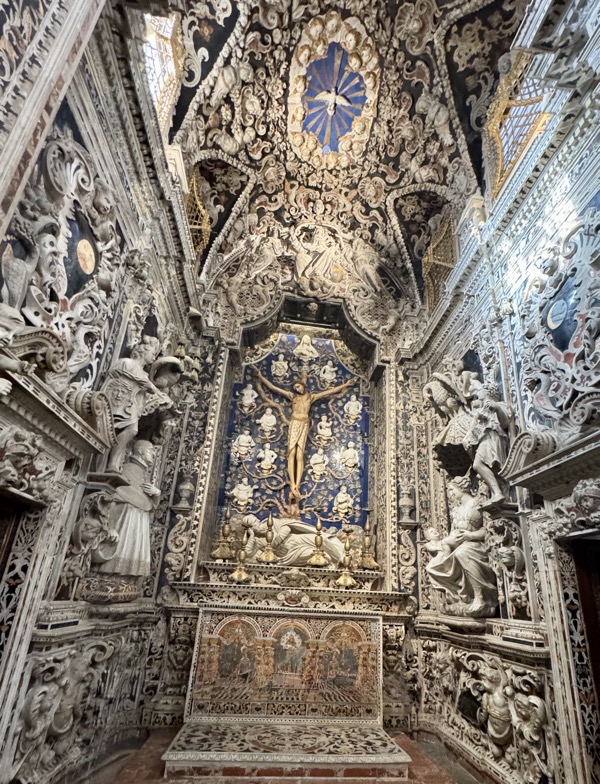
This chapel hides the tombs of Margaret of Navarre and French King Louis IX who died here during one of the crusades.
Figures of the four prophets decorate the walls.
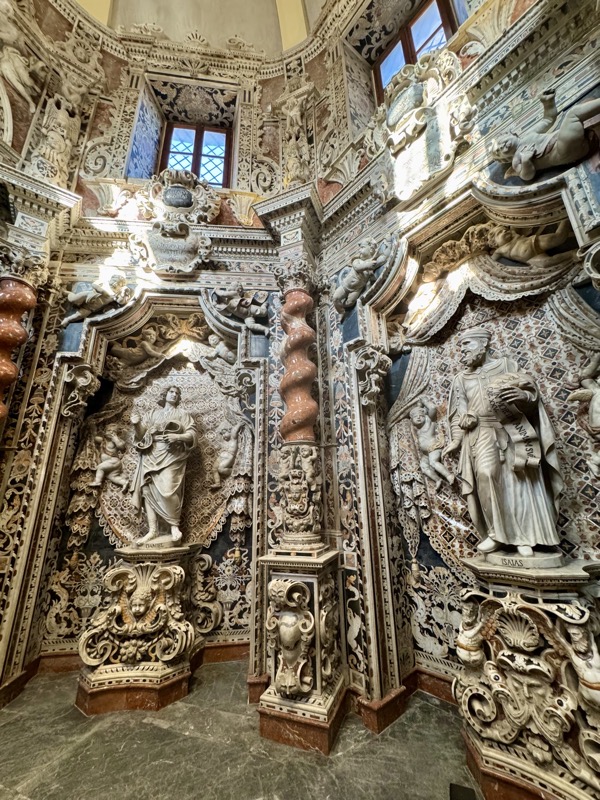
Besides prophets, there are figures of theological virtues: Faith, Hope, and Charity. This one is Charity.
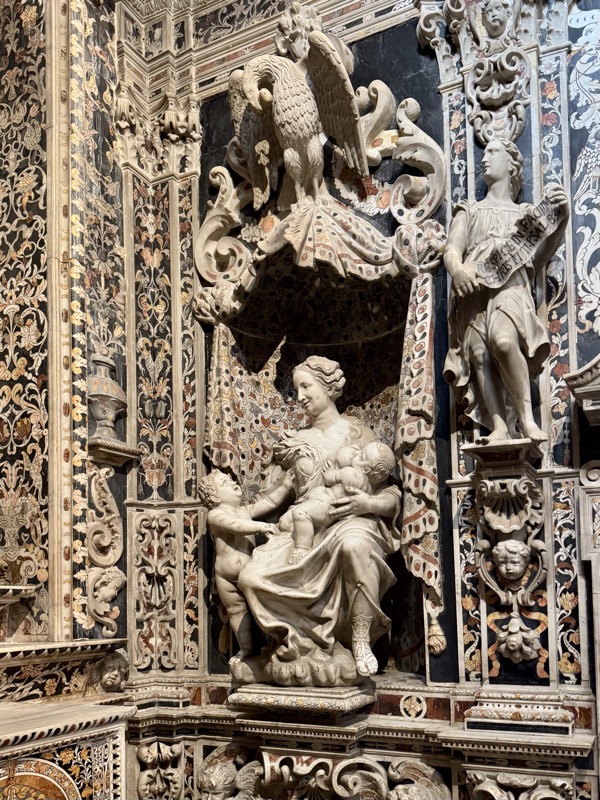
Statue of Archbishop Giovanni Roano himself. A patron of the arts, it is on his orders the construction of the chapel began.
Once outside, our little tour group took a break to absorb and process the grandeur and beauty we just have witnessed.
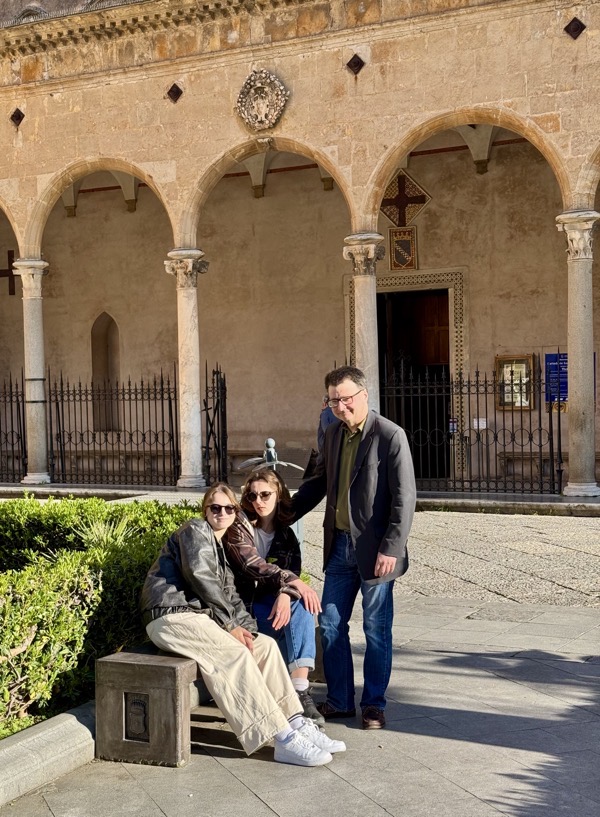
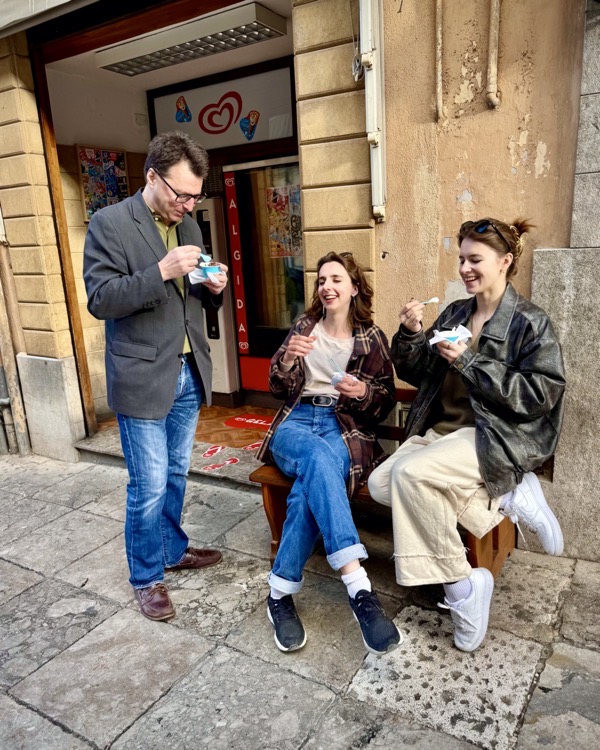
When in Italy, gelato break is a must.
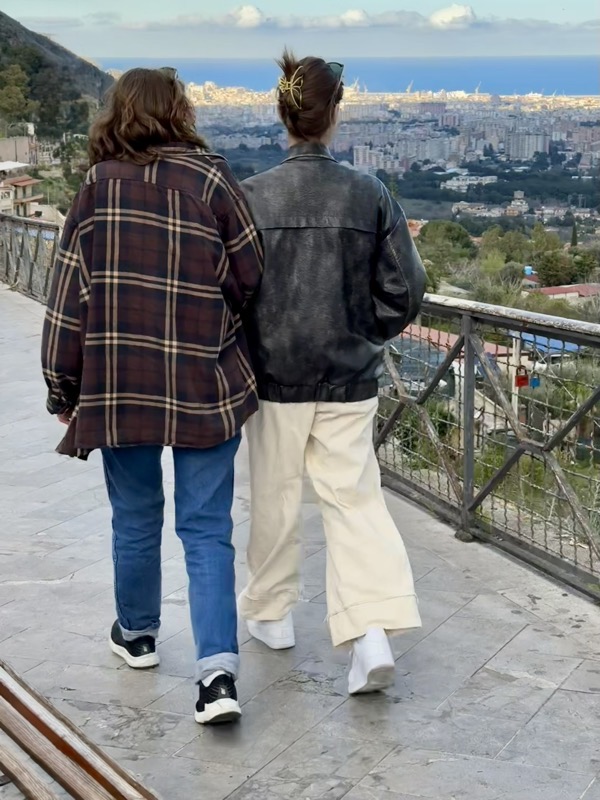
Back to the car and some more of Palermo valley views.
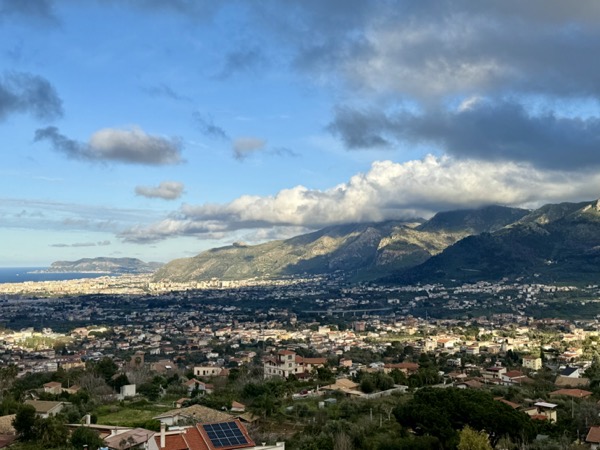
By the middle of the day clouds parted and the sun cheered up the medieval moods and landscapes.
The drive back to Palermo was quick and uneventful.
Still not getting used to and excited with Palermo laundry views as much as with the gold of Monreale.
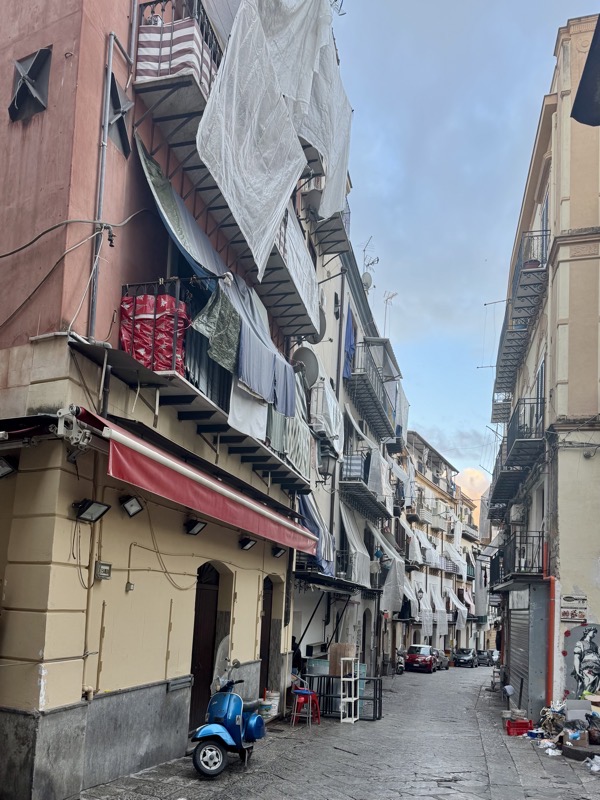
And over and over everywhere long history and beautiful architecture are intertwined with striking neglect.
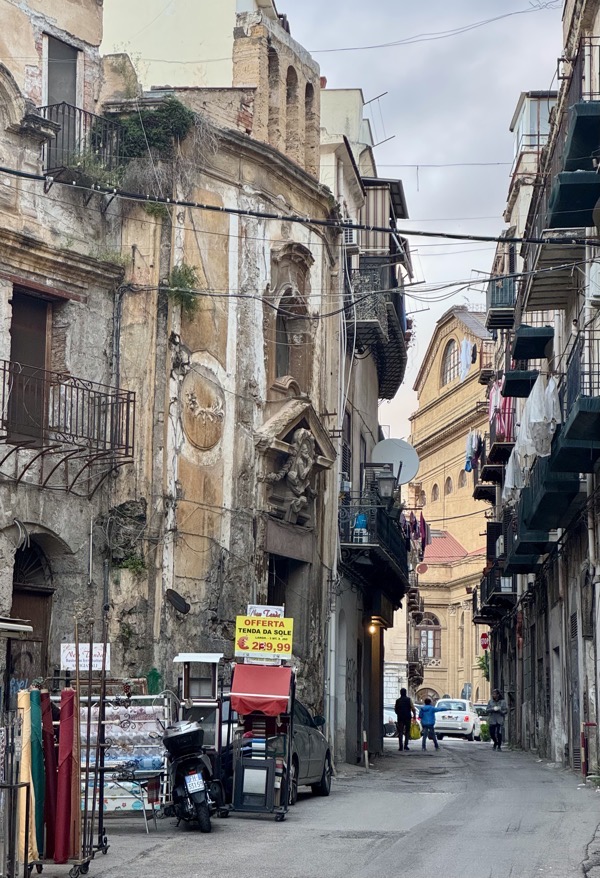
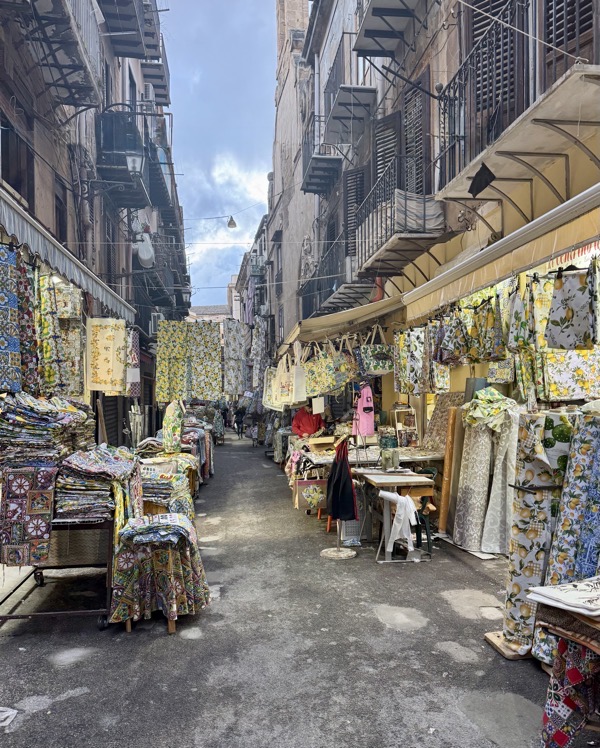
The trend in Palermo seemed to be — the closer an alley is located to the main drag, the more likely some sort of a trade would be taking place there. And the dominant Sicilian motiff‚ lemons, was everywhere — pottery, textiles, painting.
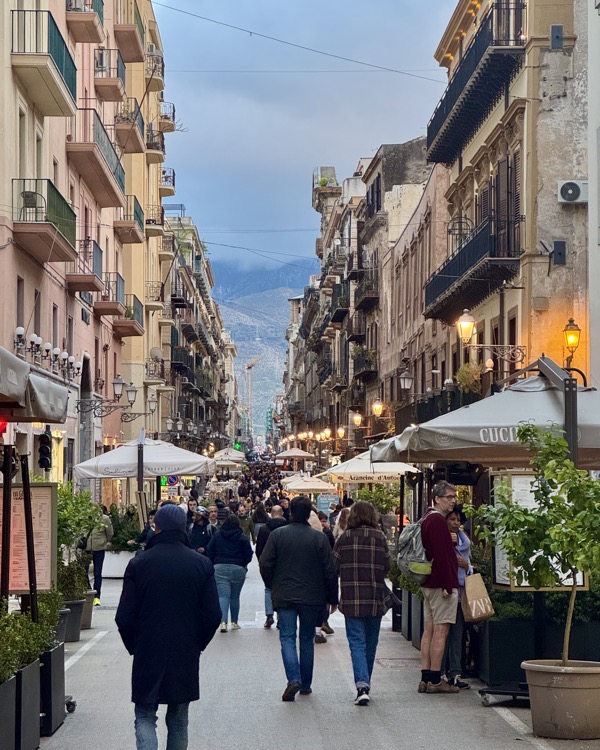
Back to Corso Vittorio Emanuelle where we were meeting Charlotte’s acting coworkers for dinner.
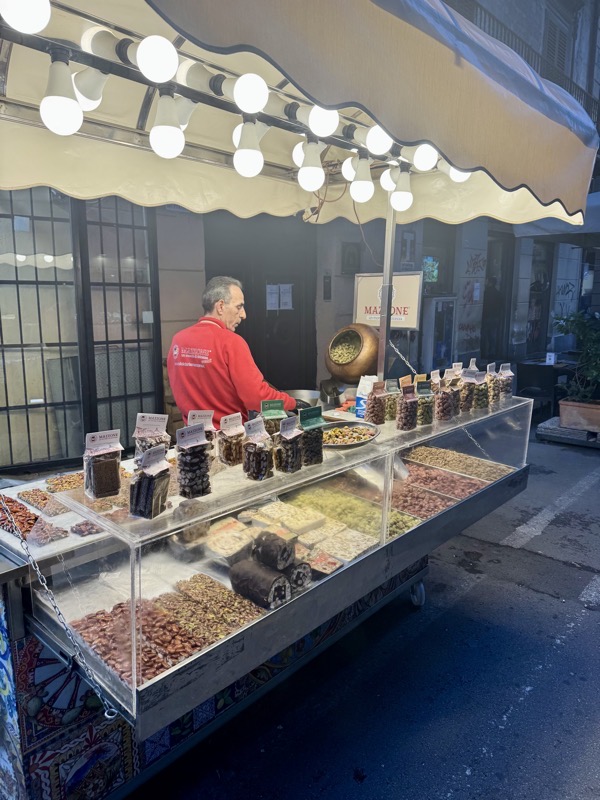
Candied nuts, dried fruit, and chocolate. What else would one want?
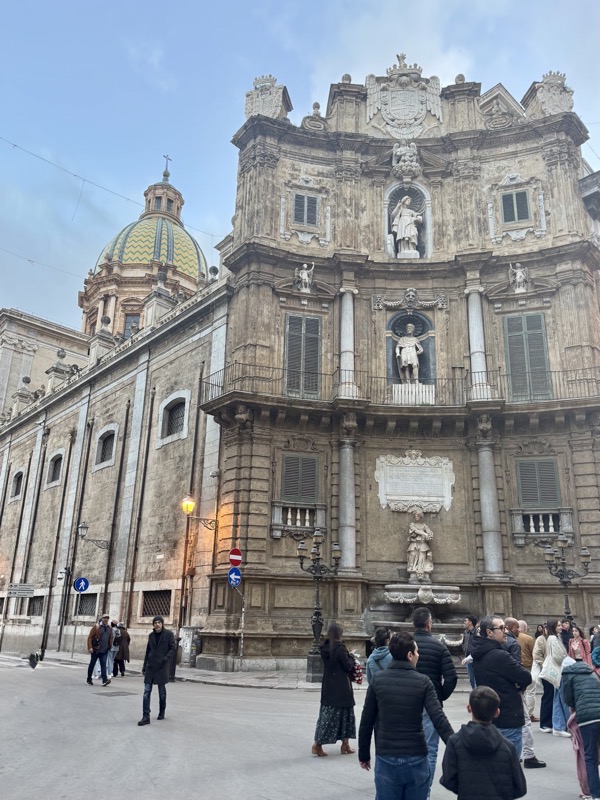
Passing by Quattro Conti. Now with Lizzie. The square feels different in every light.
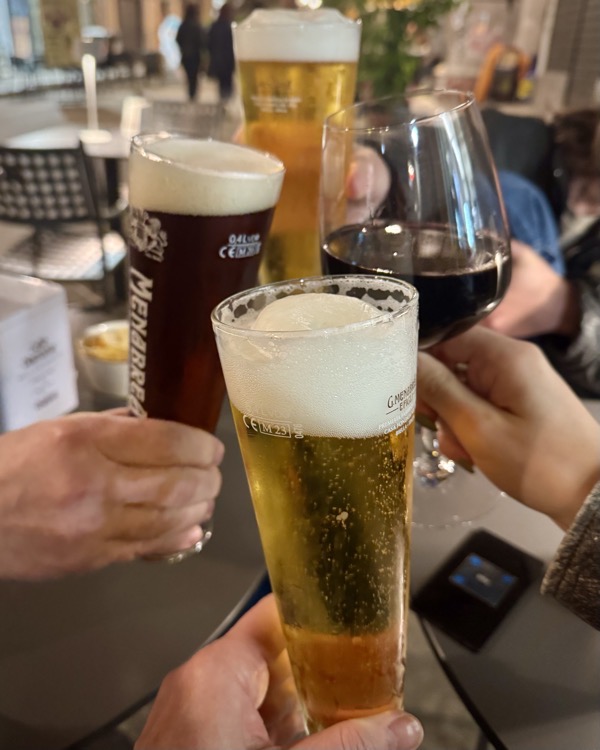
A toast to another successful day together — now in Sicily.
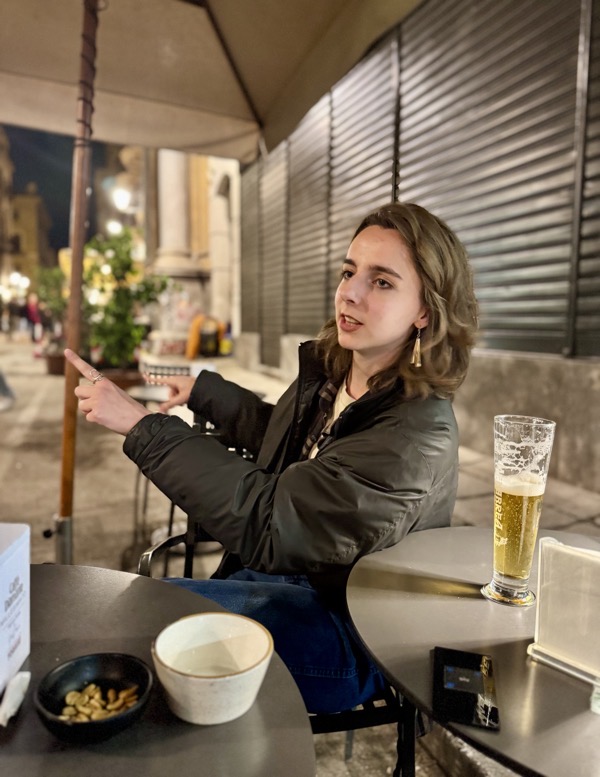
Our local tour guide and interpreter:
— Allora!
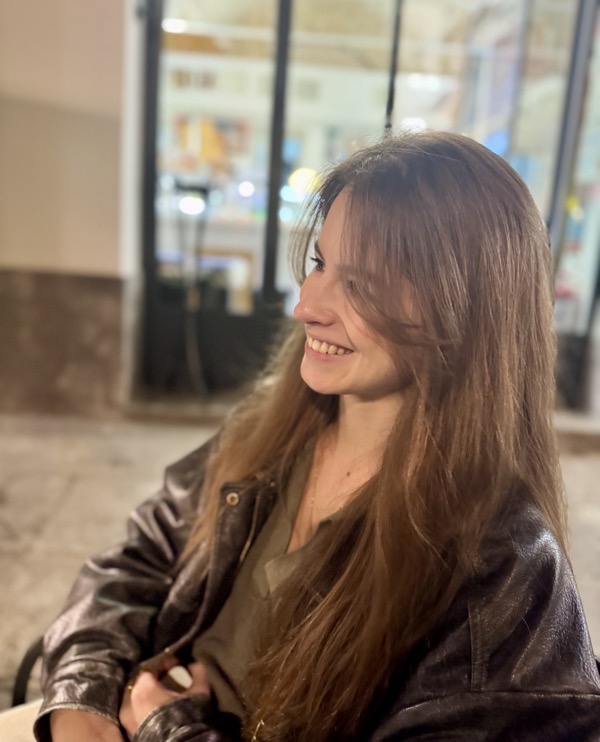
And her constant support group.
The day before, walking through Vucciria, we were pulled by this young man named Anton into one of the market’s restaurants. It turned out to be a nice place with good food and fine outdoor seating.
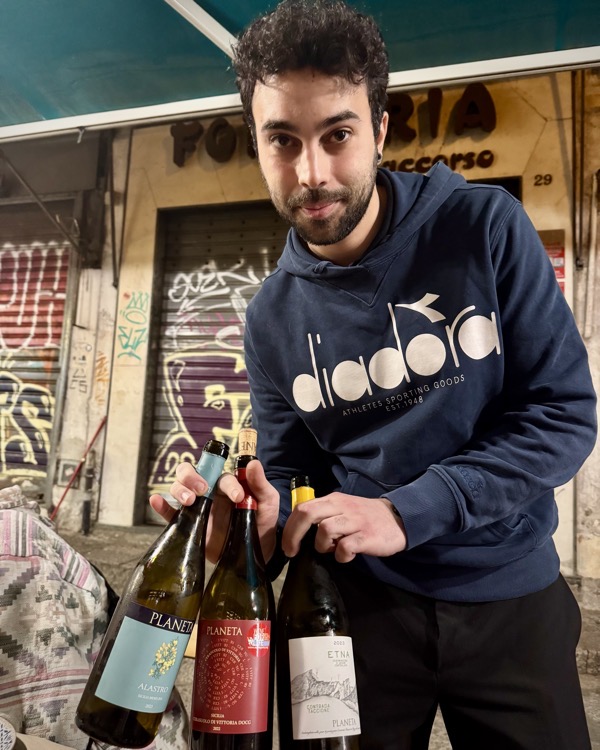
Today, we decided not to take our chances and went back to Anton.
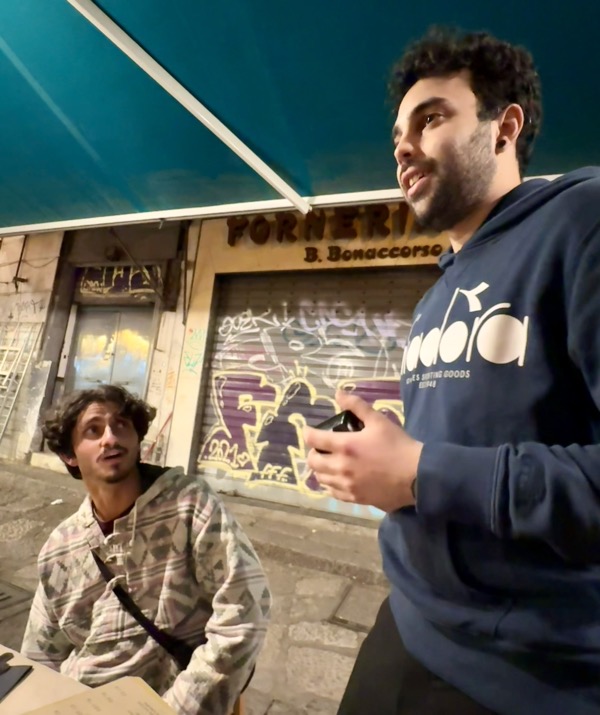
Charlotte’s Portuguese friend Gui turned out to be more knowledgeable about Italian wines so we let him decide this with Anton.
It was probably Tom and me who stuck with beer.
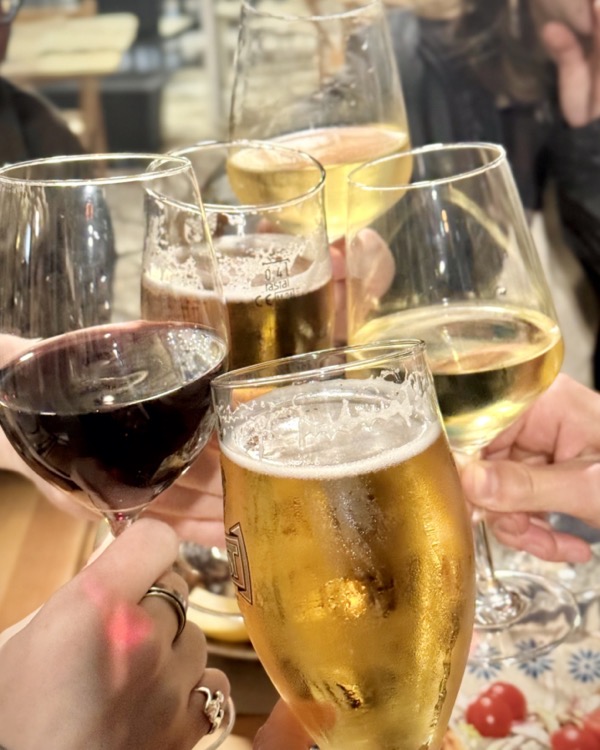
Love going out with big grioups — you can order more and try more.
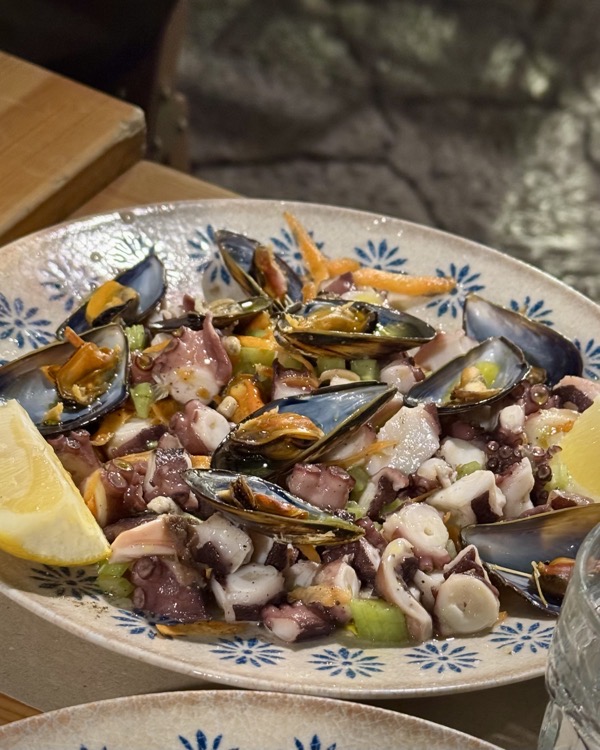
And how can you be without seafood in Italy?
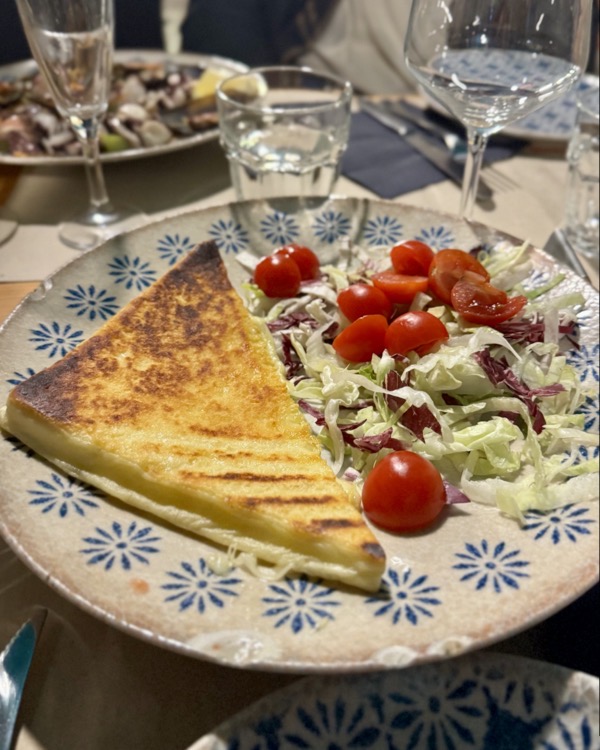
Don’t remember who ordered this cheesy polenta but it was interesting to see how this Italian ingredient is treated in Sicily.
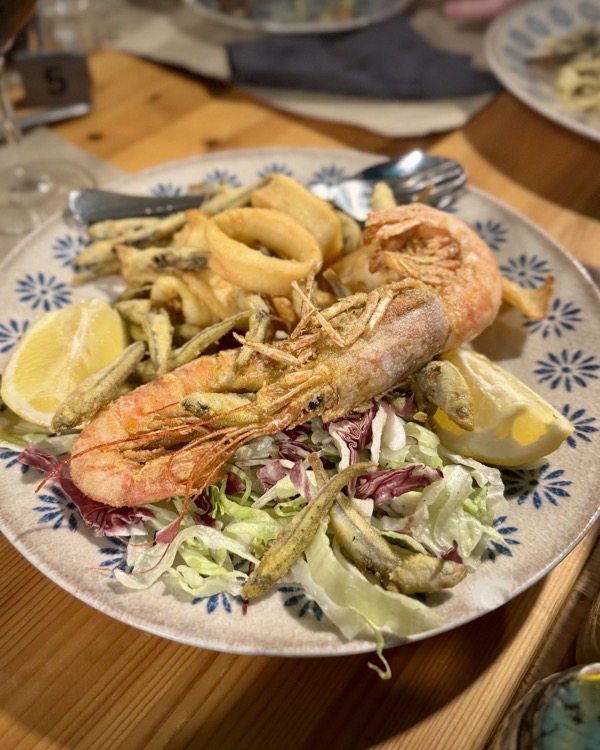
More seafood, now fritto.
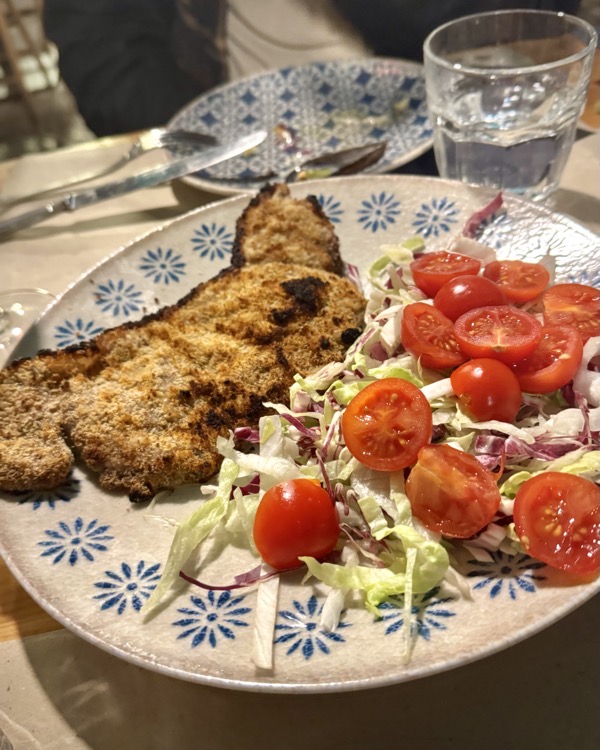
More veal. Now with local tomatoes.
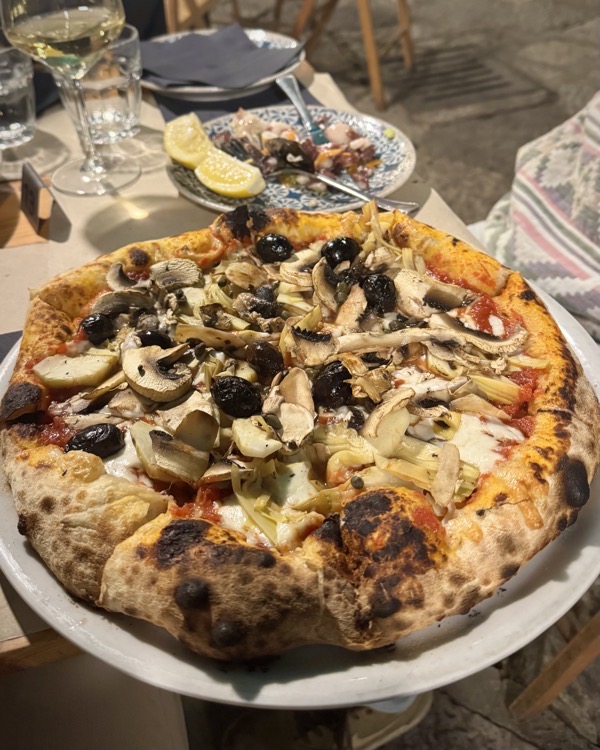
Excellent pizza. With mushrooms. Obviously not Lizzie’s choice. But here it doesn’t matter — the dough alone is amazing. Is it flour? Is it the water?
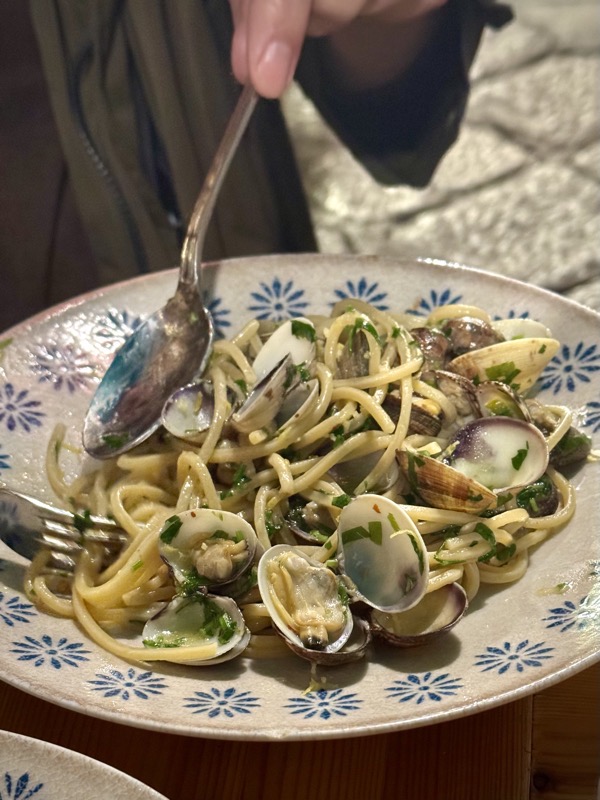
And there is never enough vongole. Significantly less al dente today than last night.